


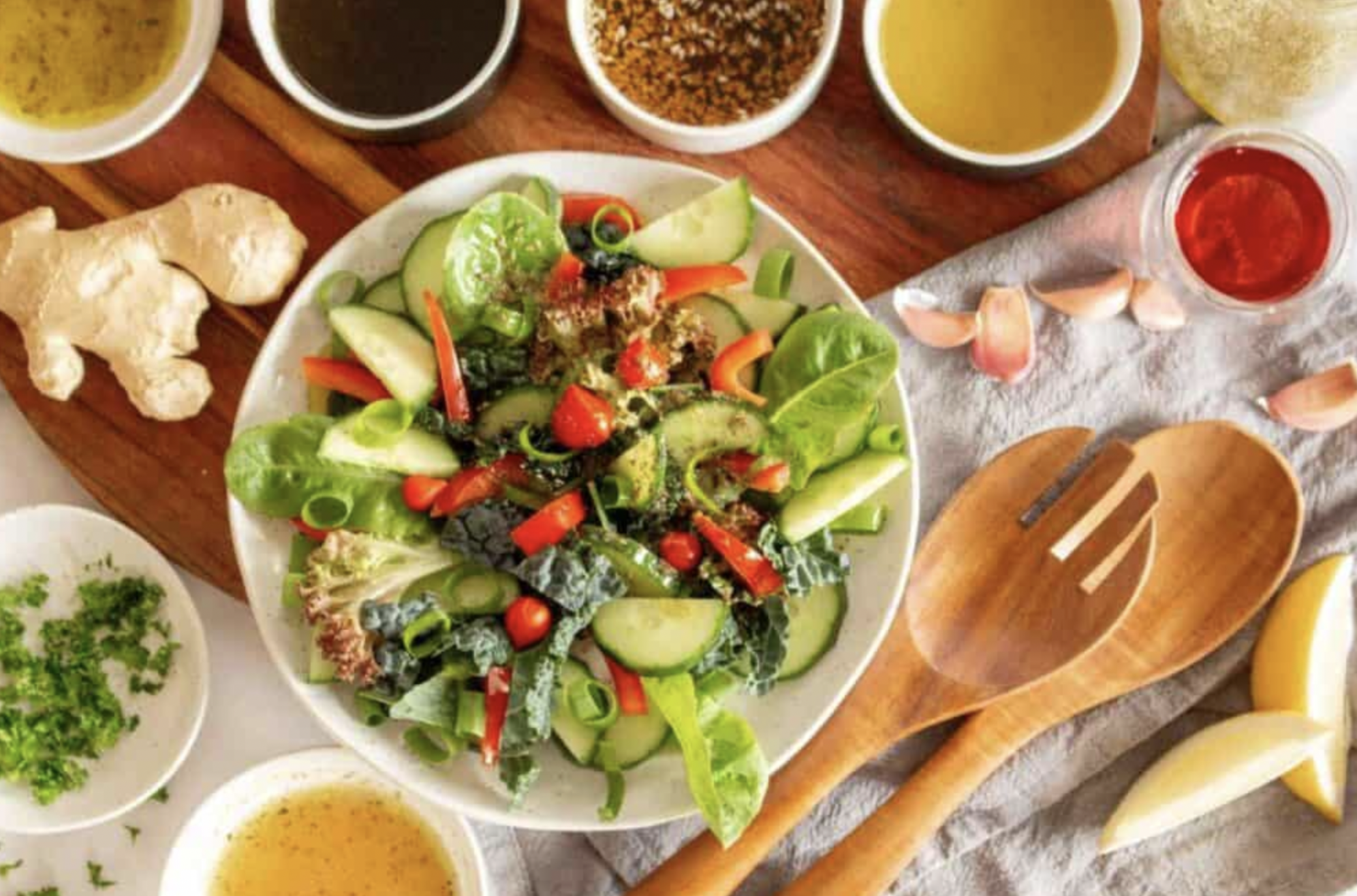
Bottled salad dressing offers convenience, but it also tends to be laden with preservatives, added sugars, and a flavor profile that can feel one-dimensional after a while. Homemade dressings, once you understand the basic ratios and techniques involved, come together in just a few minutes, taste noticeably fresher, and let you control exactly what goes into something you might be eating several times a week.
The Basic Vinaigrette Ratio
Most classic vinaigrettes follow a reasonably consistent ratio: roughly three parts oil to one part acid, whether that acid comes from vinegar, citrus juice, or a combination of the two. This ratio provides a useful starting point, though personal taste varies, and some people prefer a slightly more acidic dressing with a ratio closer to two parts oil to one part acid, particularly if the dressing is going over rich, hearty greens that can handle a brighter, sharper flavor.
This ratio as a flexible guideline rather than a rigid rule means you can adjust based on your specific ingredients and preferences, adding a bit more oil if a dressing tastes too sharp, or a bit more vinegar or citrus if it tastes flat and lacks the brightness that makes a good vinaigrette work.
Choosing Your Oil
Extra virgin olive oil remains the most common choice for vinaigrettes, offering a distinctive flavor that pairs well with a wide range of vinegars and additional ingredients. For a more neutral base that lets other flavors take center stage, a lighter oil like avocado or a mild vegetable oil works well, particularly in dressings where you want the vinegar, herbs, or other flavoring ingredients to be the clear focal point rather than competing with a more assertive olive oil flavor.
Quality matters more in a simple vinaigrette than it might in cooking, since the oil isn’t being heated or transformed the way it would during sautéing, meaning its raw flavor comes through directly in the finished dressing. Investing in a reasonably good quality oil for dressings specifically, even if you use a more basic oil for everyday cooking, improves the final result.
Choosing Your Acid
Vinegar options span an enormous range, and each brings a distinct character to a finished dressing. Balsamic vinegar offers sweetness and depth, working particularly well with heartier greens and roasted vegetables. Red wine vinegar provides a sharper, more assertive acidity suited to robust salads with strong competing flavors. White wine vinegar and champagne vinegar offer a lighter, more delicate acidity that won’t overpower more delicate greens or subtle ingredients.
Citrus juice, lemon or lime most commonly, provides a bright, fresh acidity that works beautifully in many dressings, particularly ones featuring fresh herbs or lighter, more delicate salad components. Combining a vinegar with a small amount of citrus juice sometimes produces a more complex, layered acidity than either used entirely on its own.
The Role of Emulsifiers
Oil and vinegar naturally separate when combined, which is why a basic vinaigrette needs vigorous whisking or shaking just before serving, and often separates again shortly after if left sitting. Adding a small amount of an emulsifier, an ingredient that helps oil and water-based liquids bind together more stably, produces a creamier, more cohesive dressing that holds together considerably longer.
Dijon mustard is among the most commonly used emulsifiers in vinaigrettes, contributing both its own flavor and emulsifying properties that create a noticeably smoother, more stable dressing. A small amount of honey or maple syrup can serve a similar function while also adding a touch of sweetness that balances a dressing’s acidity.
Egg yolk, used in classic dressings like a traditional Caesar, provides even stronger emulsifying power, though it requires more careful technique and consideration of food safety given the raw egg component.
Building Creamy Dressings Beyond Classic Vinaigrettes
Not every homemade dressing needs to be oil-based. Yogurt or buttermilk-based dressings offer a tangy, creamy alternative that works particularly well with heartier salads or as a dip alongside vegetables. Blending yogurt with a bit of lemon juice, garlic, and fresh herbs creates a simple, versatile dressing that comes together in minutes without requiring any of the emulsification technique that oil-based vinaigrettes demand.
Tahini-based dressings, blending tahini with lemon juice, garlic, and water to reach a pourable consistency, offer another creamy alternative with a distinctive, nutty flavor that pairs particularly well with roasted vegetables or heartier grain-based salads.
Incorporating Fresh Herbs and Aromatics
Fresh herbs elevate a basic dressing considerably, and finely chopping or blending herbs directly into a vinaigrette, rather than simply sprinkling them over a finished salad separately, distributes their flavor more evenly throughout the entire dish.
Basil, dill, cilantro, and parsley all work beautifully in dressings, though it’s worth matching herb choice to the broader flavor profile of your specific salad and other ingredients rather than defaulting to the same herb regardless of context.
Garlic and shallot, finely minced or grated, add depth and a savory backbone to many dressings, though using a light hand matters here, since raw garlic and shallot can quickly overpower a dressing if used too heavily relative to the other ingredients.
Seasoning Beyond Just Salt and Pepper
While salt and pepper form the essential seasoning foundation for most dressings, don’t overlook other seasoning options that can add depth. A small amount of Dijon mustard, even beyond its emulsifying function, contributes a subtle tang. A touch of honey balances excessive acidity. Red
pepper flakes add a pleasant warmth to dressings intended for heartier, more robust salads. Tasting and adjusting as you go, rather than following a recipe’s exact measurements without any personal calibration, ensures the final dressing matches your specific taste preferences.
Making Dressings in Larger Batches
Once you’ve found a few dressing combinations you enjoy, making them in larger batches and storing them in the refrigerator for the week ahead saves considerable time compared to preparing a fresh dressing every single time you make a salad.
Oil-based vinaigrettes generally keep well for one to two weeks refrigerated, though they’ll solidify somewhat if the oil used has a higher saturation point, simply requiring a few minutes at room temperature or a brief warm water bath to return to a pourable consistency before use.
Creamy, dairy-based dressings typically have a somewhat shorter shelf life, generally best used within about a week, given the perishable nature of their dairy components.
Storing and Shaking Properly
A simple mason jar or any container with a tight-fitting lid works perfectly for storing homemade dressing, allowing you to simply shake vigorously before each use to re-combine any separated oil and vinegar rather than needing a whisk every single time.
Labeling containers with the date made helps you keep track of freshness, particularly for dairy-based dressings with a shorter usable window than oil-based vinaigrettes.
Adapting Recipes to What You Have Available
Once you understand the basic principles, oil to acid ratio, an emulsifier for stability, herbs and aromatics for depth, additional seasoning for balance, you can improvise dressings based on whatever ingredients happen to be available, rather than needing a specific recipe every single time.
This flexibility transforms dressing-making from a task requiring a shopping list and precise recipe into an intuitive, quick process you can execute confidently with whatever’s already in your kitchen.
Conclusion
Experimenting with a handful of different oil, vinegar, and flavoring combinations over time helps you identify a small rotation of go-to dressings that consistently satisfy your particular taste preferences, removing the need to search for a new recipe every time you want something other than plain bottled dressing.
Once you’ve built this personal repertoire, homemade dressing becomes a fast, reliable habit rather than an occasional special project reserved for when you happen to have extra time and motivation.
Frequently Asked Questions
How long does homemade salad dressing actually last in the refrigerator?
Oil-based vinaigrettes without dairy typically keep well for one to two weeks when refrigerated in a sealed container. Dressings containing dairy, yogurt, buttermilk, or cream, generally have a shorter window, best used within about a week, since dairy components are more perishable than oil and vinegar alone.
Why does my dressing separate even after shaking it well?
Some separation is completely normal for basic vinaigrettes without a strong emulsifier, since oil and vinegar don’t naturally bind together permanently. Adding an emulsifying ingredient like Dijon mustard or honey creates a noticeably more stable dressing that resists separating as quickly, though even well-emulsified dressings will eventually separate somewhat over time and simply need another shake before use.
Can I make salad dressing without any oil at all?
Yes, particularly with yogurt, buttermilk, or tahini-based dressings, which achieve a satisfying, creamy texture without relying on oil as the primary base ingredient. These alternatives also tend to have a different nutritional profile than oil-based vinaigrettes, worth considering if you’re specifically looking for options lower in fat or calories.
What’s the best way to make a large batch of dressing without it going bad before I use it all?
Sticking to oil-based vinaigrettes without dairy components for larger batches makes sense given their longer shelf life, and portioning a big batch across a couple of smaller containers, rather than one large one, reduces how much air and contamination exposure the remaining dressing experiences each time you open the container to use some.
Is it worth buying specific vinegars just for salad dressings, or should I use whatever I already have?
If you cook regularly, you likely already have at least one vinegar that works reasonably well in basic vinaigrettes. That said, having two or three different vinegars on hand, a milder one like white wine vinegar and a bolder one like balsamic, meaningfully expands your ability to vary flavor profiles across different salads without needing to buy anything new for each specific recipe you want to try.
