


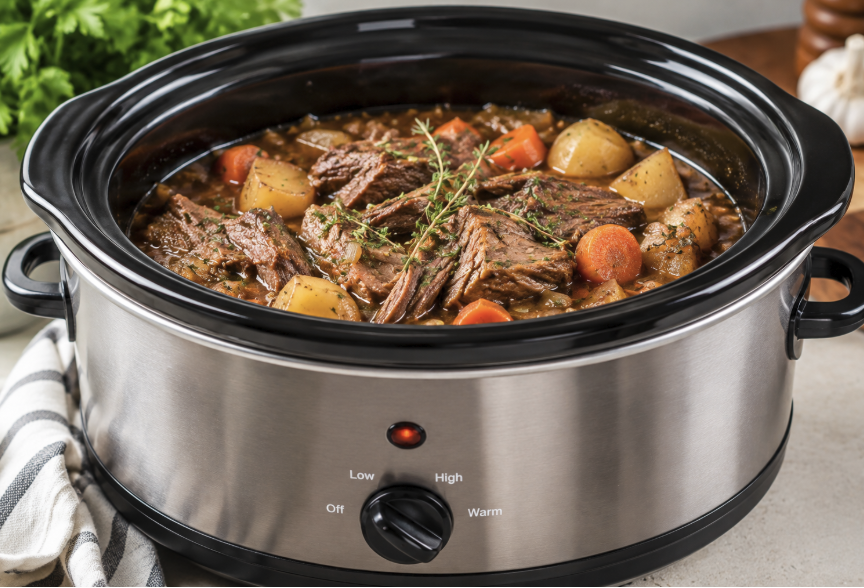
A slow cooker turns inexpensive ingredients into a hot dinner while you are out at work or busy with the rest of your day. It is also one of the easiest appliances to misuse, because long, gentle cooking brings its own food safety rules.
In this article we will explore how a slow cooker works, how to choose one, the safety habits that matter, the best ingredients, a simple step-by-step method, and easy meal ideas for busy weeks.
The science behind low and slow heat
A slow cooker is a heavy ceramic or metal pot sitting inside a housing with a heating element. The element warms the sides of the pot, and the lid traps steam so that the food cooks in a moist, sealed environment. Most models offer a low setting and a high setting, and many add a warm setting for holding food after it has finished. Low and high usually reach a similar final temperature, just at different speeds, which is why a dish can be ready in about four hours on high or about eight on low.
The gentle heat is what makes the appliance so good with tough food. Cuts of meat that come from hard-working muscles contain a lot of connective tissue, which is a kind of protein called collagen. Over many hours at a steady, moderate temperature, collagen breaks down into gelatin, and the meat turns soft and rich instead of chewy. Quick, hot methods such as grilling would leave the same cut dry and stringy.
Because the lid stays closed, very little liquid evaporates. This is a major difference from a pan on the hob or a tray in the oven, where sauces reduce and thicken. In a slow cooker, the juices from meat and vegetables collect in the pot, so you generally need much less added liquid than a stovetop recipe asks for. Beginners often pour in too much stock, and they end up with a thin, watery sauce at the end.
Temperature control is the safety side of the same story. Food needs to climb out of the range where bacteria multiply quickly, which food safety agencies commonly describe as roughly 4 to 60 degrees Celsius, or about 40 to 140 degrees Fahrenheit. A working slow cooker moves food through that range and then holds it above the upper end for hours. If the appliance is faulty, overfilled, loaded with frozen food or lifted open too often, the food can linger in the risky range for longer than it should.
It also helps to know what the appliance cannot do. It does not brown food, so the flavour that comes from a seared crust has to be added before the pot goes on. It does not crisp anything, so pastry, fried coatings and crackling stay soft. It is also not designed to cook food quickly, so a recipe that needs a short, fierce burst of heat belongs somewhere else in the kitchen.
Choosing a size and type that suits your household
Capacity is the first decision, and it is usually quoted in litres or quarts. A small pot of around 1.5 to 3 litres suits one or two people or a dip and sauce, a medium pot of roughly 3.5 to 4.5 litres feeds a small family, and a large pot of 5 litres or more suits batch cooking and big cuts of meat. Bigger is not always better, since a large pot that is only a quarter full can cook food too fast and scorch the edges. Since the commonly recommended fill level is between half and two thirds, pick a size that you will fill properly most of the time.
Shape matters as well. Round pots are good for soups, stews and chilli, while oval pots fit a whole chicken, a rolled joint or a rack of ribs more easily. If you cook for a crowd, an oval model of generous size is more flexible, but it takes up more cupboard space. Check the dimensions of your worktop, your cupboards and the dishwasher before buying.
Controls vary widely. Basic models have a simple dial with low, high and sometimes warm, and they are dependable and easy to clean. Programmable models let you set a cooking time and then switch automatically to warm, which is useful if you are away longer than the recipe needs. Some versions include a browning function or a pot that can go on the hob, which saves washing a separate frying pan, though they tend to cost more.
Look at the lid and the insert. A tight-fitting glass lid lets you check progress without lifting it, and a removable insert makes cleaning far easier than a fixed one. Cool handles, a cord of sensible length and a stable base are signs of good design. Read the manual for your own model, because details such as whether the insert can go in the oven or the freezer differ between products and countries.
The table below sets out a simple way to match a pot to your household. Treat the sizes as rough guidance, since manufacturers describe capacity in different ways. Check the stated capacity against the fill level you plan to use.
| Household or use | Rough capacity | Shape suggestion | Good for |
| One or two people | 1.5 to 3 litres | Round | Soup, porridge, small stews, dips |
| Small family | 3.5 to 4.5 litres | Round or oval | Curries, chilli, pulled pork, casseroles |
| Larger family or batch cooking | 5 litres or more | Oval | Whole chicken, joints, big pots of stew |
| Entertaining | 6 litres or more, or two pots | Oval | Meatballs, warm dips, pulled meats |
Food safety rules worth following every time
The most important rule is to start with food that is safe to begin with. Keep raw meat, poultry and fish in the refrigerator until the moment you are ready to prepare them, and use separate chopping boards and knives for raw meat and for ready-to-eat food. Wash your hands after touching raw meat and before touching anything else. Wash worktops and utensils in hot soapy water, and do not rinse raw chicken in the sink, because the splashes spread bacteria.
Thaw frozen meat and poultry completely before it goes into the pot. Food safety agencies such as the United States Department of Agriculture advise against loading a slow cooker with frozen meat, because the block takes so long to warm that it can sit in the risky temperature range for hours. The safest method is to thaw it in the refrigerator, which usually takes a day or more for a large piece. Frozen vegetables are generally fine, but they release water, so you may want to add them later and reduce the liquid slightly.
Cook food to a safe internal temperature and check it with a clean food thermometer. Commonly published guidance gives about 74 degrees Celsius, or 165 degrees Fahrenheit, for poultry, and about 71 degrees Celsius, or 160 degrees Fahrenheit, for minced meat and sausages. Whole cuts of beef, lamb and pork are often given a lower figure, with a short rest, but recommendations differ between countries, so check the guidance from the authority where you live. In practice, a pot roast or a pulled pork recipe is cooked far beyond these minimums, because the meat needs to be tender.
Dried beans need special care. Red kidney beans contain a natural toxin that can cause severe stomach upset if the beans are undercooked, and the low heat of a slow cooker may not be enough to destroy it. Health authorities in several countries advise soaking dried kidney beans and then boiling them hard in a pan for at least ten minutes before adding them to the slow cooker. Canned beans are already cooked, so they can be added directly, usually near the end. If you are not sure about another dried legume, follow the packet instructions and boil it first.
Hot food also needs to leave the pot safely. Do not leave cooked food sitting in the appliance on the warm setting for many hours, since the warm setting is meant to hold food, not to cook it, and a long wait lowers quality even where it is safe. Commonly recommended practice is to get leftovers into the refrigerator within about two hours of the end of cooking, and sooner in hot weather. Divide a big stew into shallow containers so it cools quickly, and do not put the whole ceramic insert in the refrigerator, because it holds heat for a long time.
Finally, reheat food properly. A slow cooker warms leftovers too gradually to be a dependable reheating tool, so move the food to a saucepan, an oven dish or the microwave and bring it to a steaming-hot temperature all the way through. Most guidance suggests reheating leftovers only once. Pregnant people, older adults, young children and anyone with a weakened immune system face a higher risk from foodborne illness, and they should speak to a doctor or a health professional if they have questions about what to eat. If you suspect you have food poisoning and symptoms are severe or last more than a short time, see a medical professional.
Cuts of meat and ingredients that thrive in long cooking
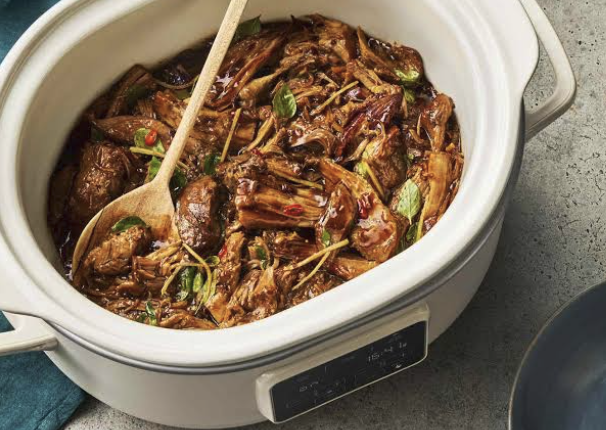
Tough, inexpensive cuts are the stars of the slow cooker. For beef, think of chuck, brisket, shin and short ribs, which are all rich in collagen and turn silky after hours of gentle heat. For pork, shoulder is the classic choice for pulled pork, while belly and hock also suit slow methods. For lamb, shoulder, neck and shanks are excellent, and for poultry, bone-in thighs and drumsticks do far better than lean breast meat.
Lean cuts need a different approach. Chicken breast, pork loin and lean steak can turn dry and crumbly if left for the usual eight hours, because there is little connective tissue to break down. If you want to use them, shorten the cooking time, cook them in plenty of sauce, and check the temperature early. Many cooks simply swap in thighs, which stay juicy and forgive a bit of extra time.
Vegetables behave differently from meat. Root vegetables such as carrots, parsnips, potatoes and onions are firm and can take the full cooking time, and they are best placed at the bottom of the pot, where the heat is strongest. Softer vegetables such as courgettes, peas, spinach, mushrooms and peppers turn mushy if they go in at the start, so add them in the final thirty to sixty minutes. Cabbage and green beans fall somewhere in the middle and can usually go in for the last couple of hours.
Dairy, herbs and some other ingredients need to wait. Milk, cream, yogurt and soft cheese can curdle or split during a long cook, so stir them in at the end, with the heat turned off or on low. Fresh herbs lose their brightness over hours, whereas dried herbs and whole spices stand up well, so use dried at the start and fresh at the finish. Pasta and rice are also better added late, or cooked separately, because they absorb liquid and become soft and gluey.
Flavour builders make a large difference. Onions, garlic, tomato paste, stock, wine, soy sauce, mustard, citrus zest and spices all hold up well in a slow cooker. Because little liquid evaporates, flavours can taste flatter than expected, so season carefully at the start and taste again at the end. A splash of vinegar or a squeeze of lemon juice just before serving often lifts a dish that seems dull after hours of cooking.
Preparing, layering and timing a meal step by step
Begin the evening before if you can. Chop the vegetables, trim excess fat from the meat, and store everything in covered containers in the refrigerator. Keep raw meat on the lowest shelf, away from ready-to-eat food. Some cooks assemble the whole pot the night before and refrigerate the insert, but a cold ceramic insert placed on a hot base can crack, so check your manual, and bring the pot to room temperature or load the ingredients on the morning itself.
Next, build flavour in a frying pan. Heat a little oil, season the meat, and brown it on all sides until it has a deep colour, then lift it out. Soften the onions and garlic in the same pan, add a spoonful of tomato paste or a splash of wine, and scrape up the browned bits from the base. This takes about ten minutes, but it gives a deeper taste than putting raw meat straight into the pot.
Then layer the pot in a sensible order. Place the hardest vegetables on the bottom and along the sides, set the meat on top of them, and pour the liquid over everything. The liquid should usually come about halfway up the ingredients, not cover them completely. Keep the total fill between roughly half and two thirds of the pot, and give the contents a gentle level so they cook evenly.
Choose the setting based on the time you have. Low suits a full working day of about eight to ten hours for tough joints, while high suits an afternoon of about four to six hours. Avoid lifting the lid, because commonly cited advice is that each lift can add around twenty minutes to the cooking time.
Finish the dish with care in the last hour. Add the delicate vegetables, stir in dairy or fresh herbs, and taste for salt, acid and heat. If the sauce is thin, take the lid off and cook on high for thirty minutes to reduce it, or stir in a paste of cornflour and cold water. Check the internal temperature of poultry and minced meat, rest large joints for a few minutes, and serve while hot.
Adapting oven and stovetop recipes for the slow cooker
Many ordinary recipes can be converted with a few rules of thumb. As a rough guide, a dish that takes about thirty minutes to an hour on the hob will often take four to six hours on high or six to eight hours on low. A dish that bakes for two to three hours in the oven suits eight to ten hours on low. Treat these figures as a starting point, and note the real result so that you can adjust the next time.
Reduce the liquid. Because the lid traps moisture, cut the stock, water or wine by about a third to a half compared with the original recipe, but keep enough that the food does not catch on the bottom. You can always thin a sauce at the end, whereas a watery stew is harder to rescue. For soups, keep the liquid, but make sure the ingredients are mostly covered.
Adjust the seasoning and thickening. Long cooking mutes salt and spices, so taste at the end and correct. Flour can be used to coat the meat before browning, which thickens the sauce gently, or you can mix cornflour with cold water and stir it in near the finish. Avoid adding thickeners at the start, because they can clump or burn on the bottom.
Know which recipes do not convert. Anything that needs a crisp finish, such as roast potatoes, fried chicken or pastry, will be disappointing. Delicate fish and shellfish overcook quickly, so add them only in the last twenty to thirty minutes. Baked goods such as cakes and breads can be made in some slow cookers, but results are uneven, so follow recipes written for the appliance.
Use the table below as a quick conversion reference. These are approximate times. The size of the pieces, the amount of food and the model of cooker all change the result.
| Original method and time | Slow cooker on low | Slow cooker on high |
| Stovetop, 15 to 30 minutes | 4 to 6 hours | 1.5 to 2.5 hours |
| Stovetop or oven, 30 to 60 minutes | 6 to 8 hours | 3 to 4 hours |
| Oven, 1 to 2 hours | 8 to 10 hours | 4 to 6 hours |
| Oven, 2 to 3 hours | 9 to 11 hours | 5 to 7 hours |
Easy meal ideas for busy weeks
Start with a few dependable formulas rather than a hundred recipes. A simple chicken casserole uses bone-in thighs, onions, carrots, potatoes, stock and herbs, and it needs about six hours on low. A beef stew uses chuck, onions, carrots, a spoonful of tomato paste and a cup of stock, and it takes eight hours on low. Both can be made with whatever vegetables you already have in the kitchen.
For a lighter weeknight, try a vegetable and lentil soup. Red or brown lentils, chopped onion, carrots, celery, tinned tomatoes and stock cook in around four to six hours on high and need no soaking. Stir in spinach and a squeeze of lemon at the end. It freezes well, so a double batch gives you lunches for the week.
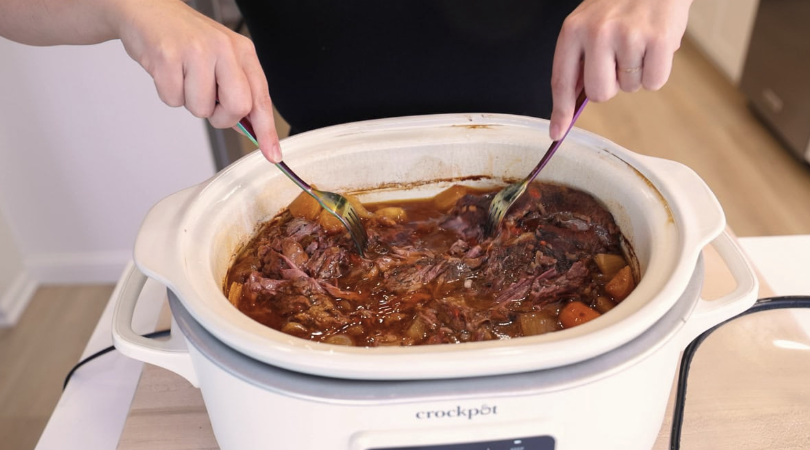
Pulled pork or pulled chicken is excellent for feeding a group. Rub a pork shoulder with paprika, garlic powder, salt and brown sugar, add a splash of stock and a spoonful of vinegar, and cook for eight to ten hours on low. Shred the meat with two forks and mix it back into the juices. Serve it in rolls, over rice, in tortillas or on baked potatoes, and use the leftovers in the next day’s lunch.
A curry or chilli is another easy answer. For chilli, brown minced beef or turkey with onions, then add canned beans, tinned tomatoes, chilli powder and cumin, and cook for six to eight hours on low. For a vegetable curry, use chickpeas, sweet potato, cauliflower and a jar of curry paste, add coconut milk near the end, and serve with rice. Both dishes taste better the next day, so they suit cooking ahead.
Do not overlook breakfast and dessert. Steel-cut oats cooked overnight with water or milk and a little fruit are ready in the morning, although you should use a recipe written for that purpose and the right ratio of liquid. Baked apples, poached pears and rice pudding are easy sweet choices. A warm dip for a party, made with cheese, beans or spinach, can sit on the warm setting while guests arrive, as long as you stir it and do not leave it out for hours.
Cleaning, care and common problems
Clean the pot properly after every use. Let the insert cool, then wash it with warm soapy water and a soft sponge, or put it in the dishwasher if the manual says it is allowed. Never immerse the heating base in water, and wipe it with a damp cloth instead. Always unplug the appliance before cleaning it, and dry it completely before storing it.
Stuck-on food is common, especially with sugary sauces. Fill the insert with warm water and a little washing-up liquid, and leave it to soak for an hour or two before scrubbing. A paste of bicarbonate of soda and water can help lift stains, and a mix of water and white vinegar can loosen mineral marks. Avoid steel wool and harsh abrasives on ceramic or non-stick surfaces, since they scratch.
Most problems have simple fixes. If the food is watery, take off the lid and cook on high for a while, or thicken the sauce. If the food is dry or tough, it may have been too lean, cooked too long, or simply needs more time for collagen to break down, so check the cut and the recipe. If the cooker seems to run too hot or too cool, ask the manufacturer for advice, and stop using any appliance with a damaged cord, a cracked insert, or a loose plug.
Store the pot safely. Keep the lid and insert in a place where they will not be knocked or dropped, and avoid sudden temperature changes, such as putting a hot insert under cold water, which can crack ceramic. Follow the manufacturer’s instructions on whether the insert can be used on the hob or in the oven. If you leave the appliance on while you are out of the house, put it on a stable, heat-resistant worktop, away from curtains, paper and the edge of the counter, and make sure the cord is out of reach of children and pets.
Conclusion
If you are new to slow cooking, begin with one simple, forgiving recipe such as a chicken thigh casserole or a beef stew. Read the manual, wash the insert, and check that the lid fits well. Buy a cheap food thermometer, because it is the single tool that removes doubt about doneness and safety.
Next, plan your first cook for a day when you will be at home, so that you can watch how the pot behaves. Thaw the meat in the refrigerator the day before, brown it, add the vegetables and liquid, and fill the pot to the right level. Keep a note of the time, the setting, and the result, and adjust the next time. After a few attempts you will know how your own cooker runs, since models vary.
Build safe habits from the very first meal. Thaw before cooking, boil dried kidney beans, check the temperature, cool leftovers quickly, and reheat them thoroughly. If you cook for people who face a higher risk from foodborne illness, or if you have a medical condition that affects what you can eat, ask a doctor or a registered dietitian for advice. Then enjoy the main benefit of the appliance, which is a hot, home-cooked dinner waiting at the end of a long day.
