


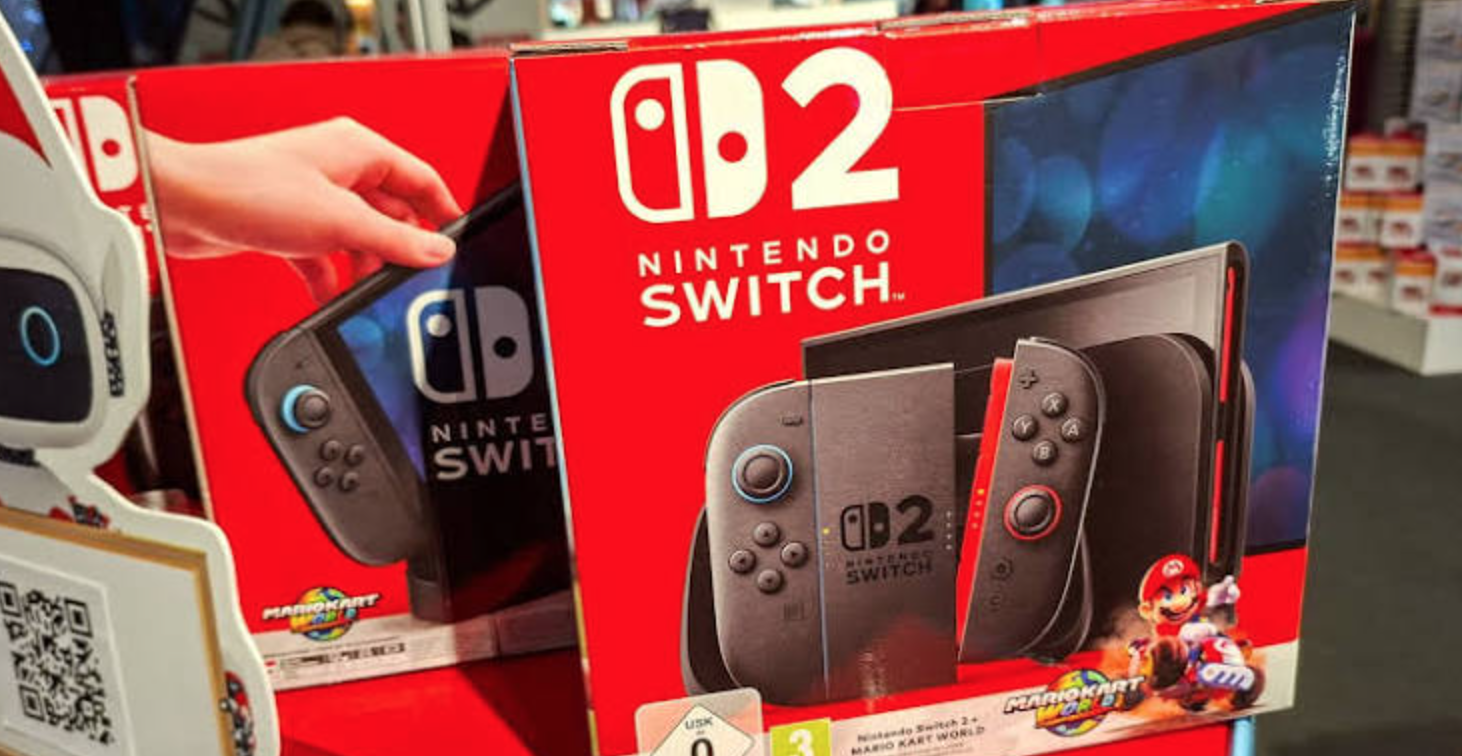
Anyone shopping for a Nintendo Switch 2 in the United States now faces a sticker price of $499.99, up $50 from the $449.99 it carried through August. That matters because a console is rarely a single purchase, and the increase arrives just as Nintendo reports its latest half-year earnings.
In this article, we will explore what changed on September 1, what the company’s own forecast implies for hardware and games, which numbers come from which source, and how a household can decide whether to buy now or wait.
A $50 Increase in Plain Terms
What Changed on September 1
Nintendo raised the US price of the Switch 2 from $449.99 to $499.99, effective September 1, 2026. The jump is $50, which works out to roughly 11 percent on the base price (that percentage is simple arithmetic on the two prices, not a figure Nintendo published). The reporting behind this article concerns the US price only. Prices in other regions, and the cost of bundles or accessories, may follow a different path, so anyone outside the United States should check a local retailer or Nintendo’s own store page.
It is worth keeping the size of the move in proportion. Fifty dollars is not trivial for a family buying a gift, yet it is a smaller share of the total outlay than it first appears once games, a second controller and extra storage are added. For a buyer who plans to own the console for five or six years, the increase is spread over a long period, though the cash is still due up front.
Why the Timing Matters to Shoppers
A price rise just before the holiday shopping season changes the usual rhythm of the market. Retailers tend to compete on bundles, gift cards, and trade-in offers rather than on the console’s list price, and those extras are where a patient shopper can still find value. In my reading of the console market, list prices on new hardware seldom fall quickly in the first years, and an increase is even less likely to be reversed soon, so waiting for a cut is a gamble rather than a plan.
That said, nothing in the reporting says what Nintendo or retailers intend to do for the holidays. Any bundle deal you see is a retailer decision, and it can change from week to week. Treat it as something to verify on the day you buy, and screenshot the price and the terms so you have a record if a dispute arises later.
Regional Prices Are Separate Decisions
A US price change does not automatically carry over elsewhere. Consoles are priced market by market, taking into account local taxes, shipping, currency, and competition. If you travel or have relatives abroad, resist the urge to assume that a console bought overseas will be cheaper or compatible with local accounts and warranties. Warranty coverage often applies only in the region of purchase, so read the terms.
How the Stock Market Reacted
Shares of Nintendo reportedly fell as much as 12 percent after the price increase. That detail comes through a secondary report and should be read with care, because the phrase “as much as” describes the deepest point of a move during trading, not necessarily where the shares finished, and it says nothing about how they behaved afterward. What it does show is that investors saw the price change as meaningful for demand. A higher price can protect profit per console, but it can also reduce the number of consoles sold, and the market was weighing those two effects against each other. Nothing here is investment advice; a licensed professional can discuss personal situations.
Hardware Sales So Far, and the Slowdown
The most recent hardware numbers on the record cover the period through June 30, 2026, and they tell a story of a big start followed by a cooler spell. Nintendo’s figures, as reported by GamesBeat and summarized by Tech Insider, put lifetime Switch 2 hardware sales at 23.68 million units through the end of June. In the April-to-June quarter alone, the company sold 3.82 million consoles, which was down 34.4 percent from the same quarter a year earlier.
A year-over-year drop of that size needs context. The comparison quarter a year earlier was the console’s launch period, when pent-up demand and first-wave buyers lifted sales sharply. Any console looks weaker against its own launch window, so a decline is expected. The more useful question is how large the decline is compared with what the company had planned, and that is where the forecast comes in.
Software moved the other way. Lifetime software sales reached 58.17 million units, and the April-to-June quarter produced 9.46 million, up 9.2 percent from a year earlier. When games sell faster while consoles sell slower, it usually means the installed base keeps growing, and the people who already own the hardware are buying more titles. Dividing 58.17 million games by 23.68 million consoles gives about 2.5 games per console over the lifetime so far, a rough ratio that is my own arithmetic and ignores digital versus physical differences, bundled games, and the fact that sales are counted at different points in the supply chain.
Console cycles usually follow a recognizable arc. Sales spike when the product is new and scarce, ease as the first wave of enthusiasts is satisfied, and then climb again during holiday seasons and when new must-have games arrive. A slowdown in the second quarter of a console’s second year is therefore normal in itself. What investors and shoppers watch is whether the slope flattens gently or collapses, and whether the price change alters the slope.
Another way to read the 23.68 million is as an installed base, meaning the pool of households that can buy games. Each additional console adds a customer for years of software, accessories and online services, so hardware sales matter well beyond the day of purchase. That is why a slower hardware quarter does not automatically translate into weaker long-term business, and why the software forecast carries so much weight in the outlook.
The table below gathers the figures reported for the first fiscal quarter, so you can see the pieces together.
| Measure | Reported figure |
| Lifetime Switch 2 hardware through June 30, 2026 | 23.68 million units |
| April-to-June hardware | 3.82 million units, down 34.4 percent year over year |
| Lifetime software | 58.17 million units |
| April-to-June software | 9.46 million units, up 9.2 percent year over year |
| First-quarter net sales | 517.8 billion yen (expected: 444.96 billion yen) |
| First-quarter net profit | 147.4 billion yen (expected: 78.30 billion yen) |
| First-quarter hardware net sales | 267 billion yen |
| First-quarter software net sales | 216 billion yen |
Nintendo’s Forecast for the Year to March 2027
Hardware: 16.5 Million Units
For the fiscal year ending in March 2027, Nintendo’s forecast calls for 16.5 million Switch 2 consoles. The previous fiscal year came in at 19.86 million, so the target is lower by about 3.36 million units, or a little under 17 percent (my arithmetic on the two reported totals). The company has already booked 3.82 million in the first quarter, which leaves about 12.68 million still to be sold across the remaining three quarters.
Here is a short illustration, using invented round numbers rather than anything Nintendo has said. If the remaining 12.68 million were spread perfectly evenly, each of the three remaining quarters would need roughly 4.2 million units, which is above the 3.82 million of the first quarter. In practice, sales are never even. The holiday quarter, October through December, normally carries a much heavier load, so a plausible shape might be a modest second quarter, a very large third quarter, and a quieter fourth. The point of the illustration is only that the target requires the later quarters to beat the first, and the holiday season has to deliver.
Software: 60 Million Units
The software forecast is 60 million units, described as up 23.2 percent. A rise of that size, set against a flat-to-lower hardware forecast, signals that Nintendo expects its games to do more of the work this year. Software is also the part of the business with the better margin profile in most console ecosystems, which is a general observation about the industry rather than a Nintendo disclosure.
Sales and Profit for the Full Year
One practical note on the yen figures. Nintendo reports in Japanese yen, so every total in this article is a yen total, and any conversion into dollars depends on the exchange rate on the day you choose. A weaker or stronger yen can move reported profit even when the number of consoles sold does not change, which is one reason companies publish forecasts built on assumed exchange rates. Check the earnings documents for the rate Nintendo assumed.
Nintendo’s full-year forecast is for net sales of 2.05 trillion yen, down 11 percent, with operating profit of 370 billion yen, ordinary profit of 430 billion yen and net profit of 310 billion yen, down 27 percent. Put the two totals side by side and a simple picture emerges. If the 16.5 million target is met, the lifetime hardware total would reach roughly 36.4 million by the end of March 2027 (23.68 million through June plus the 12.68 million still to come, my own arithmetic on the reported figures). That assumes the lifetime and fiscal-year counts line up cleanly, so treat the sum as a rough marker rather than a promise.
A word on forecasts in general. A company forecast is management’s best estimate at one moment, and it is routinely revised as the year unfolds, upward when sales run ahead of plan and downward when they lag. Treat 16.5 million as a target and a signal of intent, not as a prediction that anyone can verify yet.
Read together, these figures describe a company that expects to sell less and earn less than the year before, while still remaining highly profitable in absolute terms. Ordinary profit sits above operating profit, which in Japanese reporting generally reflects income from items such as interest and currency effects outside the core business, though readers wanting the exact breakdown should consult Nintendo’s own earnings documents.
First-Quarter Results That Beat Expectations
What the Quarter Showed
Against that cautious full-year outlook, the first quarter was strong. GamesBeat reported net sales of 517.8 billion yen against an expectation of 444.96 billion yen, a beat of about 16 percent. Net profit was 147.4 billion yen against an expectation of 78.30 billion yen, which is close to double. Both comparisons are against analyst expectations, and analysts’ numbers vary by survey, so the precise size of the beat depends on whose estimate you use.
Two details stand out. First, hardware net sales were 267 billion yen, and software net sales were 216 billion yen, together 483 billion yen out of the 517.8 billion total. The remaining 34.8 billion yen came from other sources that the reporting used here does not itemize. Second, the first quarter alone produced 147.4 billion yen of net profit, which is roughly 48 percent of the 310 billion yen forecast for the whole year. That share is my own arithmetic, and it implies that the company’s full-year net profit target leaves a lot less for the last three quarters than the first quarter delivered.
Why would a company that just beat expectations hold a cautious full-year forecast? There are several ordinary reasons. Companies often set conservative guidance early in the year, especially when costs are uncertain, and a price change has only just taken effect. A strong quarter can also pull sales forward, which makes later quarters look thinner. And a forecast is a statement about the central case, not a promise, so management may simply be leaving room. None of those explanations can be confirmed from the reporting available, so treat them as the usual reasons rather than as Nintendo’s stated ones.
The company’s biggest titles in that quarter give a feel for what sold. Tomodachi Life: Living the Dream sold 7.94 million copies, and Pokemon Pokopia sold 1.27 million. A single game moving nearly eight million copies in one quarter is a large number by any standard, and it helps explain why software sales rose even as hardware slowed.
What the November 5 Report May Change
Nintendo is scheduled to publish its April-to-September results on November 5, 2026. The figures in this article stop at the first quarter, because the July-to-September hardware number was not published in the sources used here. That matters: the second quarter is the first full quarter after the price change, so it is the first real read on how buyers responded. The new results may update the lifetime totals, the hardware run rate and possibly the full-year forecast itself.
When the new report appears, a few items are worth checking. The first is the July-to-September hardware figure compared with the 3.82 million of the prior quarter, since a number in that neighborhood or above would suggest the price rise has not choked demand. The second is whether the 16.5 million hardware target and the 60 million software target are kept, raised, or cut. The third is whether the profit forecast changes, because it is the clearest sign of how management sees costs. Finally, look for any comment on the holiday quarter, which is the period that decides most console years.
There is also the question of how buyers respond to price. Economists call this price sensitivity, and it varies by product. Here is an illustration with invented round numbers. Suppose a maker sold 100 units at $450 and then 90 units at $500. Revenue would be $45,000 both times, but the maker would be shipping ten fewer units, so if each unit costs money to build and ship, profit would be higher after the increase. If sales instead fell to 80 units, revenue would drop to $40,000, and the answer would depend on unit costs. Outsiders do not see those costs, so the practical approach is to watch the actual unit numbers when they arrive.
A caution about reading headlines: automated news summaries often compare quarterly results with analyst expectations and report only the beat or miss. A company can beat expectations while still guiding lower, and the reverse is also possible. Look at both the quarter and the forecast before drawing conclusions.
Software and Costs Behind the Outlook
Games as the Steadier Engine
When hardware cools, a console maker leans on software for revenue. Games are sold once per player, cost little to ship digitally and keep selling for years, while hardware demand tends to peak early and then taper. The 23.2 percent software growth forecast fits that pattern. For a buyer, the practical meaning is that the library keeps growing, and a console purchased now enters an ecosystem with a deep catalog rather than a thin launch lineup.
One more feature of the software story deserves a mention: the difference between a game that sells because it is new and one that sells because it keeps being recommended. Family-friendly life-simulation titles and creature-collecting spin-offs, the kinds of games named in the quarter’s results, tend to have long tails because they appeal to casual players who buy later and in waves, such as at holidays. That helps a console maker forecast software more confidently than hardware, and it may explain why the company is comfortable projecting such a large increase in game sales.
Memory and Tariff Costs
The Tech Insider article estimates that memory and tariff costs add up to about 100 billion yen. That is the outlet’s own estimate and not a figure from Nintendo, so it should be treated as one analyst’s view of the cost pressure. Memory chips are a common input across electronics, and when their prices rise, device makers face a choice between absorbing the cost, raising prices, or trimming specifications. Tariffs work through a similar channel, adding to the landed cost of imported products. A $50 US price rise is consistent with a company passing along part of those costs, but nothing in the reporting says how much of the increase is tied to either factor.
If the estimate is roughly right, 100 billion yen is a big number next to a 370 billion yen operating profit forecast, which shows why management might choose to protect margins with a price change rather than rely on volume alone. Again, that is interpretation, not a Nintendo statement.
Final Thoughts: Practical Order of Choices
For a household deciding what to do, the best approach is to sequence the questions instead of reacting to the price tag alone.
Decide Whether You Need It This Season
If the console is a gift for the holidays, the price is the price, and waiting past December may mean missing the occasion for a saving that may never come. If the purchase is for yourself and there is no deadline, you have the option to see how the market moves after the new earnings report and the holiday sales period.
Set a Ceiling Before You Shop
Decide in advance the most you will spend on the console, the first game, and one accessory together, and write the number down. Price increases make it easy to anchor on the new sticker price and then add extras without noticing. A budget set beforehand helps you judge a bundle objectively, because you can see whether it fits inside the ceiling or pushes past it.
Compare the Total Package
Look at the whole cost, not just the console. A bundle with a game you would buy anyway can recover much of the price difference, and a retailer’s trade-in or gift card offer can do the same. Add the cost of a second controller or extra storage if you will need them, and compare the full basket across at least two or three sellers.
Watch the Report, Then Act
Because new earnings are due on November 5, a short wait of a few days costs little and may bring clearer information. If the second quarter shows strong sales despite the higher price, the market is telling you demand remains healthy, and discounts are unlikely. If sales slump, retailers may become more aggressive, though that is a possibility and not a prediction.
If You Already Own One
Current owners are not affected by the new price on the console they already have. The practical effects are indirect: a second console for another room is now more expensive, and trade-in values for used units may firm up as new prices rise. If you are considering a spare, compare the used market carefully, check that any used unit is not locked to a previous owner’s account, and keep receipts.
Think About Used and Refurbished Options
Some buyers look at open-box or refurbished units to save money. That can work, but check the seller’s reputation, confirm that the warranty carries over, and make sure all accessories are included. A small discount rarely justifies losing warranty coverage on a device you expect to use for years.
Know the Return and Warranty Rules
Before paying more than $400 for anything, read the seller’s return window and the manufacturer’s warranty terms. Holiday purchases sometimes come with extended return periods, but those differ by retailer and year. Keep the box and proof of purchase until the window closes, and register the product if the maker offers it.
A final practical point concerns timing within the day-to-day market. Stock levels of popular consoles can vary by store and week, and the busiest buying days cluster around late November. If you have a firm date for gifting, set a calm window to buy two or three weeks earlier, when choice is wider, and returns are easier to handle.
In the end, a $499.99 price is a decision about how much use you will get. A console that a family plays several times a week for years costs little per hour. One that sits idle is expensive at any price. Decide on use first, then shop for the best deal. A calm, planned purchase beats a rushed one in almost every case, and the price paid matters less than the years of play that follow.
Frequently Asked Questions
1. How Much Does the Switch 2 Cost in the US Now?
Nintendo raised the US price from $449.99 to $499.99 effective September 1, 2026. Bundles, accessories, and retailer offers may be priced differently, so check the seller before you buy.
2. Why Did Nintendo Raise the Switch 2 Price?
The company has not been quoted in the reporting used here on its reasons. One outlet, Tech Insider, estimates memory and tariff costs at about 100 billion yen, but that is the outlet’s own estimate and not a Nintendo figure.
3. How Many Switch 2 Consoles Has Nintendo Sold?
Through June 30, 2026, lifetime hardware sales were 23.68 million units, according to figures reported by GamesBeat. Newer numbers are due with the company’s November 5 earnings, so the total will likely rise.
4. How Many Switch 2 Units Does Nintendo Expect to Sell This Fiscal Year?
Nintendo forecasts 16.5 million consoles and 60 million games for the fiscal year ending March 2027. That compares with 19.86 million consoles sold in the previous fiscal year.
5. Did Nintendo’s Stock Fall After the Price Increase?
Shares reportedly fell as much as 12 percent after the increase. That is a reported intraday figure and does not describe where the shares closed or what they did later.
6. Will the Switch 2 Go on Sale for the Holidays?
Nothing in the reporting says. Retailers set their own promotions, and the safest approach is to compare current offers rather than count on a particular discount.
