


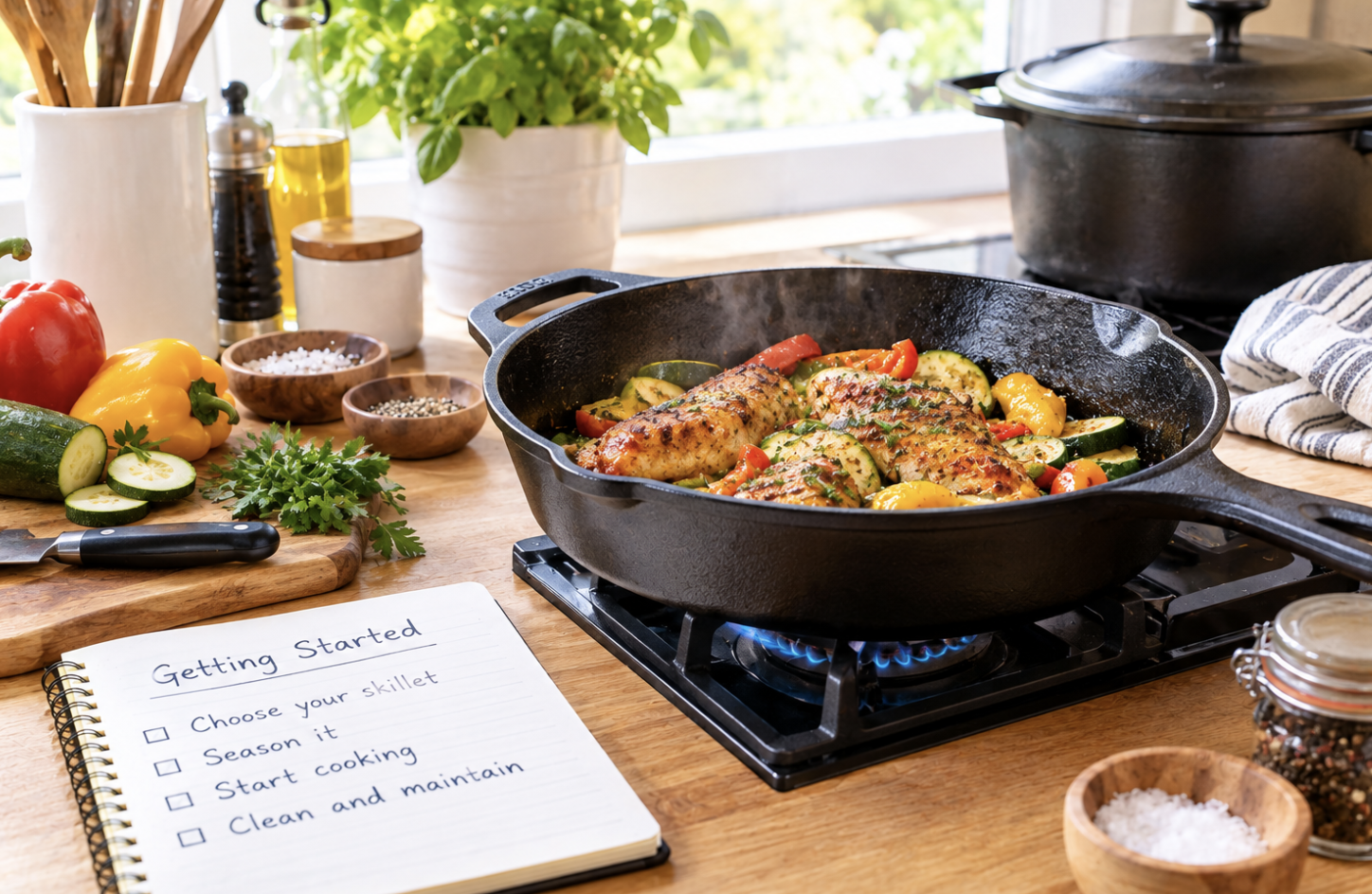
Cast iron cookware inspires a particular kind of enthusiasm among people who’ve learned to use it well, and a corresponding intimidation among people who’ve heard stories about seasoning, rust, and complicated maintenance requirements that make it sound more finicky than it actually needs to be. A few core principles demystifies most of what makes cast iron seem intimidating and reveals versatile, durable cookware that, once you understand the basics, requires considerably less complicated care than reputation might suggest.
What Seasoning Actually Is
Seasoning, in the context of cast iron, refers to a layer of polymerized oil that’s been baked onto the metal’s surface, creating a naturally non-stick coating that also protects the iron from rust. This isn’t the same as simply adding flavor to food, despite the shared terminology, but rather a specific chemical process where oil, when heated to a sufficiently high temperature, undergoes a transformation that bonds it to the metal’s surface in a durable, protective layer.
New cast iron cookware, particularly from many contemporary manufacturers, often comes pre-seasoned to some degree, though this initial seasoning layer typically benefits from being built up further through regular use and occasional additional seasoning, particularly in the early period of ownership before a truly robust seasoning layer has developed through consistent cooking.
Building and Maintaining Your Seasoning Layer
Seasoning naturally builds up through regular cooking, particularly when cooking with some oil or fat, which reinforces the existing seasoning layer with each use. This means the more you actually use your cast iron cookware, the better its seasoning generally becomes over time, which is part of why well-maintained cast iron pieces that have been used regularly for years or even decades often develop an exceptionally smooth, effective non-stick surface that new cookware simply hasn’t had time to develop yet.
If you notice your pan’s seasoning looking patchy, dull, or if food has started sticking more than it used to, this generally indicates the seasoning layer needs reinforcement, achievable through a simple re-seasoning process, applying a thin layer of oil and baking the pan at a high temperature, rather than requiring any drastic intervention or replacement of the cookware itself.
Proper Cleaning Without Damaging Your Seasoning
The most persistent myth about cast iron maintenance is that it can never be cleaned with soap, which isn’t quite accurate given modern dish soap formulations, though it’s still generally best practice to avoid harsh scrubbing or prolonged soaking that could strip away your carefully developed seasoning layer. After cooking, cleaning your pan while it’s still warm, using hot water and a stiff brush or non-abrasive scrubber, generally removes food residue effectively without needing extensive soap or aggressive scrubbing.
For stuck-on food, adding a bit of coarse salt as a gentle abrasive, combined with a bit of water or oil, and scrubbing with a cloth or brush, effectively removes residue without damaging the seasoning the way steel wool or harsh abrasive cleaners might. After cleaning, thoroughly drying your pan immediately, rather than letting it air dry, prevents rust from developing on the exposed iron surface.
The Importance of Drying Thoroughly and Applying Oil
After cleaning, cast iron should be dried completely, ideally by placing it briefly on a stovetop burner on low heat to ensure any remaining moisture fully evaporates, since cast iron left even slightly damp is prone to developing rust, particularly in the early stages of building up a robust seasoning layer. Once thoroughly dry, applying a very thin layer of oil to the cooking surface before storing helps maintain and protect the seasoning between uses.
This routine, clean while warm, dry thoroughly, apply a thin protective oil layer, becomes quick and automatic once established as a habit, taking only a couple of minutes beyond what you’d spend cleaning any other pan.
What Cast Iron Is Good For
Cast iron excels at high-heat cooking and retains heat exceptionally well once it’s actually heated through, making it particularly well-suited for searing meat, since it can maintain a consistently high temperature even when a cold piece of meat is added to the pan, producing a better sear than pans that lose heat more readily upon contact with cold food. It also transitions seamlessly from stovetop to oven, making it excellent for dishes that start with stovetop searing and finish with oven baking, cornbread, frittatas, and similar dishes that benefit from this dual-heat approach.
Cast iron also performs well for prolonged, lower-temperature cooking, braising and slow-cooked dishes benefit from the material’s excellent heat retention and even heat distribution throughout an extended cooking process.
What to Be More Cautious About
Highly acidic foods, tomato-based sauces, or dishes involving significant wine or vinegar, cooked for extended periods in cast iron can potentially react with the metal, affecting both flavor and, gradually, your seasoning layer, particularly in a pan with a less robust, more recently established seasoning. This doesn’t mean acidic ingredients need to be avoided entirely, but extended cooking of highly acidic dishes is generally more appropriate for cookware with a well-established, robust seasoning layer built up over considerable regular use, rather than a newer pan still developing its protective coating.
Delicate foods prone to sticking, eggs in particular, can be more challenging in cast iron compared to a dedicated non-stick pan, especially with a less developed seasoning layer, though a well-seasoned cast iron pan can cook eggs successfully with practice and appropriate technique, adequate preheating and appropriate fat, even if it requires somewhat more attention than a dedicated non-stick pan specifically designed for this purpose.
Choosing Your First Piece
For beginners, a ten or twelve-inch skillet represents the most versatile starting point, suitable for a wide range of everyday cooking tasks, from searing proteins to baking cornbread to sautéing vegetables. Starting with a single versatile piece, rather than an entire matched set, lets you build comfort and confidence with cast iron cooking before deciding whether additional specialized pieces, a Dutch oven, a smaller skillet, a grill pan, would add value to your specific cooking habits.
Troubleshooting Common Beginner Issues
If food sticks more than expected, this often indicates either insufficient preheating before adding food, not enough oil or fat during cooking, or a seasoning layer that needs further building up through continued regular use and possibly a dedicated re-seasoning session. If you notice rust developing, this isn’t cause for alarm or reason to discard the pan, scrubbing away the rust with steel wool, then thoroughly re-seasoning the affected area, generally restores the pan to full usability.
If your pan’s seasoning looks patchy or uneven after cooking certain foods, this is a normal part of the ongoing seasoning process rather than a sign of damage, and continuing regular use, along with occasional light re-seasoning as needed, gradually builds a more even, robust seasoning layer over time.
Conclusion
Cast iron’s reputation for complexity often exceeds its actual day-to-day maintenance requirements once you understand the basic principles: clean gently while warm, dry thoroughly, apply a thin protective oil layer, and simply use the pan regularly, since consistent use is what builds and maintains good seasoning more than any specific special maintenance ritual performed occasionally. With this basic routine established, cast iron becomes remarkably low-maintenance, durable cookware that, properly cared for, can last for generations rather than needing periodic replacement the way many other cookware materials eventually do.
Read more about News PinUp
Frequently Asked Questions
Can I really never use soap on cast iron?
This is more myth than strict rule with modern dish soap formulations, which are considerably milder than the harsh, highly alkaline soaps of decades past that could strip seasoning more aggressively. A small amount of mild dish soap, used without prolonged soaking or aggressive scrubbing, is generally fine for occasional use, though many cast iron enthusiasts still prefer to minimize soap use simply out of habit and caution rather than strict technical necessity.
How do I restore a badly rusted or neglected cast iron pan?
Scrubbing away all visible rust with steel wool or a similar abrasive, until you reach clean metal, then thoroughly washing, drying, and applying a complete re-seasoning process, several thin layers of oil baked on at a high oven temperature, generally restores even significantly neglected cast iron to full usability. This restoration process takes some time and effort but is achievable for most cast iron pieces, even ones that look quite far gone.
Is cast iron actually better than non-stick cookware, or is this mostly personal preference?
Both have strengths suited to different cooking needs. Cast iron excels at high-heat searing, heat retention, and oven-to-stovetop versatility, along with durability and longevity. Traditional non-stick cookware offers more consistent non-stick performance for delicate foods like eggs without requiring the seasoning maintenance cast iron involves, though it typically has a shorter lifespan and can’t handle the same high-heat cooking that cast iron manages well. Many experienced home cooks find value in having both types available for different specific cooking tasks.
Can I put cast iron in the dishwasher?
Generally, no, this is one of the more firmly recommended cast iron care guidelines, since dishwashers combine prolonged water exposure, harsh detergents, and extended moisture exposure during the drying cycle, all of which can significantly damage seasoning and promote rust. Hand washing, following the warm-water, gentle-scrubbing approach covered above, remains the recommended cleaning method for cast iron cookware.
How long does it actually take to build up good seasoning on a new cast iron pan?
This varies based on how frequently you use the pan and what you’re cooking, but many cast iron users notice meaningfully improved non-stick performance after several weeks of regular use, with excellent seasoning typically developing over several months to a year of consistent cooking. Cooking foods with some fat regularly, rather than exclusively very lean, low-fat dishes, tends to accelerate this seasoning-building process during the early period of ownership.
