


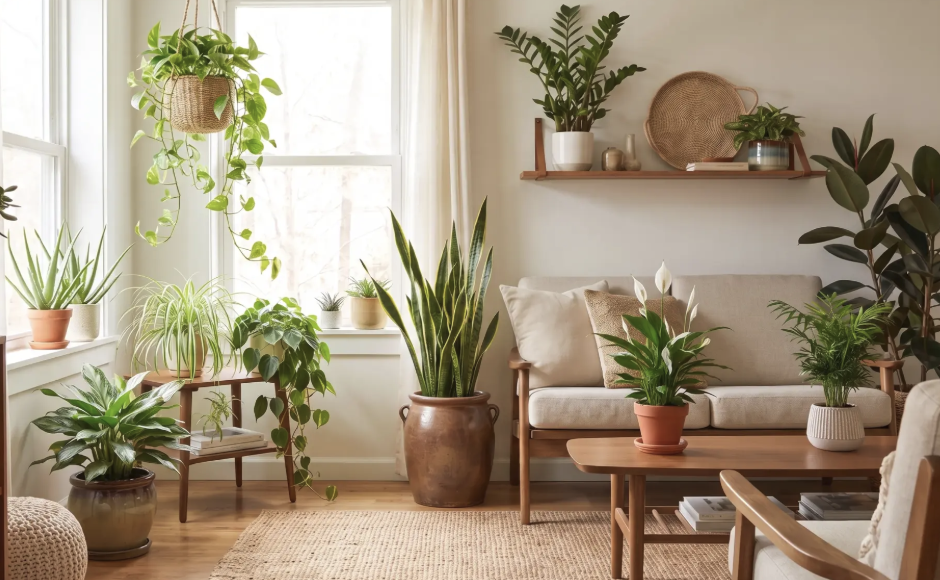
Houseplants make a home feel calmer, fresher and more lived in, yet many first-time owners give up after a few wilted weeks. The good news is that a small group of tough plants and a few repeatable habits cover most of what a beginner needs.
In this article we will explore which varieties forgive mistakes, how to read the light in your rooms, how to water with confidence, and how to build a short weekly routine you can keep.
Light Is the First Thing to Sort Out
Every houseplant problem is easier to solve once you know how much light your home really offers. Light is the plant’s food supply, and no amount of fertiliser or careful watering can make up for a spot that is too dark. Before you shop, walk through your rooms in the morning and again in the afternoon, and note where the sun reaches the floor, where it stays on a windowsill all day, and where it never arrives at all. Windows that face the equator side of your country, which means south in the northern hemisphere and north in the southern hemisphere, usually give the strongest light, while windows on the opposite side give the softest.
Growers describe light in three broad groups. Bright direct light means the sun’s rays fall on the leaves for several hours, which suits cacti, succulents and some herbs. Bright indirect light means a well-lit room where the sun does not strike the leaves for long, such as a spot a metre or so back from a sunny window or right beside a window with a thin curtain. Low light means a room that is comfortable to read in during the day but has no direct sun, and it is the category most people overestimate. A corridor with no window, or a corner that needs a lamp at midday, is usually too dim even for plants sold as low-light tolerant.
A simple hand test helps when you are unsure. Hold your hand about thirty centimetres above the surface where the plant would sit, at midday, and look at the shadow. A sharp, dark outline suggests strong light, a soft but visible outline suggests medium light, and a faint or barely visible shadow suggests low light. This is a rough guide rather than a measurement, but it is good enough to sort a windowsill from a bookshelf.
Plants also tell you when the light is wrong. Stretched, pale stems with large gaps between the leaves and a lean toward the window suggest the plant is reaching for more light. Scorched brown patches, crispy edges or bleached leaves suggest the sun is too fierce, especially behind glass in summer. If a plant looks unhappy, moving it half a metre can make a bigger difference than any change to your care routine.
Seasons matter as well. In many countries the sun sits lower and the days are shorter in winter, so a plant that was comfortable in July may need to move closer to the window by December. Dust on the glass and on the leaves also blocks light, so a quick wipe of both is a useful habit. If your home is dark, a simple plant lamp on a timer is a practical option, and you can judge any lamp by how well it covers the plant rather than by its marketing claims.
Easy Varieties That Forgive Beginner Mistakes
The easiest houseplants share a few traits: they store water in thick leaves, stems or roots, they cope with ordinary indoor air, and they recover well from the odd missed watering. Snake plant is the classic example. Its upright, sword-shaped leaves tolerate low to bright light and can go for weeks without water, and its main weakness is too much moisture rather than too little. ZZ plant is similar, with glossy leaves and thick underground storage organs that let it survive long dry spells.
Pothos is a trailing vine that grows in most rooms and shows clearly when it is thirsty, because the leaves droop and then perk up soon after a drink. That visible signal makes it a good teacher for beginners learning how a plant behaves. Spider plant produces arching striped leaves and small plantlets on long stems, which you can pot up to make new plants. Cast iron plant earns its name by putting up with shade, irregular care and cooler rooms, though it grows slowly.
Other dependable choices include peace lily, which wilts dramatically when dry and recovers quickly, and rubber plant, which grows into a bold floor plant when given bright indirect light. Chinese evergreen comes in many leaf patterns and copes with medium to low light. Succulents such as jade plant and aloe suit bright windows, but they need a gritty mix and sparing water, so they are less forgiving in dim rooms than the green foliage plants above. Choose according to the light you measured, not according to appearance alone.
If you share your home with cats, dogs or small children, check the safety of each plant before you buy it. Several popular houseplants, including pothos, peace lily and some aloes, can irritate the mouth or stomach if chewed. Reliable guidance comes from veterinary organisations and poison information services in your own country, and your vet can advise you if a pet has chewed a plant and seems unwell. Placing plants out of reach, or choosing varieties listed as pet safe, is a sensible precaution.
The table below pairs each beginner favourite with its light and watering needs. Treat the intervals as starting points, because pot size, room temperature and season all change how fast soil dries. Use the table as a quick reference when you bring a new plant home.
| Plant | Best light | Watering habit | Main beginner risk |
| Snake plant | Low to bright indirect | Let the soil dry out fully between drinks | Overwatering and root rot |
| ZZ plant | Low to bright indirect | Water sparingly, less in winter | Overwatering |
| Pothos | Low to bright indirect | Water when the top few centimetres are dry | Yellow leaves from soggy soil |
| Spider plant | Medium to bright indirect | Keep lightly moist, never waterlogged | Brown tips from dry air or minerals |
| Cast iron plant | Low to medium | Water when the top layer is dry | Slow growth mistaken for a problem |
| Peace lily | Medium indirect | Water when leaves begin to droop slightly | Direct sun scorching leaves |
| Aloe or jade plant | Bright, some direct sun | Soak, then let the mix dry completely | Too little light causing stretching |
Watering Routines That Prevent the Most Common Failures
More houseplants are lost to too much water than to too little, and the reason is simple: roots need air as well as moisture. When soil stays saturated, the air spaces fill with water, the roots cannot breathe, and they begin to rot. The leaves then turn yellow or droop, which looks like thirst, and a worried owner pours in more water. Learning to separate these two situations is the most valuable skill a beginner can build.
The finger test is the most reliable habit. Push a finger into the soil to the second knuckle, which is about five centimetres, and notice whether it feels cool and damp or dry and loose. For most leafy plants, water when the top few centimetres are dry. For succulents, snake plants and ZZ plants, wait until most of the pot has dried. Lifting the pot also helps, because a dry pot feels noticeably lighter than a freshly watered one.
When you do water, do it thoroughly. Pour slowly around the soil surface until water runs out of the drainage holes, then let the pot drain for several minutes and empty any water that collects in the saucer. Frequent small sips wet only the top layer and encourage shallow roots, while a full soak followed by a proper dry-down mimics the natural cycle most plants prefer. Water that is left standing in a saucer keeps the bottom of the pot soggy, so make emptying it part of the routine.
Water quality is rarely a problem for beginners, but a few tips help. Room-temperature water is gentler on roots than very cold water. If your tap water is hard, which means rich in dissolved minerals, you may notice white crust on the soil or brown leaf tips on sensitive plants such as spider plant and peace lily. Letting a jug of tap water stand overnight does not remove minerals, though it does let some chlorine escape, so use collected rainwater if you can and the usual tap water if you cannot.
Adjust for the season and the room. Plants drink less in winter when growth slows and light is weaker, and soil takes much longer to dry in a cool room than in a warm, sunny one. Large pots hold moisture far longer than small ones. A plant near a heater or radiator may dry out quickly, so check it more often. Instead of memorising a schedule, keep a habit of checking on the same day each week and watering only when the plant needs it.
Pots, Drainage and Potting Mix
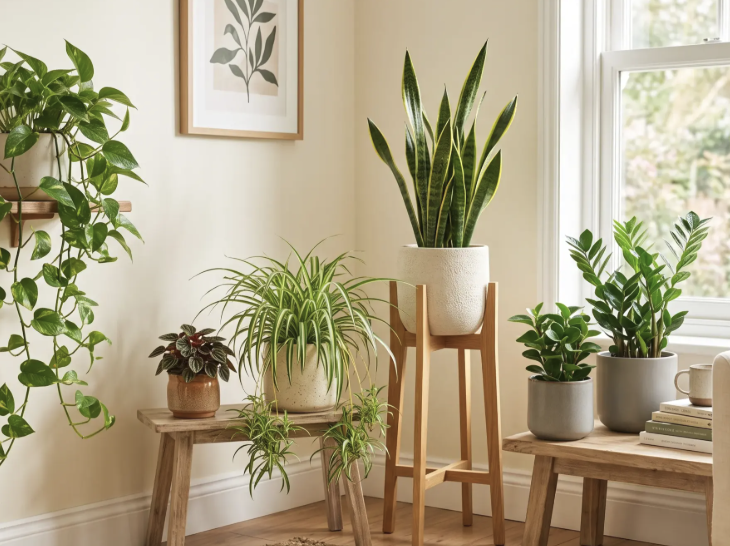
A pot with drainage holes is one of the best investments a beginner can make. Without holes, extra water collects at the bottom and has nowhere to go, which makes it very easy to overwater. If you love a decorative pot that has no holes, keep the plant in a plain plastic nursery pot with holes and slip it inside the decorative one. Lift it out to water at a sink, let it drain, and return it to its place.
Size matters too. Choose a pot that is about two to five centimetres wider than the current root ball, since a pot that is far too large holds a mass of wet soil that the roots cannot use. Most plants sold in shops are root-bound or close to it after a few months, which shows as roots circling the inside of the pot or poking out of the holes. At that point, repot into the next size up, ideally in the growing season, which is spring and summer in most climates. Handle the root ball gently, loosen the outer roots with your fingers, and set the plant at the same depth it grew before.
Potting mix is not the same as garden soil. Garden soil compacts in a container, drains badly and may carry pests or weed seeds. A good general-purpose indoor potting mix is light and airy, usually containing a mix of organic material such as peat or coir, plus ingredients that improve drainage such as perlite or bark. Names and recipes vary between brands and countries, so look at the description on the bag rather than relying on a label alone.
Different plants like different blends. Succulents and cacti prefer a gritty mix that drains very fast, and you can make one by blending ordinary potting mix with extra perlite or coarse sand. Moisture-loving plants such as peace lily do well in a standard mix with a little extra organic matter. A beginner does not need many recipes: a good all-purpose mix for most foliage plants and a specialist mix for succulents will cover nearly everything.
Material affects watering as well. Unglazed clay or terracotta pots are porous, so they dry quickly and suit people who tend to overwater. Plastic and glazed ceramic pots keep moisture in longer, which suits people who forget to water. Neither is better in every case, so choose the material that corrects your own habits.
Feeding, Cleaning and Seasonal Changes
Houseplants need far less fertiliser than most beginners expect. Fresh potting mix often contains some nutrients, and a plant sitting in low light uses very little. If you feed at all, do so during the growing season, usually spring through summer, using a balanced houseplant fertiliser diluted according to the label. Many growers prefer to use weaker doses than the packet suggests, because too much fertiliser can burn roots and leave white crust on the soil.
Skip feeding in autumn and winter, when most plants rest, and never feed a plant that is dry, stressed or newly repotted. Water first, then feed. If you are not sure whether your plant needs fertiliser, pale new growth or a long pause in growth during the active season are the usual hints. If the plant looks healthy, leave it alone.
Cleaning leaves is a quiet but useful habit. Dust builds up on foliage and cuts down the light the plant can absorb, and it can also hide pests. Wipe broad leaves gently with a soft damp cloth, supporting each leaf with your other hand so it does not snap. For plants with many small leaves, a quick lukewarm shower in the sink or bathtub works well, as long as you let the pot drain before putting it back.
Pruning is also simple. Pinch or cut off yellow, brown or damaged leaves using clean scissors, since they will not recover and they can invite mould. Trim leggy trailing plants such as pothos just above a leaf joint to encourage bushier growth. You can often root the cuttings in a glass of water or in moist mix, which is a pleasing way to multiply your collection for free.
Seasons change what your plants need. Spring is the time to repot, resume feeding and increase watering as growth picks up. In summer, protect plants from midday sun behind glass and check soil more often. In autumn, begin to reduce watering and stop feeding, and in winter keep plants away from cold draughts and from hot, dry air close to heaters. Gentle, steady changes are far better than dramatic ones, and a plant moved suddenly from a dim room into harsh sun will usually protest with dropped or scorched leaves.
Pests and Warning Signs to Watch For
Even healthy houseplants occasionally attract pests, and catching them early makes treatment much easier. Common visitors include fungus gnats, spider mites, mealybugs, scale insects and aphids. Fungus gnats are small dark flies that hover near the soil and breed in damp mix, so they are usually a sign of watering too often. Spider mites are tiny and hard to see, but fine webbing between leaves and stippled, dull foliage give them away.
Mealybugs look like small tufts of white cotton, often tucked into leaf joints and under leaves. Scale insects appear as small brown bumps along stems and leaf veins, and they may leave a sticky residue. Aphids cluster on soft new growth. A weekly look under leaves and around stem joints is the best defence, and it takes less than a minute per plant.
The first response to a pest is simple and mild. Move the affected plant away from others so that the problem does not spread. Wipe visible insects off with a damp cloth or a cotton bud dipped in a little diluted rubbing alcohol, and rinse the plant gently under lukewarm water. For fungus gnats, let the soil dry out more between waterings and consider a layer of gritty material on top of the mix. Products for houseplant pests vary by country and must be used as the label directs, so read it carefully, especially if you have pets or children.
Other warning signs are not pests at all. Yellow lower leaves on a plant that is otherwise healthy are often just normal ageing. Widespread yellowing with soggy soil points to overwatering, while crispy brown edges point to very dry air, underwatering or mineral build-up. Dropping leaves after a move often reflect a change of light or temperature, and many plants settle again within a few weeks.
Mouldy white growth on the soil surface is usually harmless and is encouraged by damp, still conditions. Scrape it off, let the soil dry a little, and improve airflow. If a stem turns soft and black at the base, or the soil smells sour, root rot is likely. Remove the plant from its pot, trim away mushy brown roots with clean scissors, and repot in fresh mix, and be ready to accept that some plants cannot be saved.
A Simple Weekly Care Routine
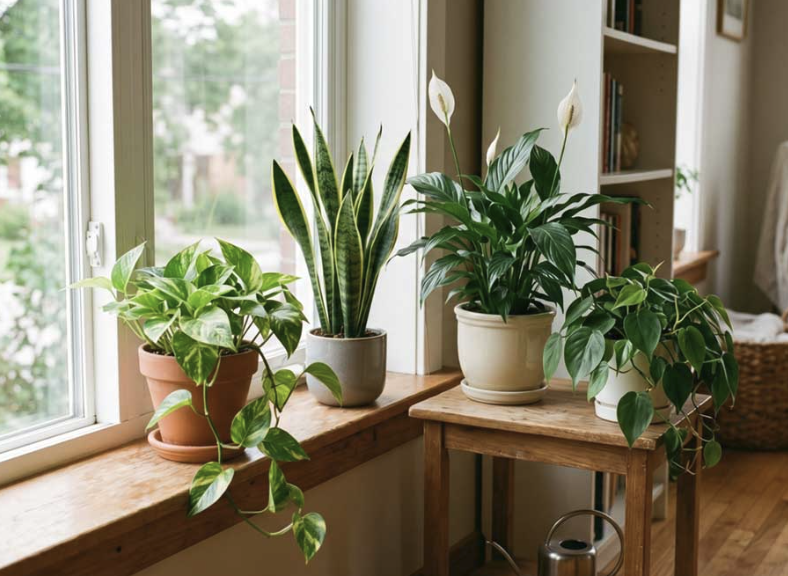
A routine does not need to be long to work. What matters is that it is regular and that it makes you look closely at each plant, because most problems are visible days before they become serious. Choose a day when you are usually at home, put on some music and spend ten to fifteen minutes. Many beginners find that tying it to a weekly habit such as a Sunday morning coffee makes it stick.
Start by looking. Check each plant for new growth, drooping, spots, webbing or insects. Then turn each pot a quarter turn, so that all sides get light and the plant grows evenly instead of leaning. Check the soil with your finger and water only the plants that need it, using the dryness guidance from earlier. Finish by emptying saucers, picking off dead leaves and wiping any dusty foliage.
Once a month, add a few extra jobs. Look at the drainage holes for roots, check whether any plant has become top-heavy or cramped, and give leggy plants a light trim. In the growing season, this is also a good moment to feed. Keep a small note on your phone or on a paper calendar so you can see patterns, such as which plant dries out fastest or which one drops leaves each autumn.
The table below sets out a routine you can follow or adapt. Rooms, climates and plants differ, so treat the timing as a framework rather than a rule. You can copy it onto a note or calendar if that helps.
| When | Task | What to look for |
| Weekly | Inspect leaves and stems | Spots, webbing, sticky residue, pale new growth |
| Weekly | Finger-test the soil | Dry to the depth the plant prefers before watering |
| Weekly | Turn each pot a quarter turn | Even, upright growth rather than leaning |
| Weekly | Empty saucers and remove dead leaves | Standing water, mould, fallen foliage |
| Monthly | Wipe or rinse leaves | Dust that blocks light and hides pests |
| Monthly in the growing season | Feed at a diluted rate | Steady growth, no white crust on soil |
| Once a year | Repot if roots are crowded | Roots through the holes, water running straight through |
Over time you will build a feel for your own plants, and the routine will become automatic. A plant that thrives in your home is evidence that you have matched it to the light and learned its rhythm. If a plant fails despite your care, treat it as useful information about the room instead of a personal failure, and try a different variety next time.
Conclusion
If you are standing in a shop or at your front door with a new plant and are not sure where to begin, follow a short sequence. First, decide where the plant will live and judge the light honestly, using the hand test and the notes you made in the morning and afternoon. Second, choose a variety from the easy list that matches that light, rather than picking the one you find prettiest and hoping it adapts. Third, check that the pot has drainage holes and that the mix is fresh and airy.
When you bring the plant home, let it settle. Water it only if the soil is dry, set it in its chosen spot and resist the urge to move it every few days. Some leaf loss in the first fortnight is normal, as plants adjust to new light and humidity. Start the weekly routine straight away, even if all you do at first is look and touch the soil.
Begin small. Two or three plants are easier to learn on than a dozen, and you can add more as your confidence grows. Pick plants that suit your lifestyle: if you travel often, choose the drought-tolerant group, and if you enjoy fussing over greenery, add a peace lily or a trailing vine that responds visibly to your attention. If a plant you own is a rare or valuable one, or if a pet has chewed a leaf and seems unwell, contact a specialist grower or a vet rather than guessing.
Above all, be patient. Most houseplants grow slowly, and the reward of a new leaf unfurling comes after weeks of steady, uneventful care. Keep the routine light, notice what each plant tells you, and let your collection grow at a pace that suits your home.
