


Making coffee at home puts you in charge of flavor, strength and cost, and it can turn a rushed morning habit into a small daily pleasure. It also adds up, because a daily cafe drink costs far more over a year than a cup brewed in your own kitchen.
In this article we will explore the main brewing methods, how to buy and store beans, the grind, water and ratio choices that shape taste, ways to save money, caffeine in sensible amounts, and how to look after your equipment.
The main brewing methods compared
Every method of making coffee does the same basic job, which is to pass hot water through ground coffee for long enough to dissolve the pleasant flavors without pulling out too many harsh ones. The differences are in how the water meets the grounds, how long it stays there, and whether a filter or mesh separates the liquid at the end. Paper filters catch oils and fine particles, producing a clean, light cup. Metal filters and mesh let oils through, producing a heavier, richer cup.
Immersion methods, such as the French press, steep the coffee in water for several minutes and then separate it. They are forgiving, easy to learn, and give a full-bodied drink. Pour-over and drip methods let water pass through a bed of grounds, which gives clearer flavors and more control. Espresso forces hot water through finely ground coffee under pressure, making a small, concentrated drink that forms the base of lattes and cappuccinos.
Other popular choices include the AeroPress, which combines steeping with gentle pressure, and the moka pot, a stovetop device that uses steam pressure to make a strong, espresso-like brew. Cold brew steeps coffee in cold water for many hours, producing a smooth, lower-acid concentrate that you dilute and serve over ice. Capsule and pod machines are fast and tidy, though the coffee is usually more expensive per cup, and the packaging creates waste in many places.
Milk drinks need a few extra tools. A latte or cappuccino starts with a strong base, which can come from an espresso machine, a moka pot or a concentrated AeroPress brew. Heat the milk gently until steaming but not boiling, and whisk or froth it for a light texture. Any of these routes can give a pleasing result at home, though the learning curve differs.
Think about your own habits before choosing. If you make one cup in a hurry, a pod machine or an AeroPress is hard to beat. If you serve two or three people at breakfast, a French press or an automatic drip machine is convenient. If you enjoy milky drinks and a bit of ritual, an espresso machine or a moka pot may be worth the learning curve.
The table below compares the common methods on the points that matter most to a home user. Equipment costs and exact results vary between products and countries, so the descriptions are kept general. Use the table as a starting point and then try one or two methods before you buy anything expensive.
| Method | Skill needed | Typical brew time | Taste in the cup | Best for |
| Automatic drip machine | Low | 5 to 10 minutes | Clean, mild | Several cups at once |
| French press | Low | About 4 minutes steeping | Full, rich, some sediment | Relaxed mornings |
| Pour-over | Medium | 3 to 4 minutes | Bright, clear | Single cups and tasting |
| AeroPress | Low to medium | 1 to 3 minutes | Smooth, adaptable | Travel and experiments |
| Moka pot | Medium | 5 to 10 minutes on the hob | Strong, intense | Espresso-style drinks without a machine |
| Espresso machine | High | 25 to 35 seconds of extraction | Concentrated, syrupy | Lattes and cappuccinos |
| Method | Skill needed | Typical brew time | Taste in the cup | Best for |
| Cold brew | Low | 12 to 18 hours | Smooth, sweet, low acid | Iced coffee and warm weather |
Pour-over, French press and AeroPress step by step
Start every method with the same preparation. Heat fresh water to just below boiling, which most coffee organizations describe as roughly 90 to 96 degrees Celsius, or 195 to 205 degrees Fahrenheit. If you have no thermometer, bring the kettle to the boil and wait about thirty seconds. Weigh your coffee on a kitchen scale, grind it fresh, and warm your cup or mug so that the drink stays hot.
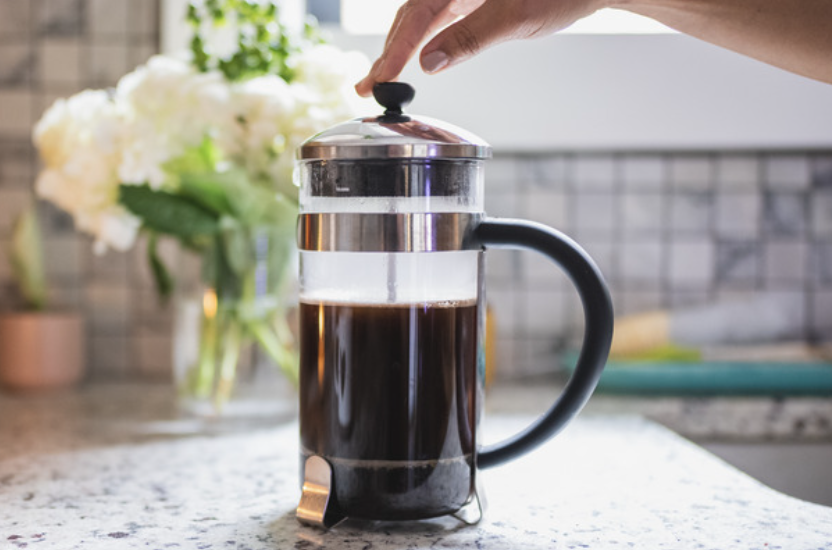
For a French press, add medium-coarse grounds to the beaker, using a ratio of about one part coffee to fifteen parts water by weight. Pour in the hot water, stir gently, and put the lid on with the plunger raised. Wait about four minutes, then press the plunger down slowly and pour out straight away. Leaving the coffee sitting on the grounds makes it bitter, so serve it all or pour any extra into a flask.
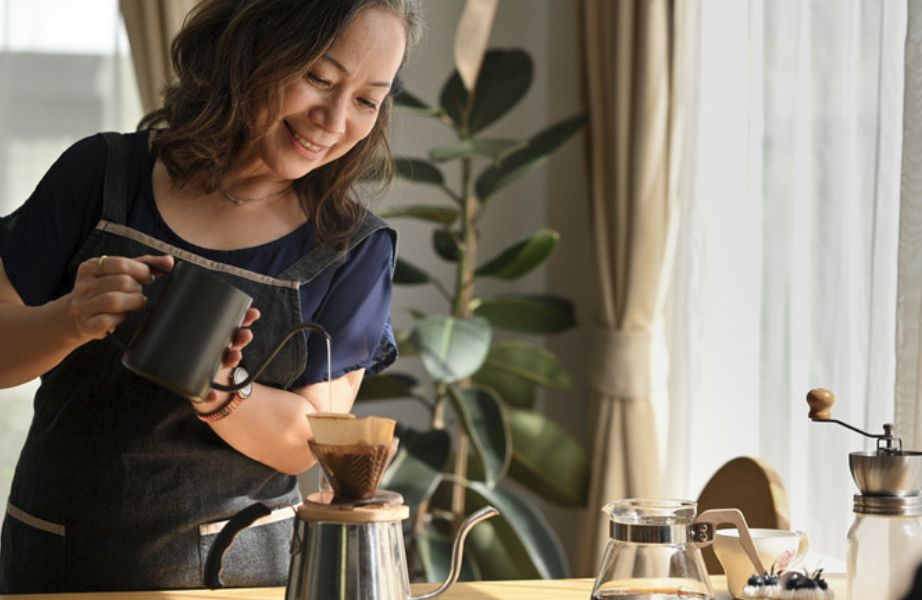
For a pour-over, place a paper filter in the cone and rinse it with hot water, which removes the papery taste and warms the vessel. Add medium grounds, then pour just enough water to wet them and wait thirty to forty seconds. This pause is called the bloom, and it lets trapped gas escape so that the water can extract evenly. Pour the remaining water in slow circles over the next two to three minutes, and finish when the bed has drained.
For an AeroPress, fit a paper filter, rinse it, and set the chamber on top of a sturdy mug. Add medium-fine grounds and hot water, stir for a few seconds, and let the coffee steep for one to two minutes. Then press the plunger slowly with steady pressure until you hear a hiss. You can dilute the result with hot water for an Americano-style drink or with warm milk for something creamier.
Cold brew needs almost no skill, only patience. Mix coarsely ground coffee with cold water at a ratio of about one part coffee to eight parts water by weight, stir, cover it, and leave it in the refrigerator for twelve to eighteen hours. Strain it through a paper filter or a fine sieve, then dilute the concentrate with water or milk to taste. Keep it covered in the refrigerator and drink it within about a week, or sooner if it starts to smell off.
If your first cup tastes wrong, change one thing at a time. A sour, thin, or salty cup is usually under-extracted, which means the water has not drawn out enough, so use a finer grind, a longer brew, or hotter water. A bitter, dry, or harsh cup is usually over-extracted, so use a coarser grind or a shorter brew. Write down what you change, because a few notes make improvement much faster than guessing.
Buying beans by roast, origin and freshness
Coffee comes from the seeds of a fruit grown on a plant, and two species dominate the market. Arabica is generally sweeter and more aromatic, and it is used for most specialty coffee. Robusta has a stronger, more bitter taste, a heavier body, and a higher caffeine content, and it often appears in espresso blends and instant coffee. Neither is automatically better, but the label tells you what to expect.
Roast level changes flavor as much as origin does. Light roasts keep more of the bean’s original fruit and floral notes and tend to taste brighter and more acidic. Medium roasts balance sweetness and body, with notes of chocolate, nuts and caramel. Dark roasts taste smoky, bold and bitter, and the oils on the surface of the beans can make some grinders clog and some machines dirty.
Single-origin coffee comes from one farm, region or country, and it shows the distinct character of a place. A blend mixes beans from several sources to create a steady, balanced flavor from one bag to the next. Many everyday drinkers prefer blends because they taste the same each time and cost less. Single origins are worth trying when you want to explore, especially with a pour-over, where delicate flavors are easy to taste.
Freshness is the biggest quality signal you can check. Look for a roast date on the bag, not just a best-before date, and aim to use the beans within a few weeks of roasting for the best flavor. Coffee releases gas and loses aroma after roasting, and the flavor fades over time. Buy whole beans rather than pre-ground coffee, since ground coffee loses aroma much faster.
Labels about ethics and quality can help, but they vary. Terms such as fair trade, organic or shade-grown are certified by different schemes in different countries, and the rules behind them are not the same everywhere. Words such as premium or gourmet have no fixed meaning. A small local roaster, a supermarket or an online subscription can all supply good beans, so check roast dates and read the notes, then buy small amounts until you find what you like.
Grinding, water and ratios that shape flavor
Grind size controls how quickly water pulls flavor from the coffee. A coarse grind, like coarse sea salt, suits a French press and cold brew. A medium grind, like sand, suits drip machines and many pour-over cones. A fine grind, like table salt, suits espresso and moka pots, with a slightly coarser setting for the moka pot.
A burr grinder is a better investment than most gadgets. Burr grinders crush beans between two surfaces and make particles of similar size, whereas blade grinders chop beans unevenly into dust and boulders. Uneven particles extract unevenly, so the cup tastes both sour and bitter at once. Hand grinders are a good low-cost way to get burrs, and they are quiet and easy to travel with.
Ratio is the next thing to fix. A commonly used starting point is one part coffee to between fifteen and eighteen parts water by weight, so about 60 to 66 grams of coffee for a litre of water at the stronger end, and around 55 grams per litre at the milder end. Specialty coffee organizations have published figures in this region. A scale takes the guesswork out of measuring, since scoops vary and beans differ in density.
Water makes up almost all of the cup, so its quality matters. If your tap water tastes of chlorine or has a strong smell, a simple jug filter can improve the coffee. Very hard water leaves scale in machines, while very soft water can make coffee taste flat, so the best water is clean and moderate in minerals. Avoid distilled water, because some minerals help carry flavor, and rules and tap water quality vary between regions.
Temperature and time work together with grind. Hotter water and longer contact extract more, and cooler water and shorter contact extract less. If a recipe is not working, resist the urge to change everything. Alter the grind first, since it has the largest effect, and then adjust time or ratio in small steps until the taste is balanced and pleasant to you.
Storing beans so they stay fresh
Four things spoil roasted coffee: air, light, heat and moisture. Oxygen slowly dulls the oils and aromas, and light and warmth speed up the process. Moisture can ruin the beans and can encourage mold in a damp environment. The goal is to keep the beans cool, dry and sealed.
An airtight container kept in a dark cupboard is the simplest answer. Choose a container with a tight seal, made of opaque ceramic, metal or dark glass, and keep it away from the stove, the kettle and sunny windowsills. Many bags come with a one-way valve and a reseal strip that work well for a couple of weeks. Do not store coffee in the refrigerator, where it can take on food odors and gather condensation each time the container is opened.
Freezing is a debated topic. Some coffee professionals suggest freezing beans if you have bought a large amount, as long as you split them into small airtight portions and thaw each one fully before opening, to avoid condensation. Repeatedly taking the same bag in and out of the freezer is a poor idea, because each change in temperature adds moisture. If you buy small amounts often, you will not need to freeze at all.
Buy only what you can use in a few weeks. A household that drinks two cups a day uses about 250 grams of beans in roughly two to three weeks, depending on the ratio. If you find a bag has gone stale, you can still use it for cold brew, where the long steep and the cool water hide some of the dullness. Old pre-ground coffee can also be used to flavor baking or to freshen a bin or refrigerator.
Ground coffee is more sensitive than whole beans, because the grinding exposes far more surface area to the air. If you have to buy pre-ground, choose a sealed pack, store it as you would beans, and use it within a couple of weeks of opening. Some shops will grind beans for you on the spot, which is better than buying pre-ground from a shelf. Even so, grinding at home just before brewing remains the best way to protect the flavor.
Saving money without giving up quality
To see how much you can save, work out the cost of one cup. Divide the price of a bag by the number of cups it makes, using about 15 to 18 grams of coffee for a standard cup. Add a small amount for milk, sugar and filters, and compare the result with the price you usually pay at a cafe. Even with a good bag of specialty beans, most people find home brewing much cheaper per cup, but the exact numbers depend on where you live.
Spend on beans and grinder first, and be cautious with machines. A modest brewer paired with fresh beans and a burr grinder will beat an expensive machine used with stale pre-ground coffee. Capsule systems and large espresso machines can cost a great deal over time, once you add the pods, descaler and repairs. Ask yourself how often you will use a feature before paying for it.
Buying in sensible bulk can lower the cost per cup. Larger bags usually cost less per gram, but only if you use them while fresh, so share a bag with a friend or freeze portions if you cannot finish it in time. Look at subscriptions with a fair price and the option to pause or skip, and avoid anything that forces you to stock up. Supermarket own-brand beans can be a good value, and checking the roast date matters more than the brand.
Cut waste in small ways. Measure with a scale so that you do not use more coffee than you need, and make only the amount you will drink. Pour any leftover coffee into a flask or turn it into ice cubes for iced drinks. Used grounds can go on the compost heap or into the garden, where many gardeners use them as a soil addition, though they should be used in moderation.
Take a realistic view of the costs of equipment and the savings. A new gadget only pays back if it replaces enough cafe visits, so work out how many cups it will take. Buying second-hand grinders and machines can lower the cost, if you check that they have been cleaned and work properly. You do not have to give up cafes altogether, and many people treat them as an occasional pleasure, with home coffee on weekdays.
Caffeine, health and sensible limits

Coffee is a regular part of life for many adults, and for most healthy people moderate amounts are considered acceptable by health authorities. A commonly cited limit for healthy adults is up to about 400 milligrams of caffeine a day, which equals roughly three to four standard cups of brewed coffee. The caffeine in a cup varies widely with the bean, the roast, the brew method and the serving size, so treat this as a rough guide and not a precise count. Sensitivity to caffeine also differs from person to person.
Some groups are advised to take more care. Health authorities commonly advise pregnant people to limit caffeine to a lower daily amount, often around 200 milligrams, but the figures differ between countries, so ask your doctor or midwife for advice that fits you. People with heart rhythm problems, high blood pressure, anxiety, reflux or sleep problems may also need to cut down. Children and teenagers should not be given strong coffee or energy drinks, and some medicines interact with caffeine, so ask a pharmacist or doctor if you are unsure.
Watch the effects on your own body. Too much caffeine can cause jitters, a racing heart, an upset stomach, restlessness and trouble sleeping. Many people sleep better if they stop drinking coffee in the afternoon, because caffeine stays in the body for hours. If you want to cut back, reduce slowly over a week or two to avoid headaches, and consider switching some cups to half-caffeinated or decaf coffee.
Think about what goes into the cup as well. Sugar, syrups, whipped cream and large amounts of milk can turn a cup of coffee into a high-calorie dessert. If you are watching your weight, blood sugar or cholesterol, check the additions as well as the coffee. Unfiltered coffee, such as French press or boiled coffee, contains more of certain oily compounds than paper-filtered coffee, and people who are advised to watch their cholesterol may want to ask a doctor which method suits them.
None of this makes coffee a medicine or a danger for most people. It is a drink with benefits and limits, like many foods. Pay attention to how you feel, keep to sensible amounts, and drink water through the day. If you have any health condition or a symptom that worries you, speak to a doctor.
Equipment care and troubleshooting
Clean equipment is the cheapest way to improve flavor. Coffee oils build up on grinders, filters, carafes and machine parts, and they turn rancid, leaving a stale or bitter taste. Rinse and wash reusable parts after each use, and dry them well. Once a week, give brewers a more thorough wash according to the manufacturer’s instructions.
Scale is the other enemy, especially in hard water areas. Machines that heat water, such as drip brewers, espresso machines and pod machines, collect mineral deposits that slow the flow and cool the brew. Descale on a regular schedule using the product or method that the manufacturer recommends, and rinse the machine well afterward. Do not mix cleaning products unless the instructions say that it is safe to do so.
Clean the grinder as well. Brush out the chamber regularly, and follow the maker’s advice about whether to use cleaning tablets or uncooked rice, since advice differs between models. Old grounds left in the burrs go stale and flavor the next batch. Keep the machine dry, as moisture and coffee dust can cause clogs.
Learn a few simple fixes. If the coffee tastes burnt, check the temperature, the roast and the cleanliness of the pot. If it tastes weak, use more coffee, grind finer, or brew longer. If a French press is gritty, grind slightly coarser and let the sediment settle for a moment before pouring. If an espresso shot runs too fast or too slow, change the grind in small steps, and keep notes.
Handle hot equipment with care. Kettles, gooseneck pots, steam wands and moka pots can all cause burns, so use dry cloths or oven gloves and keep children away. Never open a moka pot while it is hot and under pressure, and never leave a stovetop device unattended. Replace any appliance with a frayed cord, a cracked jug, or a loose plug.
Final Thoughts
Start with how you live and what you want from your cup. If you want an easy cup with minimal effort, choose an automatic drip machine or a French press, and spend the savings on better beans. If you enjoy a little craft and quiet in the morning, a pour-over set or an AeroPress is affordable and rewarding. If your heart is set on milky drinks, consider a moka pot first, and move to an espresso machine only when you are sure you will use it.
Next, set your budget by priorities. Put money into a burr grinder and a kitchen scale before an expensive brewer, then buy fresh beans in small amounts with a clear roast date. Use filtered or good-tasting tap water and keep everything clean. Track what you spend for a month, compare it with your cafe habit, and decide whether you are happy with the balance.
Finally, treat your first month as an experiment. Brew the same coffee with one method, change one variable at a time, and write down what you taste. Keep caffeine within sensible limits, and speak to a doctor if you are pregnant, take regular medicine or have a health condition. In time you will find a method, a bean and a routine that give you a good cup at a fair cost.
Read more about News PinUp
