


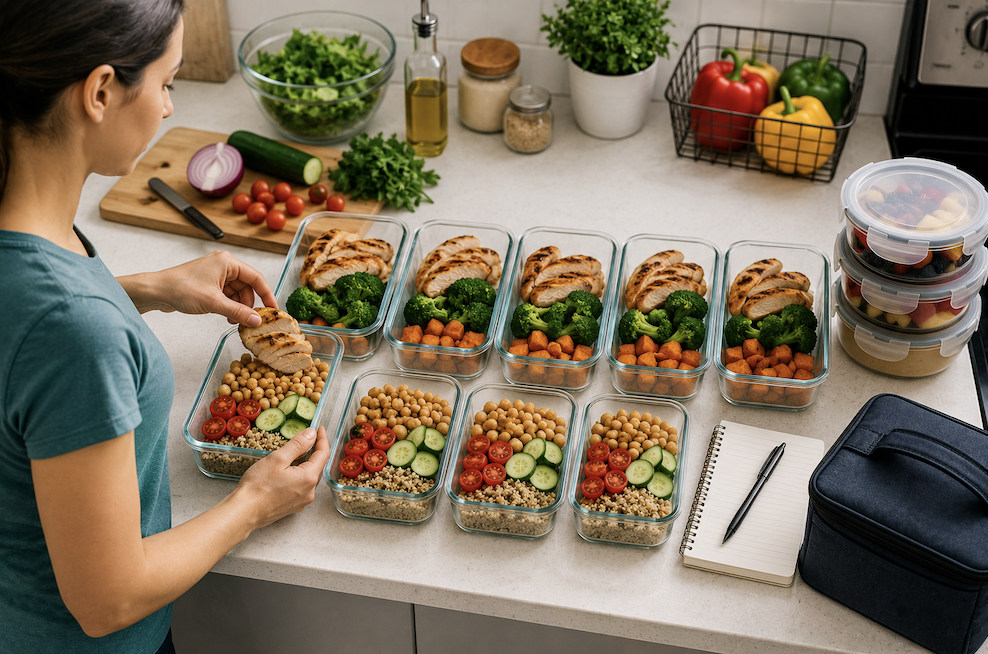
The gap between wanting to eat well and actually doing it usually comes down to one thing: time. It’s not that people don’t know a home-cooked meal is healthier and cheaper than takeout, it’s that after a full day of work, cooking from scratch feels like one task too many. Meal prep exists to close that gap, and once you build a system that fits your actual schedule, it stops feeling like a chore and starts feeling like the thing that makes the rest of your week easier.
What Meal Prep Actually Means
Meal prep doesn’t have to mean cooking every single meal for the entire week in one marathon Sunday session, though that’s one valid approach. At its core, meal prep just means doing some of the cooking work in advance so that weekday meals require less time, less decision-making, and less cleanup. That can look like fully cooked meals ready to reheat, or it can look like prepped ingredients, chopped vegetables, cooked grains, and marinated proteins that come together quickly on a weeknight.
The right approach depends on your schedule, your kitchen space, and honestly how much you enjoy cooking in the first place. There’s no single correct method, only the one that you’ll actually stick with.
Start With a Real Look at Your Week
Before you plan a single meal, look at your actual week ahead rather than an idealized version of it. If you know Wednesday is going to be a long day with no time to cook, that’s the day that needs a fully prepped meal ready to go. If you have a bit more time on Thursday, that’s the day you can afford something that requires a little more active cooking.
Meal prep fails most often when people plan as if every day will go smoothly. Building in flexibility for your actual schedule, including the days you know will be chaotic, makes the whole system far more sustainable.
Choose a Manageable Number of Recipes
One of the most common meal prep mistakes is trying to cook five completely different meals for five different days. This multiplies your shopping list, your cooking time, and the number of dishes you need to wash, all for marginal variety. A more sustainable approach is choosing two or three base recipes and making larger batches of each, then varying them slightly with different sides, sauces, or spices so they don’t feel repetitive by day four.
For example, a batch of roasted chicken thighs can become a grain bowl on Monday, a wrap on Tuesday, and a salad topping on Wednesday, just by changing what surrounds it. This approach cuts your active cooking time dramatically while still giving you variety throughout the week.
Build Meals Around a Simple Formula
A reliable way to plan meals quickly is to think in terms of three components: a protein, a carbohydrate or starch, and vegetables. Cook a couple of proteins in bulk, chicken, beans, tofu, or ground meat all work well and reheat without losing much quality. Cook a starch separately, rice, quinoa, roasted potatoes, or pasta all hold up well in the refrigerator. Then roast or steam a couple of batches of vegetables that pair well with your proteins.
With these three components prepped separately, you can mix and match throughout the week rather than committing to five identical meals, which keeps things from feeling monotonous while still saving significant time.
Pick a Prep Day That Actually Fits Your Schedule
Sunday is the default meal prep day for a lot of people, but it doesn’t have to be. If your weekends are busy or you’d rather not spend part of your day off in the kitchen, consider splitting prep across two shorter sessions, one for proteins and grains, another later in the week for anything that doesn’t hold up as well over several days, like leafy greens or delicate vegetables.
The goal is finding a rhythm that fits into your actual life rather than forcing yourself into someone else’s Sunday-prep routine that doesn’t match your schedule.
Invest in a Few Good Containers
Good storage containers make a bigger difference than people expect. Look for containers that are microwave-safe, stack well in your refrigerator, and have compartments if you like keeping components separate rather than mixed together. Glass containers tend to last longer and don’t absorb odors or stains the way some plastic containers do over time, though they are heavier and less convenient if you’re taking meals somewhere outside your home.
Having a consistent set of containers also makes portioning easier, since you naturally start filling them with roughly the same amount each time, which helps if part of your goal is portion control.
Know What Holds Up and What Doesn’t
Not every food reheats or stores equally well. Proteins, grains, and roasted or steamed vegetables generally hold up for four to five days in the refrigerator without much quality loss. Leafy greens, fresh herbs, and anything meant to be crispy, like fried foods, degrade quickly and are better prepped closer to when you’ll actually eat them.
A useful workaround is prepping the sturdy components in advance and adding the delicate ones fresh each day, a handful of spinach tossed in right before eating, or a fresh squeeze of lemon added at the last minute, rather than prepped days ahead.
Season Generously, Then Adjust
Food that’s been refrigerated and reheated tends to lose some flavor intensity compared to when it was freshly cooked. Season a bit more assertively than you might for a meal you’re eating immediately, and
keep a few finishing touches on hand, hot sauce, a squeeze of citrus, fresh herbs, a drizzle of good olive oil, to freshen up a reheated meal in the moment. This small habit makes a noticeable difference in how much you actually enjoy eating your prepped meals rather than dreading them.
Don’t Forget Breakfast and Snacks
Meal prep conversations tend to focus heavily on lunch and dinner, but busy mornings are often where people fall back on less healthy, more expensive options simply because there’s no time to think. Overnight oats, egg muffins baked in a batch, or portioned yogurt with fruit and nuts can all be prepped in advance and grabbed on the way out the door. The same applies to snacks: portioning out nuts, cut vegetables, or fruit into grab-and-go containers removes the friction that often leads to less intentional choices during a busy day.
Keep Your First Few Weeks Simple
It’s tempting to dive into elaborate meal prep plans with entirely new recipes every week, but this often leads to burnout fast. For your first few weeks, stick to meals you already know how to cook well and genuinely enjoy eating multiple times. Once the habit of prepping itself feels manageable, expanding into new recipes and more variety becomes much easier to sustain.
Conclusion
Pick one prep session of roughly ninety minutes to two hours. Cook two proteins, one starch, and two vegetable dishes in that window. Portion everything into containers by component rather than fully assembled meals, giving yourself flexibility to combine them differently throughout the week. Keep a couple of sauces or dressings on hand to change up the flavor profile without any extra cooking.
This single routine, repeated and refined over a few weeks, tends to save several hours over the course of a month while making weekday eating noticeably less stressful. The goal isn’t perfection on the first try, it’s building something sustainable enough that you’ll actually keep doing it once the initial motivation fades.
Frequently Asked Questions
1. How long does prepped food actually stay good in the fridge?
Most cooked proteins, grains, and roasted vegetables stay good for four to five days when stored properly in sealed containers. If you want food to last a full week, freezing part of your batch and thawing it partway through the week is a reliable way to extend freshness without any quality loss.
2. Can I meal prep if I don’t like eating the same thing multiple days in a row?
Yes, the key is prepping components rather than fully assembled meals. The same batch of chicken and rice can become a burrito bowl one day, a stir-fry the next, and a soup base the day after, just by changing the sauce, seasoning, or what you pair it with. Variety comes from combination, not from cooking five separate recipes.
3. Is meal prep actually cheaper than eating out?
In almost every case, yes, often significantly. Buying ingredients in bulk for a few base recipes costs a fraction of what the equivalent number of takeout or restaurant meals would cost, even accounting for some food that occasionally goes to waste while you’re building the habit.
4. What if I don’t have much time on my prep day either?
Start smaller than you think you need to. Prepping just one component, a batch of grains or a tray of roasted vegetables, still saves meaningful time during the week even if you’re cooking proteins fresh each night. Partial prep is still worth doing and often easier to sustain than an all-or-nothing approach.
5. Do I need special equipment to meal prep effectively?
Not really. A sheet pan for roasting, a large pot for grains or proteins, and a set of storage containers cover most of what you need. Slow cookers and pressure cookers can help if you already have them, but they’re conveniences, not requirements, for a functional meal prep routine.
