


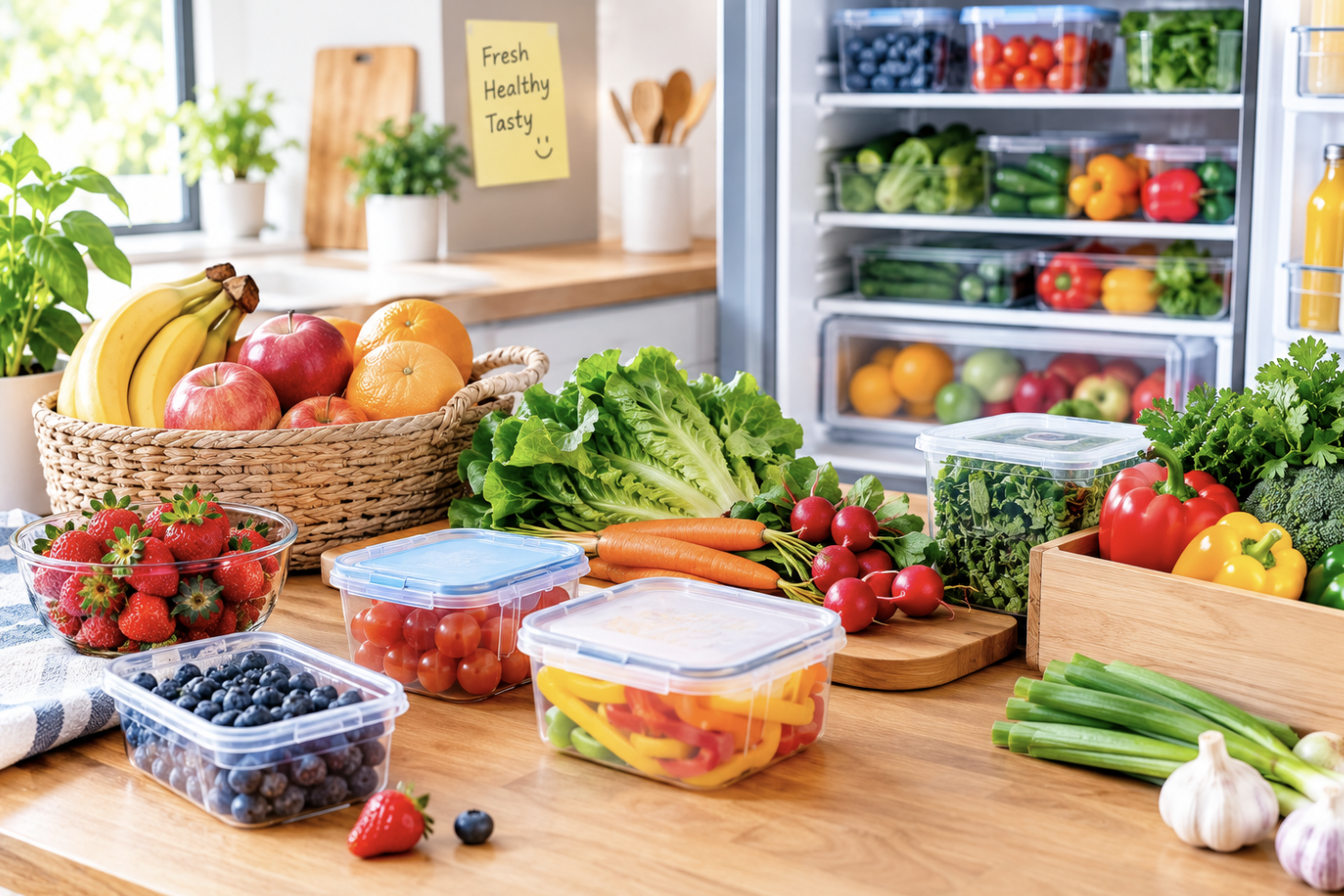
There’s a specific frustration in buying a bag of fresh produce with good intentions, only to discover a portion of it wilted, moldy, or otherwise unusable by the time you actually get around to using it. A significant amount of this waste comes down to storage, not the produce being inherently short-lived, and the specific storage needs of different fruits and vegetables can meaningfully extend how long they stay fresh and usable.
Ethylene Gas and Why It Matters
Some fruits and vegetables produce ethylene gas as they ripen, and this gas accelerates ripening, and eventually spoilage, in other produce stored nearby. Apples, bananas, avocados, tomatoes, and stone fruits like peaches are among the most significant ethylene producers.
Meanwhile, many vegetables, particularly leafy greens, are especially sensitive to ethylene exposure and spoil considerably faster when stored near these high-ethylene producers.
This relationship helps explain why produce sometimes spoils faster than expected even when handled carefully otherwise, and separating ethylene producers from ethylene-sensitive items, rather than storing everything together in one general produce area, is one of the most impactful changes you can make for extending overall freshness.
Refrigerate or Not: The Right Environment
Not all produce benefits from refrigeration, and storing certain items in the fridge can actually accelerate quality loss rather than preventing it. Tomatoes, for instance, lose flavor and develop a mealy texture when refrigerated, and are better kept at room temperature, ideally out of direct sunlight, until ripe, with refrigeration reserved only for extending the life of already-ripe tomatoes you won’t use within a day or two.
Potatoes, onions, and garlic generally do best in a cool, dark, well-ventilated space rather than the refrigerator, since cold temperatures can convert some of a potato’s starch to sugar, affecting texture and flavor when cooked. Winter squash, whole melons, and citrus fruits also generally store well at room temperature until cut, at which point refrigeration becomes appropriate to slow spoilage of the exposed flesh.
Most other fruits and vegetables do benefit from refrigeration, though the specific compartment and preparation matters considerably for maximizing freshness, covered in more detail below.
Use Your Refrigerator’s Crisper Drawers Correctly
Most refrigerators include crisper drawers with adjustable humidity settings, and using these correctly makes a meaningful difference in produce longevity. Higher humidity settings work better for leafy greens, herbs, and other produce prone to wilting, since they slow moisture loss from the produce itself.
Lower humidity settings, which allow more airflow and ethylene gas to escape, work better for ethylene-producing fruits and vegetables that benefit from that gas dissipating rather than building up around them.
If your refrigerator has two separate crisper drawers, using one for high-humidity, ethylene-sensitive items and the other for lower-humidity, ethylene-producing items takes advantage of this separation more effectively than treating both drawers identically or ignoring the humidity settings entirely.
Store Leafy Greens With Extra Care
Leafy greens are among the most perishable common produce items, and a bit of extra preparation before storage significantly extends their usable life. Washing greens, then thoroughly drying them, ideally with a salad spinner, before storing wrapped in a paper towel inside a sealed container or bag, removes excess moisture that would otherwise accelerate decay while the paper towel absorbs any remaining moisture that develops during storage.
This combination of thorough drying and moisture absorption during storage can extend the usable life of leafy greens considerably compared to simply placing them in their original packaging in the refrigerator.
Herbs Need Different Treatment Than Most Produce
Fresh herbs, particularly delicate ones like cilantro, parsley, and basil, benefit from a different storage approach than most other produce. Treating them like a bouquet of flowers, trimming the stems and placing them in a jar with a small amount of water, then loosely covering the leaves with a plastic bag before refrigerating, generally extends their freshness significantly compared to storing them in their original packaging.
Basil specifically often does better at room temperature rather than refrigerated, since cold temperatures can cause its leaves to blacken and degrade faster than room temperature storage in a similar water-and-cover setup.
Hardier herbs like rosemary, thyme, and sage tend to be more forgiving and generally store well simply wrapped loosely and refrigerated without requiring the more elaborate water-based method needed for their more delicate counterparts.
Keep Certain Fruits and Vegetables Separated From Each Other
Beyond the general ethylene principle, some specific produce pairings are worth actively avoiding during storage. Keeping onions and potatoes stored separately, rather than together in the same bin or bag, matters since onions release gases that can cause potatoes to sprout more quickly, and the moisture from potatoes can accelerate onion spoilage in return.
Similarly, keeping fresh herbs away from ethylene-producing fruit prevents accelerated wilting of the more delicate herb leaves.
Don’t Wash Produce Until You’re Ready to Use It
While washing leafy greens before storage, as mentioned above, can extend freshness when done with proper drying, many other fruits and vegetables actually last longer when left unwashed until just before use.
Excess moisture from washing, if not thoroughly dried, creates an environment more conducive to mold and bacterial growth during storage. Berries in particular benefit from this approach, generally staying fresh longer when stored unwashed and only rinsed immediately before eating, rather than washed in advance and left to sit in the refrigerator with residual moisture.
Use Proper Containers and Bags
Produce stored in its original plastic packaging from the grocery store isn’t always in the optimal container for extending freshness at home. Perforated bags, which allow some airflow while still providing protection, work well for many vegetables, while sealed containers with paper towel liners work better for moisture-sensitive items like berries and leafy greens.
Reusable produce bags designed specifically for extending freshness, available at many grocery and kitchen supply stores, can also make a meaningful difference for produce you tend to buy in larger quantities or store for longer periods.
Freeze Produce Approaching the End of Its Fresh Life
Rather than letting produce go to waste once it’s clearly approaching the end of its usable freshness, freezing is often a viable option that extends usability considerably further. Many vegetables can be blanched briefly before freezing to preserve texture and color, while fruits generally freeze well without this extra step, particularly when intended for smoothies, baking, or cooked preparations rather than eating fresh.
This approach turns produce that would otherwise be discarded into a usable ingredient for future meals, meaningfully reducing overall food waste.
Buy in Realistic Quantities for How You Actually Cook
Beyond storage techniques themselves, being realistic about how much fresh produce you’ll actually use within its typical freshness window prevents a meaningful amount of waste before storage optimization even becomes relevant.
If you consistently find certain produce spoiling before use despite proper storage, it’s worth adjusting the quantity you purchase, or the frequency of your shopping trips, rather than assuming better storage alone will fully solve a quantity mismatch with your actual cooking and eating habits.
Conclusion
Small changes to how you store fruits and vegetables, separating ethylene producers from sensitive items, using appropriate humidity settings, properly drying leafy greens before storage, and choosing the right storage location for each specific type of produce, add up to meaningfully less waste and fresher food available when you actually need it for cooking.
These habits take a bit of initial attention to learn, but quickly become automatic once you’ve internalized the basic principles behind why certain produce needs certain conditions to stay fresh as long as possible.
Frequently Asked Questions
1. Should bananas be stored with other fruit or separately?
Separately, if possible, since bananas are significant ethylene producers and can accelerate ripening in nearby fruit. If you want to slow down banana ripening specifically, wrapping the stems in plastic wrap can help, since much of the ethylene gas is released from that area, while separating bananas from other produce protects the rest of your fruit bowl from accelerated ripening.
2. Why do my berries mold so quickly even when refrigerated?
This usually comes down to residual moisture, either from washing before storage or simply from condensation within their original packaging. Storing berries unwashed, in a container lined with paper towels to absorb excess moisture, and only rinsing them immediately before eating, generally extends their usable life considerably compared to leaving them in their original grocery store packaging.
3. Is it worth buying specialized produce storage containers, or do regular containers work fine?
Specialized containers, particularly ones designed with adjustable venting or moisture control, can extend freshness for produce you buy regularly and want to keep fresh as long as possible. For occasional use, a simple approach using paper towels and standard containers or bags, applied with the general principles covered above, achieves much of the same benefit without requiring a specific purchase.
4. Can I revive slightly wilted vegetables, or are they beyond saving at that point?
Many vegetables, particularly leafy greens and some firmer vegetables like carrots or celery, can be revived somewhat by soaking in ice water for fifteen to thirty minutes, which helps rehydrate cells that have lost moisture. This won’t work for produce that’s actually spoiled or moldy, but for items that are simply wilted from moisture loss, this technique can restore a meaningful amount of crispness before use.
5. How long does frozen produce actually last compared to fresh?
Properly frozen fruits and vegetables generally maintain good quality for eight to twelve months, significantly longer than their fresh counterparts, though they’re best used within this window for optimal texture and flavor rather than being stored indefinitely. Labeling frozen produce with the date it was frozen helps you keep track of this timeline and prioritize using older items before more recently frozen ones.
