


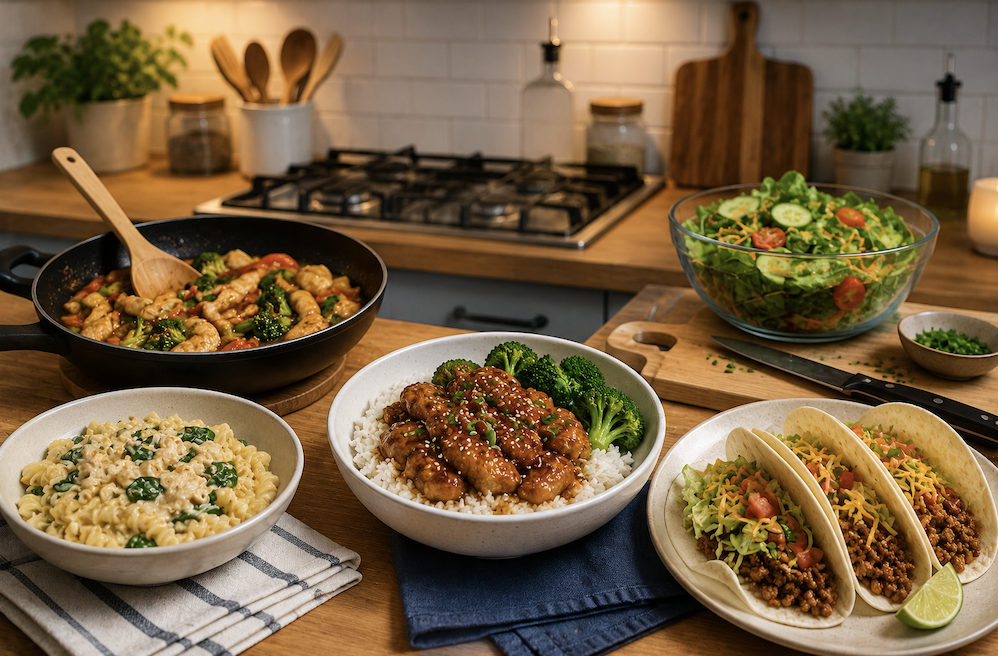
There’s a specific kind of dread that sets in around five in the evening when you realize you have no plan for dinner, limited energy, and a fridge that doesn’t seem to contain anything that goes together. This is exactly the situation weeknight cooking needs to solve for, not with elaborate recipes requiring a dozen ingredients, but with a handful of reliable, genuinely easy meals you can make with minimal thought after a long day.
Why Simple Recipes Matter More on Weeknights
Weekend cooking and weeknight cooking are really two different activities with two different goals. On a weekend, you might have the time and energy to try something new, follow a longer recipe, or experiment with unfamiliar ingredients. On a weeknight, the priority shifts entirely toward speed, minimal cleanup, and using ingredients you likely already have on hand.
Building a small rotation of dependable weeknight meals removes the decision fatigue of figuring out what to cook every single evening, which is often the biggest obstacle to eating well during a busy week, more than any lack of cooking skill.
Sheet Pan Dinners
Few methods deliver as much flavor for as little effort as a sheet pan dinner. Toss a protein, chicken thighs, sausage, or firm tofu, with chopped vegetables, a drizzle of olive oil, and simple seasoning directly on a lined baking sheet, then roast everything together at a high temperature until it’s done. The vegetables caramelize, the protein cooks through, and cleanup is limited to a single pan.
A reliable combination to start with is chicken thighs with broccoli and diced potatoes, seasoned simply with salt, pepper, garlic powder, and a squeeze of lemon at the end. Once you’re comfortable with the basic method, swapping in different vegetables and proteins based on what’s in your fridge becomes second nature.
One-Pot Pasta
Traditional pasta recipes often require boiling pasta separately, making a sauce in another pot, and dirtying multiple dishes in the process. One-pot pasta simplifies this by cooking everything together in a single pot, pasta, liquid, and sauce ingredients, until the pasta is tender and the liquid has reduced into a sauce.
A simple version: combine dry pasta, canned crushed tomatoes, a bit of vegetable or chicken broth, minced garlic, and Italian seasoning in one pot, bring it to a simmer, and stir occasionally until the pasta is cooked and the sauce has thickened. Finish with a handful of fresh basil or a sprinkle of parmesan if you have it on hand.
Stir-Fry Using Whatever’s in the Fridge
Stir-fry is one of the most forgiving weeknight formats because it genuinely works with almost any combination of protein and vegetables you happen to have available. The basic method stays the same regardless of what you’re using: cook your protein first in a hot pan with a bit of oil, remove it, cook your vegetables in the same pan until just tender, then combine everything back together with a simple sauce.
A reliable sauce that works across most combinations is a mix of soy sauce, a bit of honey or brown sugar, minced garlic, and a splash of rice vinegar. Serve over rice or noodles, and you have a complete meal that changes every time based on whatever vegetables need to be used up.
Sheet Pan Fajitas
Similar in spirit to the sheet pan dinner above, but with its own distinct flavor profile, sheet pan fajitas involve tossing sliced chicken or steak with bell peppers and onions, a simple fajita seasoning blend, and a bit of oil, then roasting everything together until cooked through. Serve with warm tortillas and whatever toppings you have on hand, shredded cheese, sour cream, salsa, or avocado.
This is an especially good option for feeding a group with different preferences, since everyone can build their own plate from the same base ingredients.
Breakfast for Dinner
There’s no rule that dinner has to look like a traditional dinner, and breakfast foods are often faster and simpler than anything else in a typical recipe rotation. Scrambled eggs with vegetables and cheese, folded into a tortilla or served alongside toast, comes together in under fifteen minutes and uses ingredients most people already have stocked. This is a particularly good option for the nights when even a sheet pan dinner feels like too much effort.
Loaded Baked Potatoes or Sweet Potatoes
A baked potato is one of the simplest bases for a complete meal, and it requires almost no active attention while it cooks. Pierce a potato a few times with a fork, microwave it for several minutes until soft, or bake it in the oven if you have more time, then load it up with toppings, black beans, salsa, cheese, sour cream, sautéed vegetables, or leftover shredded chicken. This approach turns almost anything sitting in your fridge into a legitimate topping, making it an excellent way to use up small amounts of ingredients that wouldn’t otherwise make a full meal on their own.
Quesadillas
Few meals come together faster than a quesadilla. Fill a tortilla with cheese and whatever protein or vegetables you have on hand, fold it or top it with a second tortilla, and cook it in a dry or lightly oiled pan until golden and crispy on both sides with the cheese fully melted. Serve with salsa, sour cream, or a simple side salad. This is also one of the easiest meals to customize for picky eaters, since each person’s filling can be adjusted individually.
Building Your Own Rotation
The meals above work well specifically because they follow flexible formulas rather than rigid recipes requiring exact ingredients. Once you understand the basic method behind a sheet pan dinner, a stir-fry, or a loaded baked potato, you can adapt it indefinitely based on what’s actually in your kitchen that week, rather than needing to shop for a completely new list of ingredients every time.
A good starting point is picking three or four of these formulas that appeal to you most and cooking each one a couple of times until the method feels automatic. From there, you’ll naturally start improvising variations without needing to think about it, which is really the entire goal of weeknight cooking: meals that require enough thought to be satisfying, but not so much that they become one more source of stress at the end of a long day.
Conclusion
Keep a basic stock of pantry staples on hand at all times, canned tomatoes, pasta, rice, broth, and basic spices, so you’re never starting completely from scratch. Prep vegetables in bulk when you have a bit of extra time on the weekend, since chopped vegetables ready to go remove one of the more time-consuming steps from any weeknight recipe. And don’t underestimate the value of repetition. Cooking the same handful of reliable meals regularly, rather than chasing constant variety, is what actually makes weeknight cooking sustainable over the long run.
Frequently Asked Questions
1. How do I stop dinner from feeling boring if I’m cooking the same few meals repeatedly?
Small changes in seasoning, sauce, or a single swapped ingredient can make a familiar formula feel new without adding real effort. Trying a different spice blend on a sheet pan dinner, or switching the sauce on a stir-fry, keeps things interesting while still relying on a method you already know well and can make quickly.
2. What if I don’t have most of the ingredients a recipe calls for?
This is exactly why formula-based cooking, rather than rigid recipes, works so well on weeknights. A stir-fry, a loaded baked potato, or a quesadilla can be built around almost any protein and vegetable combination you have available, so missing a specific ingredient rarely means you can’t make the meal at all, just that it’ll turn out a little differently than last time.
3. How can I make weeknight cooking faster without sacrificing flavor?
Prepping components in advance, chopped vegetables, cooked grains, marinated proteins, makes the biggest difference in actual cooking time on a busy evening. Keeping a well-stocked spice cabinet also matters more than people expect, since a few well-chosen seasonings can turn a simple combination of protein and vegetables into something that tastes intentional rather than thrown together.
4. Is it okay to rely on frozen or pre-cut vegetables for weeknight meals?
Absolutely. Frozen vegetables are typically flash-frozen at peak ripeness and retain most of their nutritional value, and pre-cut fresh vegetables save real time during the week. There’s no meaningful downside to using either as a regular part of your weeknight cooking routine, especially if it’s the difference between cooking at home and reaching for takeout.
5. What’s the easiest meal on this list for someone who barely cooks at all?
Quesadillas and loaded baked potatoes are both excellent starting points, since neither requires any real technique beyond assembling ingredients and applying heat. Both are also highly forgiving if you’re still learning to judge cooking times, since it’s hard to seriously overcook either one in the few minutes they typically take.
