



Good sleep affects mood, memory, appetite, energy and how well we cope with ordinary stress, yet many people treat it as whatever is left over after a busy day. The good news is that a handful of everyday habits can make nights smoother without any special equipment.
In this article we will explore what sleep hygiene means, how timing, light, food, drink, bedroom setup, screens and worry all play a part, and how to build a realistic plan you can follow.
Sleep needs vary between people
Sleep hygiene is the name given to the everyday behaviours and surroundings that support steady, restful sleep. The phrase sounds clinical, but it simply covers things such as when you go to bed, what you eat and drink in the evening, how your bedroom feels and what you do in the hour before lights out. None of these habits is a cure for a medical sleep disorder, yet together they create the conditions in which healthy sleep is most likely to happen.
Many health organizations commonly recommend that most adults aim for roughly seven to nine hours of sleep a night, with children and teenagers needing more. These ranges are averages, not targets to be chased with stress. Some adults feel well on a little less, and others need a little more, and the right amount for you is the one that lets you wake up reasonably alert and stay that way through the day without leaning heavily on caffeine.
A useful way to judge your own needs is to look at how you feel on a relaxed stretch of days, such as a holiday without alarms. If you sleep for noticeably longer than usual for the first few nights and then settle into a steady length, that settled length is a good clue to what your body wants. If you keep sleeping long hours well beyond the first few days, it may mean you are carrying a sleep debt, or that something else deserves attention.
It also helps to remember that sleep quality is not only about hours. Waking briefly during the night is normal, and most people do not remember it. What matters more is whether you can fall asleep within a reasonable time, return to sleep after waking, and feel fairly refreshed the next day. Worrying about a perfect number can itself keep you awake, so treat the range as a guide and pay attention to how you function.
Age, health, pregnancy, illness and recent stress can all change how much rest you need for a while. Teenagers often feel sleepy later than younger children do, and older adults often wake more easily and sleep more lightly, both of which are normal patterns rather than faults. Knowing this can stop you comparing your nights with those of a partner, friend or colleague.
Regular timing anchors the body clock
Your body runs on an internal clock, often called the circadian rhythm, that prepares you for sleep at roughly the same time each night and for waking at roughly the same time each morning. This clock responds to routine. When bedtimes and wake times jump around, it receives mixed signals, and you can end up feeling groggy in the morning and wide awake at night, a bit like mild jet lag without leaving home.
The single most helpful step is to choose a wake-up time you can keep every day. Set it first, because the wake time pulls the bedtime into place more reliably than the other way around. Try to keep it within about an hour on weekends, since a long weekend lie-in shifts your clock later and makes Sunday night and Monday morning harder than they need to be.
Bedtime should follow your sleepiness rather than the clock alone. Going to bed when you are wide awake mostly produces time spent tossing and turning, which teaches the brain that bed is a place for frustration. A sensible approach is to work out when you need to wake, count back the hours you usually need, and head to bed when you feel drowsy around that time. If you are not asleep after a spell that feels like a long while, many sleep specialists suggest getting up, going to another dimly lit room and doing something quiet until drowsiness returns.
Shift workers, new parents and people who travel across time zones face a harder task, and perfect regularity may not be possible. In those cases, aim for whatever anchors you can keep, such as a consistent routine before sleep, a dark room whatever the hour, and a protected block of sleep time that others in the household respect. Plan around your schedule instead of fighting it, and be gentle with yourself while your body adjusts.
One practical trick for travellers is to shift your schedule by small steps before a trip, going to bed and rising perhaps half an hour earlier or later each day. On arrival, get outdoor light at local morning times and eat meals on the local schedule. Short naps, kept to under half an hour, can bridge the worst of the tiredness without wrecking the first night.
Morning light shapes the evening
Light is the strongest signal your body clock receives. Bright light, especially outdoor daylight, tells the brain that the day has begun and helps set the timer for when sleepiness should arrive many hours later. This is why sleep experts so often give the same simple advice: get outside soon after you wake up.
You do not need a long outing. Ten to twenty minutes outdoors in the morning, whether that is a short walk, a coffee on the doorstep or standing by an open window, gives you far more light than a typical indoor room. Even on a cloudy day, outdoor light is much stronger than ordinary indoor lighting. If you work from home, try to place your desk near a window and take at least one break outside during daylight hours.
As evening arrives, reverse the pattern. Bright overhead lights late at night can delay the sense of sleepiness, while dimmer and warmer lamps help it arrive on time. In the last hour or two before bed, switch off harsh ceiling lights and use softer lamps instead. A bedside lamp with a warm bulb is usually enough for reading, and it is kinder to your clock than a bright bathroom light at midnight.
If you need to get up during the night, keep the light as low as possible. A small night light in the hallway or bathroom means you can move safely without flooding your eyes with brightness that tells the brain it is morning. People who work night shifts may find that dark curtains or a comfortable eye mask make a big difference when they must sleep in daylight hours.
Caffeine, alcohol and food change how you rest
Caffeine blocks the chemical signals that build up through the day and make you feel sleepy, and it can stay in the body for many hours. The exact time varies from person to person, depending on genetics, medication and habits. Because of this, many sleep experts advise keeping coffee, strong tea, energy drinks and caffeinated sodas to the morning and early afternoon. Chocolate and some pain relief products also contain caffeine, which is easy to forget.
A useful experiment is to move your last caffeinated drink earlier by a couple of hours and see what changes over a week. If you fall asleep faster or wake less often, you have found a lever worth keeping. If you rely on caffeine to push through a tired afternoon, that is a hint that your night sleep needs attention instead. Cutting back gradually is kinder than stopping suddenly, which can cause headaches and irritability for a few days.
Alcohol is a trickier case, because it can make you feel drowsy and help you drop off quickly. The trouble is that as the body processes it, sleep often becomes lighter and more broken in the second half of the night, and you may wake earlier than planned. Alcohol can also worsen snoring and breathing problems during sleep. If you drink, doing so earlier in the evening and in modest amounts, with plenty of water, is less disruptive than a late nightcap.
Food matters too, mainly through timing and size. A very heavy or spicy meal close to bedtime can cause discomfort and reflux, while going to bed hungry can also keep you awake. A common approach is to finish your main meal a few hours before sleep and, if you need something later, to choose a small and plain snack such as a banana, some yoghurt or a slice of toast. Drinking large amounts of fluid late in the evening may lead to bathroom trips, so front-load your water earlier in the day.
Nicotine is a stimulant as well, and smoking or vaping close to bedtime, or during the night, can make sleep lighter. If you use nicotine, ask a pharmacist or doctor about support to cut down, and avoid it in the hours before bed whenever you can. Quitting also brings many other health benefits, so a better night is one more reason to try.
A bedroom built for sleeping
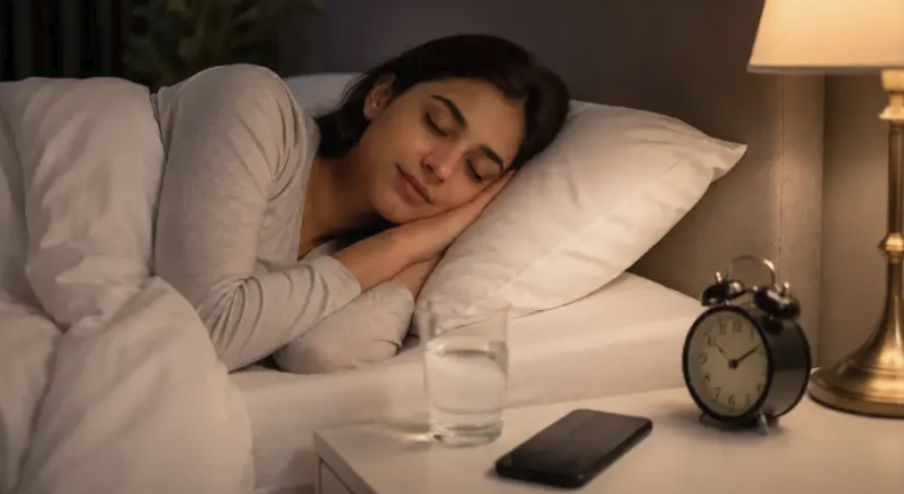
Your bedroom should make sleep easy, and three qualities matter most: it should be dark, quiet and comfortably cool. Cool usually means a little cooler than the rest of the house, and many sleep guides suggest a range somewhere around the mid to high teens in degrees Celsius, though comfort differs from person to person and with bedding. Adjust the room until you feel pleasantly cosy under your covers rather than hot or shivering.
Darkness is worth working on. Heavy curtains or blackout lining help in homes near streetlights or in places with long summer evenings, and a simple sleep mask is an inexpensive alternative. Cover or turn away small bright lights from chargers and standby devices, since even a faint glow can be distracting. If you must keep a light on for safety, choose a dim, warm one placed low down.
Noise is harder to control, especially in shared buildings or busy streets. Earplugs, a fan or a steady background sound can mask unpredictable noises such as traffic or neighbours. Consistent sound tends to be easier to ignore than sudden bursts. If a partner snores loudly, do not simply put up with it, because it may be a sign of a breathing problem worth mentioning to a doctor.
Comfort of the bed itself counts as well. A mattress and pillow that suit your sleeping position, clean sheets and bedding that match the season all help. There is no single best mattress for everyone, so judge by comfort and by whether you wake with aches, rather than by price or marketing. If your mattress is visibly sagging or very old, it may be time to think about a replacement.
Pets are another factor worth an honest look. Many people love sleeping beside a dog or cat, and for some it is comforting, but movement, noise and early-morning requests for breakfast can break up rest. If you wake often and your pet is on the bed, try a trial of a comfortable bed on the floor nearby for two weeks and see whether your nights change.
Finally, try to keep the bed for sleep and rest. Working, paying bills or watching long programmes in bed trains your brain to link the space with alertness. If your home is small and the bed doubles as a sofa, create a small ritual, such as turning on a particular lamp, that marks the difference between sitting and sleeping.
Screens and the wind-down hour
Phones, tablets and televisions affect sleep in two ways. The light they emit can nudge the body clock later, and the content they offer can keep the mind active, anxious or excited at the very moment it should be slowing down. Notifications, news and social feeds are especially good at pulling attention back when you meant to stop.
A practical goal is to put screens away for the last thirty to sixty minutes before bed. Charge your phone outside the bedroom if you can, or at least across the room, and use a simple alarm clock if you rely on your phone to wake you. If you do use a device in the evening, lower its brightness, use the built-in night or warm display setting and choose calm activities rather than emails, arguments online or exciting games.
What you do in place of screens matters, since a blank hour can feel uncomfortable at first. Gentle activities work well: reading a paper book in soft light, listening to quiet music or a calm podcast, tidying the next day’s clothes, stretching, writing a short list for tomorrow or sharing a few quiet words with a partner. Choose something you enjoy, and repeat it nightly so that it becomes a cue your body recognizes.
A warm bath or shower about an hour or two before bed can also help. As your body cools afterwards, it mimics the natural drop in temperature that comes with sleep onset. Keep the routine short and simple, because a wind-down that takes two hours and ten steps will be hard to maintain on a tired weeknight.
Families with young children can adapt the same idea, using a bath, a story and a quiet song in the same order each evening. Children thrive on predictability, and adults often benefit from the same pattern, because a familiar sequence tells the whole household that the day is ending. Whatever your household looks like, keep the order roughly the same each night.
Naps, exercise and daytime habits
What you do during the day shapes the night. Regular physical activity is commonly linked with better sleep, and even a brisk walk can help. Most people find that moderate activity earlier in the day suits them well, while very vigorous exercise right before bed can leave some people feeling wired. Experiment to see what works for you, and treat finishing exercise a few hours before bedtime as a sensible starting point.
Strength work, yoga, cycling and swimming all count, so pick the kind you enjoy enough to repeat. Gentle stretching or a slow walk in the evening is a different matter, and many people find it relaxing rather than stimulating. Do not use a lack of sleep as a reason to skip movement entirely, because a short, easy session usually leaves you better off than none.
Naps can be helpful or harmful, depending on how they are used. A short nap of roughly twenty to thirty minutes in the early afternoon can refresh you without much effect on night sleep. Long or late naps, though, reduce the pressure to sleep that builds through the day, which can make it harder to fall asleep at bedtime. If you struggle with sleep at night, try skipping naps for a couple of weeks to see whether your nights improve.
Daytime habits also include how you handle stress and use your time. Leaving worries to build up until bedtime gives them a loud stage. Setting aside a short slot in the late afternoon or early evening to deal with tasks, plan the next day and jot down concerns can lighten the load when you lie down. Social contact, time outdoors and regular meals all support a steady rhythm, too.
Medications, supplements and health conditions can play a role, and it is worth being careful. Some prescription and over-the-counter medicines can affect sleep, as can pain, reflux, asthma and thyroid problems. Do not stop a prescribed medicine on your own because you suspect it is hurting your sleep. Talk to your doctor or pharmacist, who may be able to change the timing or the dose.
How worry and racing thoughts can be eased
Lying awake with a busy mind is one of the most common complaints about sleep. The more you try to force sleep, the more alert you tend to feel, and the more you watch the clock, the more anxious you become. A key step is to take the pressure off. Sleep cannot be commanded, but you can create the conditions and then let it arrive.
Turn the clock face away so you are not tempted to calculate how many hours remain. Keep a notepad by the bed, and if a thought keeps circling, write it down in a few words so your brain can let it go until morning. Some people find a short “worry time” earlier in the evening helpful, where they write down concerns and one small next step for each, then close the notebook and leave it.
Relaxation techniques can calm the body. Slow breathing, where you breathe in gently through the nose and out a little more slowly, is simple and free. Progressive muscle relaxation, where you tense and release each muscle group from your feet to your face, helps many people notice and drop tension. Pleasant mental imagery, such as walking through a familiar and peaceful place in your mind, can crowd out worrying thoughts.
If you remain awake and frustrated, get up rather than staying in bed fighting it. Move to another dimly lit room, do something quiet and low-stimulation, and return when you feel sleepy. This protects the link between bed and sleep. If worry, low mood or anxiety is a constant companion rather than an occasional visitor, speak to a doctor or mental health professional, because there are effective treatments available. Many health services recommend a structured talking therapy for long-term insomnia, often called cognitive behavioural therapy for insomnia, and it is worth asking whether it is offered where you live.
To pull the advice together, the table below gives a quick checklist of the main choices covered so far. Use it to spot where a small change might help most, and treat the middle column as a menu rather than a list of rules you must follow all at once. Most people find that two or three rows describe their own problems, and those are the rows to work on first.
| Area | Helpful habit | Habit that often hurts |
| Wake time | Same time daily, within about an hour | Large weekend lie-ins |
| Light | Outdoor light in the morning, dim lamps at night | Bright lights late at night |
| Caffeine | Morning and early afternoon only | Coffee or energy drinks in the evening |
| Alcohol | Little or none, finished well before bed | Regular late-night drinks to fall asleep |
| Bedroom | Cool, dark, quiet, comfortable | Clutter, bright standby lights, noise |
| Screens | Put away 30 to 60 minutes before bed | Scrolling in bed |
| Naps | Short, early afternoon | Long or late-day sleeps |
| Worry | Notes, breathing, getting up if awake | Clock watching and forcing sleep |
Conclusion
Trying to change everything at once usually ends in giving up by the weekend, so choose only two or three habits to begin with. A sensible first trio is a fixed wake-up time, outdoor light in the morning and a screen-free wind-down. These three cost nothing, fit into most lives and tend to produce a noticeable difference within a couple of weeks.
Keep a simple sleep diary for two weeks before and after you make changes. Each morning, write down roughly when you went to bed, how long it took to fall asleep, how often you woke, when you got up and how rested you feel. You may also note caffeine, alcohol, exercise and stress. Patterns that were invisible before often leap out on paper, and the diary is also extremely useful if you later visit a doctor.
Give any new habit at least two to three weeks before judging it, since the body clock changes slowly. Add one more step when the first ones feel automatic, such as moving your last coffee earlier or cooling the bedroom. If you slip on a busy week, simply return to the routine the next day instead of treating one bad night as a failure.
Know when habits are not enough. See a doctor if you have had trouble sleeping most nights for a few weeks, if you snore loudly or stop breathing during the night, if you feel an irresistible urge to move your legs, if you fall asleep in dangerous situations such as driving, or if sleeplessness comes with low mood, anxiety or other health worries. Do not rely on sleeping tablets or supplements without medical advice, as they carry risks and rules differ between countries. With patience and a few steady habits, most people can look forward to better nights.
