


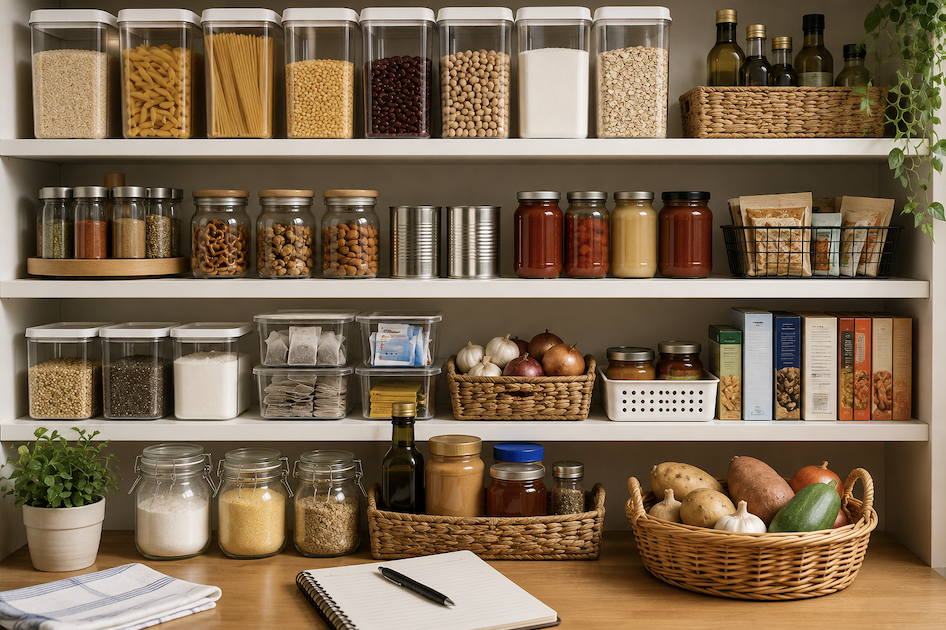
Walking into a grocery store without a plan often leads to either buying random ingredients that don’t combine into actual meals, or leaving with a cart full of specific items for one recipe that then sit unused once that dish is made. A well-stocked pantry solves both problems. With the right foundational ingredients on hand, you can put together a genuine meal on short notice without a special shopping trip, and cooking in general becomes far less intimidating.
Why a Good Pantry Matters More Than People Realize
A pantry stocked with the right basics acts as a safety net for cooking. Instead of needing every single ingredient for a specific recipe, you can often substitute or build a meal around what’s already available, which removes a huge amount of the friction that keeps people from cooking at home regularly. It also saves money over time, since buying pantry staples in reasonable quantities is generally cheaper per use than constantly buying small amounts of specialty ingredients for one-off recipes.
Grains and Starches
Grains and starches form the base of a huge percentage of meals, and they store well for extended periods, making them one of the best categories to stock up on. Rice, in either white or brown varieties, is endlessly versatile and pairs with almost any protein and vegetable combination. Pasta, in a couple of different shapes, covers everything from quick weeknight dinners to heartier baked dishes. Oats are useful well beyond breakfast, working in baking and as a binding ingredient in some recipes.
Beyond these basics, having at least one or two other starches on hand, potatoes, which store well in a cool, dark place, or a bag of dried beans or lentils, expands your options significantly without much added complexity.
Canned and Jarred Staples
Canned goods are often underrated in home cooking, offering long shelf life and genuine convenience without much sacrifice in quality for many uses. Canned tomatoes, whole, crushed, or diced, are a foundational ingredient for countless sauces, soups, and stews. Canned beans, black beans, chickpeas, and kidney beans in particular, are a fast, affordable protein source that requires no soaking or long cooking time, unlike their dried counterparts.
Canned or jarred broth, whether chicken, beef, or vegetable, forms the base of soups and adds depth to countless other dishes. A jar of good-quality tomato sauce, and a jar of a general cooking oil beyond your primary one, like sesame oil for adding flavor to Asian-inspired dishes, round out this category well for a beginner’s kitchen.
Oils, Vinegars, and Basic Condiments
A neutral cooking oil, vegetable or canola, handles most everyday cooking needs like sautéing and roasting. A good olive oil, kept separate for dishes where its flavor actually matters, like dressings or finishing a dish, adds noticeably better flavor than using a neutral oil for everything.
At least one vinegar, apple cider or white vinegar both work well as versatile starting points, adds acidity that balances rich or heavy dishes and forms the base of simple dressings. Basic condiments, soy sauce, mustard, and a hot sauce you genuinely enjoy, extend your ability to season and flavor food significantly beyond what salt and pepper alone can achieve.
Spices and Dried Herbs
This is the category that transforms basic ingredients into something that actually tastes intentional. You don’t need dozens of specialty spices to start, a focused core collection covers the vast majority of everyday cooking. Salt and black pepper are the obvious foundation. Garlic powder and onion powder add depth quickly without the prep work of fresh alternatives. Paprika, cumin, and dried oregano or Italian seasoning cover a wide range of cuisines between them. Red pepper flakes add heat when you want it, and a bay leaf or two goes a long way in soups and stews.
As you cook more and develop preferences for specific cuisines, expanding this collection becomes a natural next step, but this core list is genuinely enough to season the vast majority of beginner-friendly recipes well.
Baking Basics
Even if you don’t consider yourself a baker, a few baking basics come in handy more often than expected. All-purpose flour and sugar, both granulated and a bag of brown sugar, cover most simple baking needs and also show up in some savory recipes as thickeners or balancing agents. Baking powder and baking soda, though they seem interchangeable, serve different chemical purposes and are worth having both on hand if you plan to bake even occasionally.
Refrigerator and Freezer Staples
While the pantry itself refers to shelf-stable ingredients, a few refrigerated and frozen staples round out a functional beginner kitchen. Eggs are one of the most versatile ingredients available, working in breakfast dishes, baking, and as a quick protein source on their own. Butter serves both cooking and baking needs. A block of a versatile cheese, cheddar or mozzarella depending on your preferences, adds flavor and substance to a wide range of dishes.
In the freezer, keeping a bag of mixed vegetables and a couple of protein options, chicken breasts or thighs, and ground beef or a plant-based alternative, means you’re never entirely without the makings of a real meal, even on days you haven’t been to the grocery store recently.
Building Your Pantry Gradually
You don’t need to buy everything on this list in a single trip, and doing so can feel overwhelming both in cost and in effort. A more sustainable approach is adding a few new staples each grocery trip,
prioritizing the items you’ll use most immediately based on the recipes you’re actually planning to cook that week. Within a month or two of shopping this way, you’ll have a genuinely well-rounded pantry without ever feeling like you made one enormous, expensive trip just to stock up.
Conclusion
A pantry is only as useful as your ability to actually see what you have. Store dry goods in clear, labeled containers where practical, which both keeps things fresher longer and makes it immediately obvious what you’re running low on. Group similar items together, grains in one area, canned goods in another, spices somewhere easily visible rather than buried behind other items, so you’re not searching blindly every time you cook.
Periodically checking expiration dates and using older items before newer purchases, a habit sometimes called first in, first out, prevents waste and ensures you’re always cooking with ingredients that are still at their best.
A well-stocked, organized pantry doesn’t just make cooking easier, it makes cooking something you’re more likely to actually do on a regular basis, rather than defaulting to takeout because nothing at home seems to add up to a real meal.
Frequently Asked Questions
1. How much should I expect to spend stocking a beginner pantry from scratch?
Costs vary by region and brand choices, but building up the core categories gradually over a few grocery trips, rather than buying everything at once, spreads the cost out significantly and tends to feel far more manageable than a single large shopping trip. Store-brand versions of pantry staples are often just as good as name brands for basics like rice, canned tomatoes, and dried pasta.
2. What if I have limited storage space for a full pantry?
Prioritize based on what you’ll actually use most often rather than trying to stock every category fully. A smaller version of this list, one grain, one or two canned staples, a core set of five or six spices, and basic oils and condiments, still covers a meaningful range of meals without requiring extensive storage space.
3. Do canned goods actually stay good for a long time?
Yes, most canned goods have a shelf life of one to several years when stored properly in a cool, dry place, though it’s worth checking the specific expiration date on each product. Canned goods do gradually lose some quality over very long storage periods, so it’s still worth rotating through your stock rather than holding onto cans indefinitely.
4. Should I buy whole spices or pre-ground ones as a beginner?
Pre-ground spices are more convenient and perfectly adequate for most beginner cooking, and they’re what most basic recipes assume you’re using. Whole spices generally offer more intense flavor and last longer before losing potency, but they require a grinder or mortar and pestle, which is a reasonable upgrade to consider once you’re cooking more regularly rather than a necessary starting point.
5. How do I know when it’s time to restock a specific pantry item?
Keeping your pantry organized and visible, rather than buried in the back of a cabinet, makes this far easier to notice naturally. Checking your pantry briefly before each grocery trip and noting what’s running low, rather than only realizing you’re out of something mid-recipe, helps you restock proactively instead of scrambling for a substitute.
6. Is it worth buying specialty ingredients before I’m sure I’ll use them regularly?
Generally no, at least not right away. Stick to the core staples that appear across a wide range of recipes first, and add specialty ingredients, a particular spice blend, an uncommon grain, a specific vinegar, once you’ve identified a cuisine or style of cooking you genuinely gravitate toward. This keeps your initial investment focused and prevents half-used specialty items from sitting forgotten in the back of a cabinet.
