


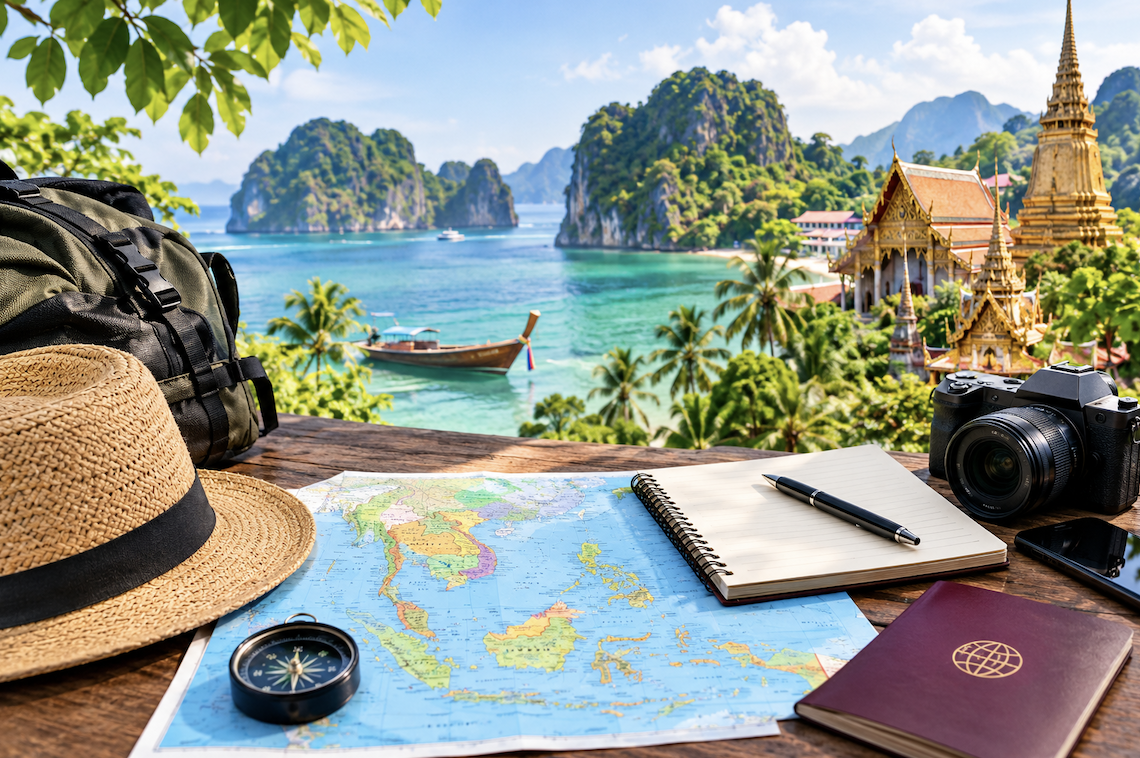
Southeast Asia draws travelers back again and again for good reason: incredible food, rich cultural diversity across a relatively compact region, generally affordable travel costs, and landscapes ranging from bustling cities to quiet beaches and mountain villages. But the region encompasses many distinct countries, each with its own customs, logistics, and practical considerations, and a bit of preparation goes a long way toward making a first trip smooth rather than overwhelming.
Understand That “Southeast Asia” Covers Very Different Countries
One of the most common mistakes first-time visitors make is treating the region as a single, uniform destination rather than a collection of genuinely distinct countries, each with its own language, customs, currency, visa requirements, and level of tourism infrastructure. Thailand, Vietnam, Cambodia, Laos, Myanmar, Malaysia, Singapore, Indonesia, and the Philippines all differ meaningfully from each other, and assuming what applies in one country automatically applies in a neighboring one can lead to real confusion or missteps.
Researching your specific destination countries individually, rather than relying on general “Southeast Asia” travel advice alone, gives you a far more accurate picture of what to actually expect and prepare for.
Check Visa Requirements Well in Advance
Visa requirements vary significantly by country and by your specific nationality, ranging from visa-free entry for short stays, to visa-on-arrival options, to requiring an application and approval before you travel. Checking the specific requirements for each country on your itinerary, based on your actual passport, well before booking flights, prevents the stressful scenario of arriving at a border only to discover you’re missing a required document or application.
Some countries also have specific requirements around passport validity, commonly requiring at least six months of remaining validity from your date of entry, which is worth checking and addressing if your passport is approaching that threshold before you travel.
Plan Around the Region’s Distinct Weather Patterns
Southeast Asia’s climate is generally tropical, but rainy and dry seasons vary meaningfully by specific country and even by region within larger countries, and timing your trip without accounting for this can mean encountering significant, trip-altering rainfall during what you assumed would be a straightforward travel period. Researching the specific seasonal patterns for each destination on your itinerary, rather than assuming uniform weather across the whole region, helps you plan realistic expectations and pack appropriately.
It’s also worth noting that a rainy season doesn’t necessarily mean a ruined trip, many destinations see relatively brief, predictable downpours followed by clear skies, but understanding this pattern in advance helps you plan activities and expectations more realistically than assuming constant rain throughout an entire rainy season.
Budget Realistically While Understanding the Real Costs
Southeast Asia has a well-earned reputation as an affordable travel destination, and for budget-conscious travelers, this reputation is largely accurate, particularly for accommodation, food, and local transportation compared to Western countries. That said, costs vary meaningfully between countries in the region, with Singapore, for example, being considerably more expensive than neighboring Cambodia or Laos, and it’s worth researching realistic costs for your specific planned countries rather than assuming uniformly low prices throughout the entire region.
Bargaining is a normal and expected practice in many markets and with certain transportation options throughout much of the region, though the appropriate approach and expected discount varies by country and specific context, and observing how locals and experienced travelers navigate this in each specific place helps you calibrate appropriately rather than either overpaying significantly or bargaining too aggressively in a way that comes across as disrespectful.
Take Health Precautions Seriously
Depending on your specific destinations and planned activities, certain vaccinations or health precautions may be recommended or required, and it’s worth consulting a travel medicine clinic or your doctor several weeks before departure, since some vaccinations require multiple doses spread over time to be fully effective. Malaria risk varies significantly by specific region within the broader area, and antimalarial medication may be recommended for certain destinations while being unnecessary for others, making destination-specific research important rather than a blanket approach across the whole region.
Being cautious about tap water in many parts of the region, generally sticking to bottled or properly filtered water, and being thoughtful about street food safety, generally favoring stalls with high turnover and visibly fresh ingredients, helps minimize the risk of the traveler’s stomach issues that are a common, though usually manageable, part of the travel experience in the region for many visitors.
Respect Local Customs and Dress Codes
Southeast Asia includes a mix of predominantly Buddhist, Muslim, Hindu, and Christian countries and communities, each with specific customs around dress, particularly at religious sites, and general social behavior. Researching basic customs for your specific destinations, appropriate dress for visiting temples or mosques, general etiquette around greetings and interactions, and any specific behaviors considered disrespectful, helps you navigate interactions respectfully and avoid unintentionally causing offense.
Packing at least one modest outfit suitable for visiting religious sites, generally covering shoulders and knees regardless of the specific country’s dominant religion, since many sites across different faiths share similar modesty expectations, saves you from being turned away or needing to purchase a covering garment on the spot at a site you’re specifically visiting.
Get Comfortable With Diverse Transportation Options
Transportation throughout the region ranges from modern high-speed trains and reliable rideshare apps in more developed cities, to local buses, boats, and motorbike taxis in more rural or less developed areas. Researching the realistic transportation options for your specific route, and building in reasonable buffer time for transportation that may run less predictably than you’re used to at home, helps prevent unnecessary stress if a journey takes longer or looks different than initially expected.
Renting a motorbike, common and often practical in certain destinations, carries genuine safety considerations worth taking seriously, including confirming your travel insurance actually covers motorbike accidents, since some policies specifically exclude this activity, and understanding local traffic patterns and road conditions before deciding whether this is the right transportation choice for your specific comfort level and experience.
Consider Regional Travel Between Countries
If your itinerary includes multiple countries within the region, researching realistic overland or short-flight connections between them, along with any specific border crossing requirements or logistics for that route, before finalizing your itinerary prevents overly ambitious planning that doesn’t account for the actual time and logistics involved in moving between countries, even ones that appear close together on a map.
Conclusion
Research your specific destination countries individually rather than the region as a whole, confirm visa requirements well in advance for each country on your route, plan around the actual seasonal weather patterns for your specific destinations, take recommended health precautions seriously, and pack with local customs and modesty expectations in mind. A bit of destination-specific preparation, rather than relying on generalized regional assumptions, is what actually turns Southeast Asia’s genuine appeal into a smooth, enjoyable trip rather than one full of avoidable surprises.
FAQ’s
1. How many countries should I try to visit in a single trip?
It depends heavily on your total trip length, but a common mistake is trying to pack too many countries into a short trip, leaving little time in any single place and adding unnecessary transit stress. For a trip of two to three weeks, focusing on one or two countries, or a few regions within a single larger country, generally allows for a more relaxed, genuinely enjoyable experience than an overly ambitious multi-country itinerary.
2. Is it safe to drink the tap water anywhere in Southeast Asia?
Generally, it’s safer to assume tap water isn’t suitable for drinking throughout most of the region, and to rely on bottled or properly filtered water instead. Some specific destinations, particularly Singapore, have tap water that meets international drinking standards, but when traveling more broadly across the region, sticking to bottled water as a general precaution is the more cautious and commonly recommended approach.
3. What’s the best way to handle money and currency exchange in the region?
Each country has its own currency, and it’s generally best to exchange a small amount at the airport for immediate needs upon arrival, then use ATMs for the bulk of your cash needs, since they typically offer better exchange rates than currency exchange counters. Notify your bank of your travel plans beforehand to avoid your card being flagged for suspicious activity, and carry a mix of cash and cards, since cash remains essential in many markets and smaller establishments throughout the region.
4. Do I need travel insurance specifically for activities like scuba diving or motorbike riding?
Yes, and it’s worth checking carefully, since many standard travel insurance policies exclude certain activities, motorbike riding and certain adventure sports among the most commonly excluded, unless you’ve specifically added coverage for them. If your itinerary includes these kinds of activities, look for a policy that explicitly covers them rather than assuming standard coverage applies.
5. Is it culturally appropriate to bargain for everything in local markets?
Bargaining is expected and normal in many markets and with certain transportation arrangements, but it’s not universal fixed-price shops, malls, and many restaurants don’t involve bargaining at all. Observing local norms in each specific context and approaching bargaining with good humor rather than aggressive insistence generally leads to a more positive experience for both you and the vendor.
