


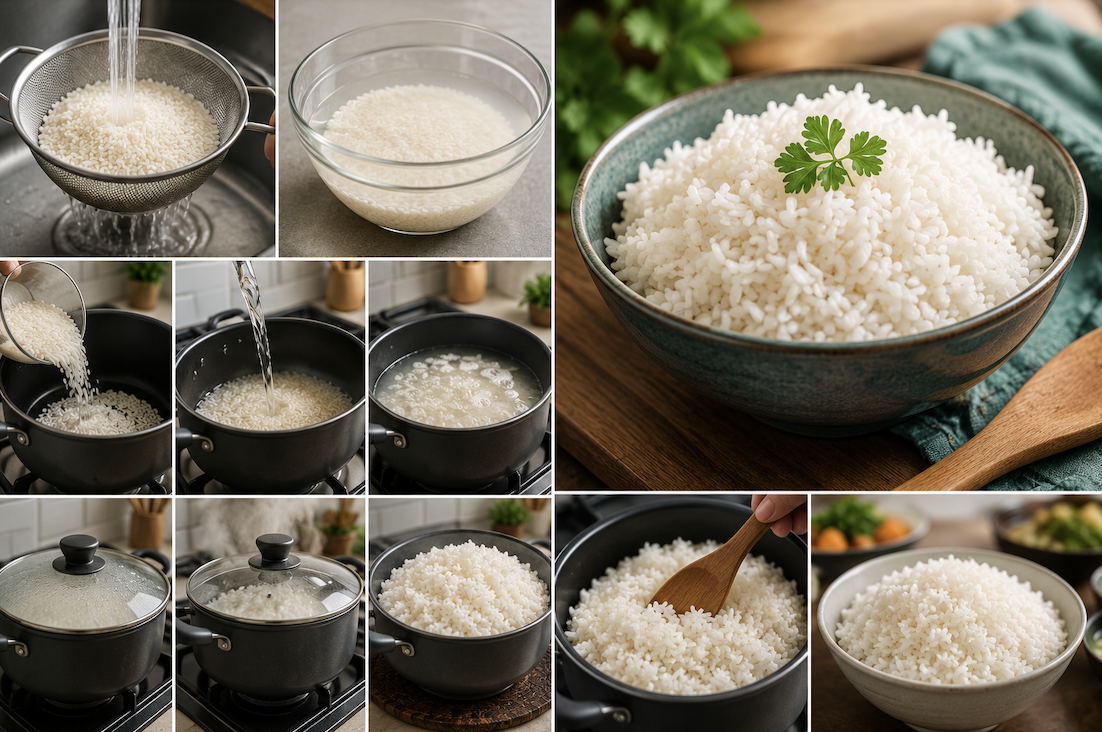
Rice seems like it should be one of the simplest things to cook, and yet it’s a common source of kitchen frustration, mushy on one attempt, crunchy and undercooked on the next, or scorched at the bottom of the pot. The good news is that perfectly cooked rice comes down to a few consistent principles that apply regardless of what type of rice you’re working with, once you understand what’s actually happening in the pot.
Why Rice Goes Wrong So Often
Most rice failures come down to one of a few consistent culprits: using the wrong ratio of water to rice, lifting the lid too often during cooking, which lets essential steam escape, or not accounting for the fact that different rice varieties genuinely need different amounts of water and cooking time. Understanding these variables, rather than following a single generic method for every type of rice, is what separates consistently good results from a coin flip every time you cook it.
Rinse Your Rice First
This step gets skipped more often than it should, and skipping it is one of the most common reasons rice turns out gummy or overly sticky. Rice is coated in surface starch from processing, and rinsing it under cool water before cooking, until the water runs mostly clear rather than cloudy, removes much of this excess starch. For most rice varieties, this results in more distinct, separate grains once cooked, rather than a clumped, sticky texture.
The exception is certain short-grain rice varieties specifically used for dishes like sushi or risotto, where a stickier texture is actually desired, in which case rinsing is either skipped or done more lightly according to the specific recipe.
Get the Water Ratio Right for Your Rice Type
This is the single most important factor in cooking rice successfully, and it varies meaningfully by rice variety. Long-grain white rice generally uses a ratio of about one and three-quarters cups of water for every cup of dry rice. Medium and short-grain white rice typically need slightly less water, closer to one and a half cups per cup of rice. Brown rice requires notably more water and a longer cooking time due to its intact bran layer, typically around two to two and a quarter cups of water per cup of rice.
These ratios are reliable starting points, but it’s worth checking the specific guidance for whatever rice you’re using, since brands and specific varieties can vary somewhat from these general guidelines.
Use the Right Cooking Method for Consistent Results
The stovetop absorption method is the most common approach and works reliably once you’ve got the ratio right. Bring the rice and water to a boil, then immediately reduce the heat to the lowest setting, cover the pot with a tight-fitting lid, and let it cook undisturbed for the recommended time for your specific rice variety, typically fifteen to eighteen minutes for white rice and closer to forty to forty-five minutes for brown rice.
The critical part of this method that trips people up is resisting the urge to lift the lid and check on the rice while it cooks. Every time the lid comes off, steam escapes that the rice needs to finish cooking evenly, which can result in unevenly cooked grains or rice that needs additional time beyond what the recipe originally called for.
A rice cooker automates this entire process and is worth considering if you cook rice frequently, since it removes the guesswork around timing and heat management entirely, consistently producing good results with minimal attention required.
Let It Rest Before Fluffing
Once the cooking time is up, resist the urge to immediately remove the lid and start fluffing the rice. Letting the pot sit, off the heat but still covered, for about ten minutes allows the remaining steam to finish evenly distributing moisture throughout the rice and lets the grains firm up slightly, which actually improves the final texture compared to serving it immediately.
After this resting period, fluff the rice gently with a fork, which separates the grains without mashing them the way a more aggressive stirring motion with a spoon might.
Troubleshooting Common Problems
If your rice consistently turns out mushy or overly wet, you’re likely using too much water relative to the type of rice, or possibly cooking at too high a heat, which can cause excess evaporation loss that then gets compensated for with too much added water. Try reducing your water slightly next time and confirm you’re using the appropriate ratio for your specific rice variety.
If your rice turns out undercooked or crunchy, particularly in the center of the pot, you may be using too little water, cooking for too short a time, or lifting the lid during cooking, which lets out steam the rice needs. Confirm your ratio and resist checking on it during the cooking process.
If rice sticks and burns at the bottom of the pot, your heat is likely too high during the simmering phase. The rice should cook at a very gentle simmer, not an active boil, once you’ve reduced the heat after the initial boiling stage. A heavy-bottomed pot also helps distribute heat more evenly and reduces the likelihood of scorching compared to a thin, lightweight pot.
Cooking Different Rice Varieties Successfully
Brown rice, due to its intact bran layer, benefits from a slightly longer soak, even just twenty to thirty minutes before cooking, which can help it cook more evenly and reduce the total cooking time somewhat. Basmati and jasmine rice, both aromatic long-grain varieties, generally benefit from a brief soak of about twenty to thirty minutes as well, which helps achieve the light, fluffy texture these varieties are known for.
Short-grain rice used for sushi requires a different approach entirely, involving specific rinsing, cooking, and seasoning steps tailored to that particular use, and it’s worth following a dedicated method for that specific application rather than a general-purpose rice cooking approach.
Conclusion
Like most cooking fundamentals, consistently good rice comes from understanding the underlying principles, correct ratio, minimal disturbance during cooking, and adequate resting time, rather than memorizing a single rigid recipe. Once you’ve made rice successfully a few times using these principles, adjusting for different varieties and slightly different quantities becomes intuitive rather than something you need to look up every single time.
- Read more about Newspinup
FAQ’s
1. Should I add salt or oil to the water when cooking rice?
This is optional and mostly a matter of personal preference. A small amount of salt in the cooking water can enhance the overall flavor of the rice, similar to salting pasta water. Oil or butter isn’t necessary for the cooking process itself, though some people add a small amount for flavor or to help reduce sticking, particularly with stickier rice varieties.
2. How do I reheat leftover rice without it drying out?
Adding a small splash of water before reheating, whether in the microwave or on the stovetop, and covering the container helps trap steam and restore moisture that’s evaporated during storage. Reheating gently rather than on high heat also helps prevent the rice from drying out or becoming tough.
3. Is it safe to leave cooked rice at room temperature for a while before refrigerating?
Cooked rice should be refrigerated within about an hour of cooking, since it can harbor bacteria that produce heat-resistant toxins if left at room temperature for extended periods. Cooling it relatively quickly and storing it in a sealed container in the refrigerator, where it typically keeps well for four to six days, is the safer approach.
4. Why does my rice cooker produce different results than the stovetop method?
Rice cookers use a thermostat that automatically detects when the water has been fully absorbed and switches to a keep-warm setting, which removes much of the guesswork around timing that the stovetop method requires. If you’re getting inconsistent results from a rice cooker, double-check that you’re using the water ratio specifically recommended for that appliance, since some rice cookers are calibrated slightly differently than standard stovetop ratios.
5. Can I cook rice in advance and freeze it for later use?
Yes, cooked rice freezes well for later use in fried rice, grain bowls, or as a quick side dish. Spread it out to cool before freezing in a sealed container or bag, and reheat directly from frozen with a small amount of added water, either in the microwave or on the stovetop, for a quick and convenient meal component.
6. What’s the best type of pot for cooking rice on the stovetop?
A heavy-bottomed pot with a tight-fitting lid produces the most consistent results, since it distributes heat evenly and reduces the risk of scorching at the bottom. A thin, lightweight pot tends to heat unevenly, increasing the chances of some rice sticking and burning while other parts remain undercooked.
7. Does the age of the rice affect how much water it needs?
Yes, somewhat. Older rice tends to be drier and may absorb slightly more water than freshly milled rice, since it’s lost more moisture during storage over time. If you consistently find your rice turning out slightly undercooked with your usual ratio, adding a small amount of extra water, roughly a tablespoon or two per cup of rice, can help compensate for this natural variation.
