


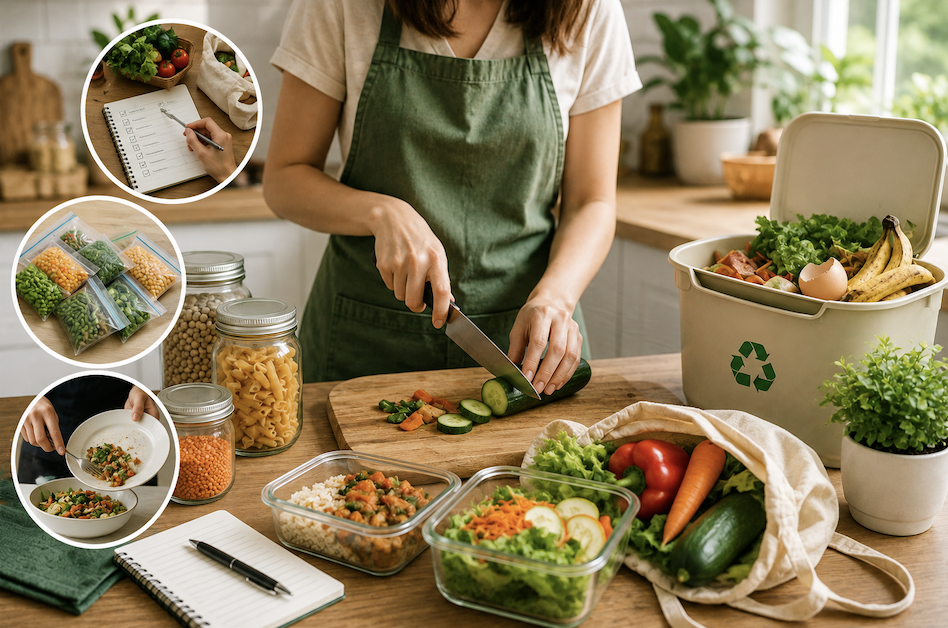
It’s easy to underestimate how much food actually gets thrown away in an average household until you start paying attention. Wilted vegetables pushed to the back of the fridge, leftovers forgotten until they’re no longer appealing, bread that goes stale before it’s finished, all of it adds up over a year to a genuinely significant amount of wasted money and food. Reducing food waste doesn’t require a dramatic lifestyle overhaul, just a handful of practical habits that make it easier to actually use what you buy.
Why Food Waste Adds Up More Than People Expect
Food waste tends to happen gradually and in small amounts, which is exactly why it’s easy to underestimate. A few forgotten vegetables here, a container of leftovers there, none of it feels significant in the moment, but tracked over weeks and months, the total cost is substantial for most households. Beyond the financial impact, reducing food waste also has a meaningful environmental benefit, since food waste in landfills contributes to methane emissions as it decomposes without oxygen.
Shop With a Plan, Not Just Instinct
A significant amount of food waste starts at the grocery store, before food even makes it home. Shopping without a rough meal plan for the week often leads to buying ingredients that don’t actually combine into meals, or duplicating things you already have without realizing it. Taking even ten minutes before a grocery trip to plan a few meals for the week, and checking what you already have on hand before adding items to your list, significantly reduces the chance of buying more than you’ll actually use.
This doesn’t require an elaborate, rigid meal plan. Even a loose idea of three or four meals for the week, built around ingredients you’ll actually use across multiple dishes, makes a real difference compared to shopping without any plan at all.
Understand Expiration Dates Correctly
A significant portion of food waste happens because of confusion around expiration date labeling, which varies more than most people realize. “Best by” and “sell by” dates are generally about peak quality, not safety, meaning food is often still perfectly fine to eat after these dates, particularly for shelf-stable items. “Use by” dates are more directly tied to safety, particularly for perishable items like dairy and meat, and are worth taking more seriously.
Learning to trust your senses, smell, appearance, and texture, alongside these date labels, rather than automatically discarding food the moment a date passes, prevents a meaningful amount of unnecessary waste, especially for shelf-stable and lightly perishable items.
Store Food Properly to Extend Its Life
How you store food has a bigger impact on how long it lasts than most people account for. Many vegetables and fruits have specific storage needs, some do better in the refrigerator, others at room temperature, and some release gases that speed up spoilage in nearby produce if stored together. A quick search for the specific storage recommendations for produce you buy regularly can meaningfully extend how long it stays fresh.
Beyond specific storage locations, simply making sure food is stored in airtight containers, with as much air removed as practical, slows spoilage significantly compared to loosely wrapped or partially sealed storage.
Keep a Visible “Eat Me First” Zone in Your Fridge
Designating a specific, visible area of your refrigerator for items that need to be used soon, produce that’s starting to soften, leftovers approaching the end of their safe window, and opened containers nearing their expiration creates a natural visual reminder every time you open the fridge. This simple habit alone catches a surprising number of items that would otherwise be forgotten and eventually thrown away.
Get Creative With Ingredients Before They Go Bad
Vegetables that are starting to look a little tired are often still perfectly usable in dishes where texture matters less, soups, stir-fries, smoothies, or baked dishes. Overripe fruit that’s no longer appealing to eat fresh works well in baking, smoothies, or homemade sauces. Wilting herbs can be blended into a sauce or frozen in oil for later use rather than discarded. Learning to see slightly past-their-peak ingredients as still useful, rather than automatically discarding them, meaningfully reduces waste over time.
Embrace Leftovers Intentionally
Leftovers often get wasted not because people don’t like eating them, but because they’re forgotten in the back of the fridge without a plan for when they’ll actually be eaten. Building leftovers into your actual meal plan for the week, rather than treating them as an afterthought, makes it far more likely they’ll actually get eaten. Labeling containers with the date they were made also helps you prioritize eating older leftovers before newer ones, rather than reaching for whatever’s most convenient and letting older items get pushed to the back.
Freeze Strategically
The freezer is one of the most underused tools for reducing food waste. Bread, meat, and many cooked dishes freeze well and can be portioned out for later use rather than risking spoilage if you won’t get to them soon. Vegetables approaching the end of their fresh life can be chopped and frozen for future soups or stir-fries rather than discarded. Even herbs, chopped and frozen in a bit of oil or water in an ice cube tray, extend their usefulness well beyond their fresh shelf life.
Labeling frozen items with the date and contents prevents the common problem of unidentifiable freezer contents accumulating indefinitely without ever actually getting used.
Compost What You Can’t Use
Even with the best planning, some food scraps are genuinely unavoidable, vegetable peels, eggshells, coffee grounds. Composting these, whether through a home compost system or a local municipal composting program if one is available in your area, keeps this unavoidable waste out of landfills and turns it into something useful for gardening, rather than simply discarding it.
Track What You’re Actually Throwing Away
For a week or two, pay attention to what actually ends up in the trash or compost rather than being eaten. This simple awareness exercise often reveals specific patterns, a particular ingredient that consistently goes unused, a portion size that consistently produces uneaten leftovers, that you can directly address once you know what to look for. Most people are surprised by what this reveals once they actually pay attention rather than assuming they already know their own habits.
Conclusion
Trying to implement every single one of these habits at once can feel overwhelming and difficult to sustain. Picking one or two that feel most relevant to your specific situation, whether that’s better meal planning, smarter storage, or more intentional use of leftovers, and building those into a consistent habit before adding more, tends to create lasting change far more effectively than attempting a complete overhaul all at once.
Frequently Asked Questions
1. Is it actually safe to eat food after the date on the package has passed?
For most shelf-stable and lightly perishable items, yes, particularly if the label says “best by” or “sell by” rather than “use by.” These dates are largely about peak quality rather than safety. Trust your senses, smell, appearance, and texture, alongside the printed date, and when in doubt for genuinely perishable items like dairy or meat, err on the side of caution.
2. How can I reduce food waste if I live alone and portion sizes are hard to manage?
Freezing extra portions of meals you cook, buying smaller quantities of perishable items even if the per-unit cost is slightly higher, and choosing recipes designed for one or two servings rather than automatically halving family-sized recipes can all help. Building a rotation of a few freezer-friendly meals also gives you built-in portion control without daily cooking.
3. Does composting really make a meaningful difference compared to just throwing food scraps away?
Yes, particularly at scale. Food waste in landfills decomposes without oxygen, producing methane, a potent greenhouse gas. Composting allows that same organic material to break down aerobically instead, avoiding those emissions while also producing something useful for soil, rather than simply taking up landfill space.
4. What’s the single most effective habit for reducing food waste?
Meal planning before grocery shopping tends to have the biggest overall impact, since it prevents much of the waste that starts with buying more than you’ll realistically use. Combined with a designated “eat me first” area in your fridge, these two habits alone address a large share of typical household food waste without requiring much additional effort.
5. Is frozen food actually as good as fresh once it’s been frozen and thawed?
For most vegetables, meats, and cooked dishes, frozen food retains the vast majority of its nutritional value and flavor, especially when frozen close to its peak freshness. Some texture changes can occur, particularly in produce with high water content, but for cooking purposes rather than eating raw, frozen ingredients work well in the vast majority of recipes.
6. How do I get other people in my household on board with reducing food waste?
Framing it around the financial savings tends to resonate broadly, since most people underestimate how much money wasted food actually represents over a year. Making the habits genuinely easy, a clearly labeled “eat me first” shelf, a shared meal plan visible to everyone, tends to work better than relying on individual willpower or reminders alone.
