


Introduction
As cities grow and waste production increases, traditional recycling systems struggle to keep up with the demand for efficient waste management. Smart technologies are transforming the recycling industry, and MataRecycler stands out as an innovative platform designed to improve waste sorting, tracking, and management. By combining Artificial Intelligence (AI) and Internet of Things (IoT) technologies, MataRecycler helps organizations reduce waste, improve recycling rates, and contribute to a more sustainable future.
What Is MataRecycler?
MataRecycler is a smart recycling platform that leverages AI-powered analytics and IoT-enabled sensors to automate and optimize waste management processes. The system identifies, sorts, tracks, and analyzes waste materials in real time, helping organizations maximize recycling efficiency while minimizing environmental impact.
Unlike traditional recycling methods that rely heavily on manual sorting and monitoring, MataRecycler uses advanced technologies to make waste management more accurate, efficient, and cost-effective.
How MataRecycler Uses AI and IoT for Smart Waste Management
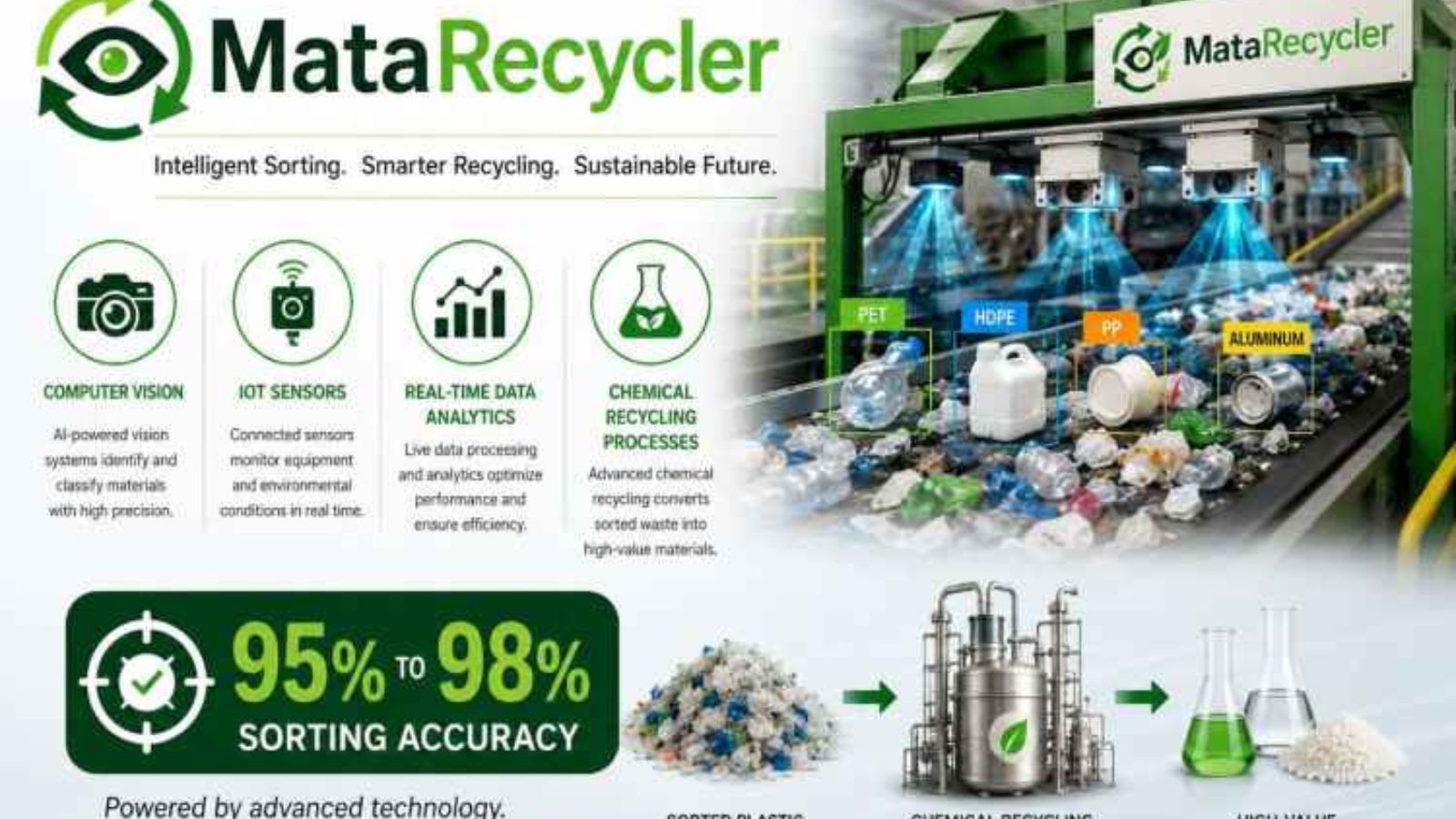
MataRecycler integrates AI algorithms with IoT devices to create a connected recycling ecosystem. AI analyzes waste materials using image recognition and machine learning models, while IoT sensors collect real-time data from waste bins, recycling stations, and processing facilities.
This combination enables:
- Automated waste classification
- Real-time monitoring of waste levels
- Predictive maintenance for recycling equipment
- Data-driven decision-making
- Improved operational efficiency
The result is a smarter and more responsive waste management system.
Key Features of the MataRecycler Platform
MataRecycler offers several advanced features that distinguish it from conventional recycling solutions:
Intelligent Waste Identification
AI-powered cameras and sensors identify different waste materials with high accuracy.
Real-Time Monitoring
IoT sensors continuously monitor waste collection points and provide live updates.
Automated Sorting
The platform helps separate recyclable materials from non-recyclable waste.
Data Analytics Dashboard
Users can access detailed reports and performance metrics through an intuitive dashboard.
Route Optimization
Waste collection routes can be optimized using real-time data to reduce fuel consumption and operational costs.
Predictive Maintenance
AI predicts equipment failures before they occur, minimizing downtime.
AI-Powered Waste Sorting Explained
One of MataRecycler’s most valuable capabilities is its AI-powered waste sorting technology. Using machine learning and computer vision, the platform can recognize materials such as:
- Plastic
- Paper
- Glass
- Metal
- Organic waste
- Electronic waste
The AI system continuously learns from collected data, improving its sorting accuracy over time. This reduces contamination in recycling streams and increases the value of recovered materials.
The Role of IoT Sensors in Recycling Operations
IoT sensors serve as the foundation of MataRecycler’s monitoring capabilities. These sensors are installed in waste bins, recycling containers, and processing facilities.
The sensors collect data on:
- Fill levels
- Temperature
- Weight
- Location
- Collection schedules
This information is transmitted to the central platform, enabling managers to make informed decisions and improve operational efficiency.
Benefits of Using MataRecycler for Businesses and Communities
Organizations adopting MataRecycler can experience numerous advantages.
Reduced Operational Costs
Automation decreases labor requirements and improves resource allocation.
Improved Recycling Rates
Accurate sorting helps recover more recyclable materials.
Better Environmental Performance
Less waste ends up in landfills, reducing environmental damage.
Increased Transparency
Real-time reporting provides complete visibility into recycling activities.
Enhanced Regulatory Compliance
Organizations can track waste management performance and meet environmental regulations more effectively.
How MataRecycler Improves Recycling Accuracy
Traditional recycling systems often suffer from contamination caused by incorrectly sorted waste. MataRecycler addresses this issue through AI-based identification systems that distinguish materials with remarkable precision.
Improved accuracy leads to:
- Higher-quality recycled materials
- Lower processing costs
- Reduced landfill waste
- Better sustainability outcomes
As the AI models learn from additional data, sorting performance continues to improve.
Real-Time Waste Tracking and Monitoring Capabilities
Real-time monitoring is essential for efficient waste management. MataRecycler provides instant access to operational data through a centralized dashboard.
Users can monitor:
- Waste collection status
- Bin fill levels
- Recycling performance
- Facility efficiency
- Collection schedules
This visibility enables organizations to respond quickly to changing conditions and avoid service disruptions.
Environmental Impact of MataRecycler Technology
Environmental sustainability is one of the primary goals of MataRecycler. The platform contributes to environmental protection by:
- Reducing landfill waste
- Lowering greenhouse gas emissions
- Conserving natural resources
- Encouraging circular economy practices
- Improving recycling participation
These benefits help communities move toward long-term sustainability goals.
MataRecycler vs Traditional Recycling Methods
Traditional Recycling
- Manual sorting processes
- Limited data visibility
- Higher contamination rates
- Reactive maintenance
- Less efficient collection routes
MataRecycler
- AI-powered automation
- Real-time monitoring
- Data-driven optimization
- Predictive maintenance
- Enhanced recycling accuracy
The smart capabilities of MataRecycler make it significantly more efficient than conventional approaches.
Industries That Can Benefit from MataRecycler
MataRecycler can be applied across various sectors, including:
Municipal Governments
Improve city-wide waste management and recycling programs.
Manufacturing Facilities
Manage industrial waste streams more effectively.
Educational Institutions
Promote sustainable campus operations.
Healthcare Facilities
Track and manage medical waste responsibly.
Retail and Commercial Centers
Reduce waste disposal costs and increase recycling performance.
Smart Cities
Integrate waste management into broader smart city initiatives.
Challenges in Smart Waste Management and How MataRecycler Solves Them
Modern waste management faces several challenges:
Rising Waste Volumes
MataRecycler automates sorting and processing to handle larger waste streams.
Resource Constraints
Optimization tools improve resource utilization.
Contamination Issues
AI-based classification reduces sorting errors.
Lack of Data
IoT sensors provide continuous operational insights.
Equipment Downtime
Predictive maintenance minimizes disruptions.
These solutions make waste management more scalable and efficient.
Data Analytics and Reporting Features in MataRecycler
Data plays a critical role in modern recycling operations. MataRecycler provides comprehensive analytics tools that help organizations evaluate performance and identify improvement opportunities.
Reports may include:
- Recycling rates
- Waste diversion metrics
- Collection efficiency
- Cost savings
- Environmental impact assessments
These insights support informed decision-making and strategic planning.
Future Innovations and Roadmap of MataRecycler
As AI and IoT technologies continue to evolve, MataRecycler is expected to introduce additional capabilities such as:
- Advanced machine learning models
- Autonomous recycling systems
- Blockchain-based waste tracking
- Smart city integration
- Enhanced predictive analytics
These innovations will further strengthen recycling efficiency and sustainability efforts.
Why MataRecycler Is Shaping the Future of Sustainable Recycling
The future of waste management depends on intelligent technologies that can handle increasing waste volumes while minimizing environmental impact. MataRecycler combines AI, IoT, automation, and analytics to create a comprehensive solution for modern recycling challenges.
By improving sorting accuracy, reducing operational costs, and providing actionable insights, MataRecycler empowers organizations to build more sustainable waste management systems.
Frequently Asked Questions
Is MataRecycler suitable for small businesses?
Yes. The platform can be scaled to meet the needs of small businesses, large enterprises, and municipalities.
How does AI improve waste sorting efficiency?
AI uses machine learning and image recognition to identify materials accurately and automate sorting processes.
What types of waste can MataRecycler identify?
The system can identify plastics, paper, glass, metals, organic waste, and various other recyclable materials.
Can MataRecycler integrate with existing recycling systems?
Yes. Many smart recycling platforms are designed to work alongside existing infrastructure.
What are the environmental benefits of MataRecycler?
The platform helps reduce landfill waste, lower emissions, conserve resources, and improve recycling rates.
Conclusion
MataRecycler represents a major advancement in smart waste management. Through the integration of Artificial Intelligence and Internet of Things technologies, it delivers accurate waste sorting, real-time monitoring, predictive analytics, and operational efficiency. As sustainability becomes increasingly important worldwide, platforms like MataRecycler will play a vital role in building cleaner, smarter, and more environmentally responsible communities.
