


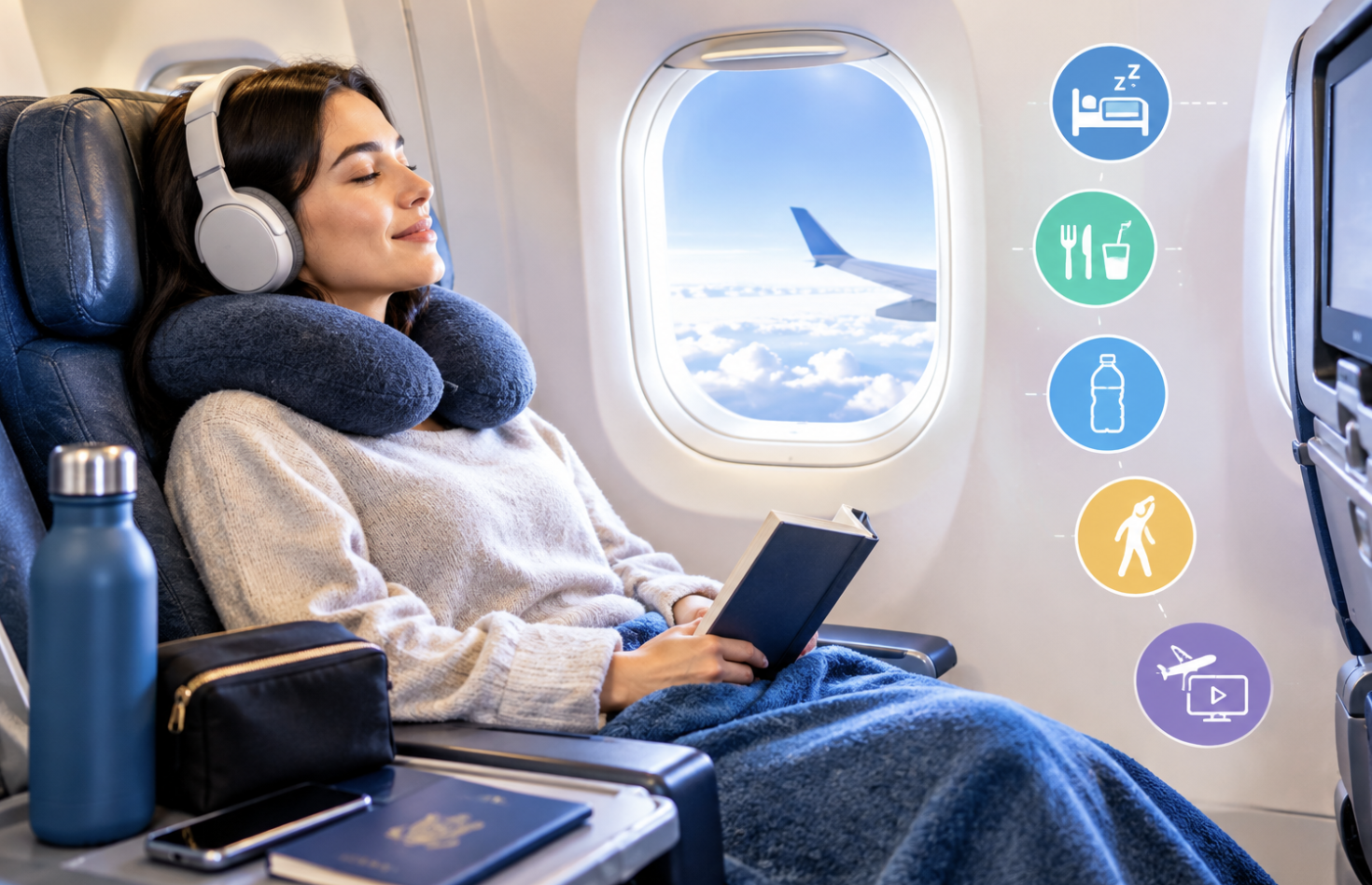
Long-haul flights, generally anything over six or so hours, present a different experience than shorter domestic hops, and treating them the same way you’d approach a quick flight tends to leave you feeling considerably worse upon arrival than necessary. A bit of specific preparation and a handful of in-flight habits can make a substantial difference in how you feel both during the flight itself and once you actually reach your destination.
Prepare Before You Even Get to the Airport
The days leading up to a long-haul flight matter more than people often realize. Getting adequate sleep in the days before departure, rather than trying to power through an already sleep-deprived state before an already demanding travel day, helps you start the flight in a better position to actually rest during it.
Staying well hydrated in the days beforehand also helps offset the dehydrating effects of the flight itself, which are more significant than many travelers account for.
If your flight involves a significant time zone change, beginning to gradually shift your sleep schedule toward your destination’s time zone in the days before departure, even by a modest amount, gives your body a head start on the adjustment process rather than starting that adjustment only once you’ve already landed.
Choose Your Seat Strategically
Seat selection matters considerably more on a long-haul flight than a shorter one, given the extended time you’ll actually be spending in that specific seat. Aisle seats offer easier access to get up and move around without disturbing seatmates, which matters for both comfort and the health benefits of periodic movement during a long flight. Window seats offer a stable surface to lean against for sleeping and control over the window shade, useful for managing light exposure relevant to jet lag management.
Seats near the front of the cabin, or directly behind a bulkhead, sometimes offer additional legroom, though this varies by specific aircraft and airline, worth researching for your specific flight if extra space is a priority. Seats near the rear of the aircraft, particularly close to the galley or lavatories, tend to experience more noise and foot traffic, worth avoiding if you’re hoping to get meaningful rest during the flight.
Dress for Comfort, Not Style
Long-haul flights benefit from prioritizing comfort in what you wear over how put-together you look upon boarding. Loose, breathable layers allow you to adjust to the cabin’s fluctuating temperature throughout the flight, since aircraft cabin temperature isn’t always consistent and can feel notably cold at certain points.
Compression socks, while perhaps not the most fashionable choice, help reduce the swelling and discomfort that can develop in your legs and feet during extended periods of sitting, and can meaningfully reduce your risk of more serious circulation issues associated with prolonged immobility.
Slip-on shoes make the security screening process and any in-flight trips to the lavatory considerably more convenient than shoes requiring laces or buckles to remove and reapply repeatedly.
Stay Hydrated Throughout the Flight
Aircraft cabin air is notably dry, with humidity levels considerably lower than typical indoor environments, and this dehydration compounds with the general dehydrating effects of air travel to leave you feeling noticeably worse if you don’t actively counteract it.
Drinking water consistently throughout the flight, more than you might think to without actively focusing on it, helps offset this effect. Bringing an empty refillable water bottle through security, then filling it after passing through, is a simple and cost-effective way to ensure you have adequate water access without relying entirely on however frequently the beverage cart happens to come through the cabin.
Limiting alcohol and excessive caffeine during the flight, both of which have dehydrating effects that compound with the cabin’s already dry air, supports better hydration and generally better sleep quality during the flight as well.
Move Regularly to Support Circulation
Extended periods of sitting during a long flight can contribute to poor circulation and, in more serious cases, an increased risk of blood clots, particularly for individuals with certain existing risk factors. Getting up and walking the aisle periodically, generally recommended every couple of hours during a long flight, along with simple seated exercises, ankle rotations, calf raises, that can be done without leaving your seat, help support healthy circulation throughout an extended flight.
If you have specific risk factors for blood clots, discussing appropriate precautions with a doctor before a long flight, which might include compression stockings or other specific recommendations, is a reasonable step given the elevated risk associated with prolonged immobility during extended travel.
Plan for Actual Sleep, Not Just Resting Your Eyes
If your flight schedule allows for sleep to align reasonably with your destination’s nighttime hours, actively trying to sleep during the appropriate portion of the flight, rather than simply resting your eyes while remaining fundamentally awake, meaningfully supports your adjustment once you arrive.
A neck pillow suited to your specific sleeping position preferences, an eye mask to block cabin lighting, and noise-cancelling headphones or earplugs to reduce ambient aircraft noise all support actually falling and staying asleep during a flight, rather than just making the attempt more comfortable without meaningfully improving your actual chances of real rest.
Bring Entertainment and Distractions Beyond What the Airline Provides
While many airlines offer in-flight entertainment systems, having your own downloaded content, movies, shows, podcasts, books, or games, provides a backup for flights with limited entertainment options or simply gives you more control over exactly what you want to engage with during different portions of a long flight.
Downloading content in advance, rather than assuming reliable in-flight Wi-Fi will be available for streaming, ensures you have entertainment access regardless of your specific flight’s connectivity situation.
Manage Your Meals Thoughtfully
Airline meal timing doesn’t always align neatly with either your body’s usual eating schedule or your destination’s local time, and being thoughtful about this, rather than simply eating whenever food is offered regardless of your actual hunger or the broader jet lag management strategy you’re following, can support better overall adjustment.
If you’re trying to shift your schedule toward your destination’s time zone, eating meals aligned with that destination’s typical mealtimes, rather than your departure location’s schedule, reinforces the same time zone adjustment your sleep schedule adjustments are working toward.
Consider Your Skin and General Comfort
The dry cabin air affects your skin as well as your general hydration, and bringing a moisturizer or hydrating facial mist for use during the flight can help offset some of this dryness, particularly noticeable on longer flights. Traveling and removing contact lenses in favour of glasses during a long flight reduces eye discomfort associated with the combination of dry cabin air and extended screen or reading time.
Plan Your Arrival Activities Around Realistic Expectations
Upon landing after a long-haul flight, particularly one involving significant time zone changes, planning a lighter schedule for your arrival day, rather than immediately diving into an ambitious sightseeing itinerary, acknowledges the physical toll of long-haul traveling and supports a smoother transition into your trip rather than starting from a place of significant fatigue that undermines your ability to actually enjoy those initial planned activities.
Conclusion
Long-haul flights become considerably more manageable once you’ve developed a personal routine based on what actually works for you specifically, rather than following someone else’s exact preferences and habits. Experimenting with these various strategies across a few different long-haul trips, and noting what helps you feel better upon arrival versus what makes little practical difference for your specific situation, lets you build a personalized approach that makes extended flights feel considerably less draining over time.
Frequently Asked Questions
Is it worth paying extra for a better seat on a long-haul flight?
For flights over eight or so hours, many travelers find that upgraded seating, extra legroom, premium economy, or business class where affordable, improves their arrival experience enough to justify the added cost, particularly for a demanding itinerary immediately following arrival. For shorter long-haul flights or more budget-conscious travel, the strategies covered here, seat selection within economy, proper hydration, and movement, can meaningfully improve comfort without the added expense.
Should I take sleep aids to help sleep on a long flight?
This is a personal decision worth discussing with a doctor if you’re considering it, particularly regarding any potential interactions with other medications or conditions. Some travelers find over-the-counter options helpful for a long flight, though it’s worth testing any new sleep aid at home first rather than trying it for the first time during an actual flight, since individual reactions can vary and you want to know how a specific product affects you before relying on it during travel.
How do I handle a long-haul flight with young children?
Many of the same principles apply, though with additional consideration for entertainment and comfort items specifically suited to children, along with realistic expectations about how much actual rest you personally will get. Booking seats that allow for some movement and flexibility, and packing entertainment and snacks specifically for your child’s preferences, matters considerably for managing a long flight with young children more smoothly.
Does flying business or first class actually make jet lag less severe?
Better seating and increased ability to actually sleep during the flight can support better arrival adjustment, since actual quality sleep during appropriate hours is one of the more effective jet lag management strategies. That said, jet lag itself is fundamentally about your body’s internal clock adjusting to a new time zone, and even excellent in-flight comfort doesn’t eliminate this adjustment process entirely, just potentially supports a somewhat smoother transition.
What’s the single most impactful thing I can do to feel better after a long-haul flight?
Staying well hydrated throughout the flight is one of the most consistently emphasized recommendations across various travel health resources, since dehydration compounds nearly every other aspect of feeling poorly after a long flight, fatigue, headaches, general malaise. Combined with getting up to move periodically and prioritizing actual sleep during appropriate hours relative to your destination, these three habits together address most of what makes long-haul flights feel particularly draining.
