


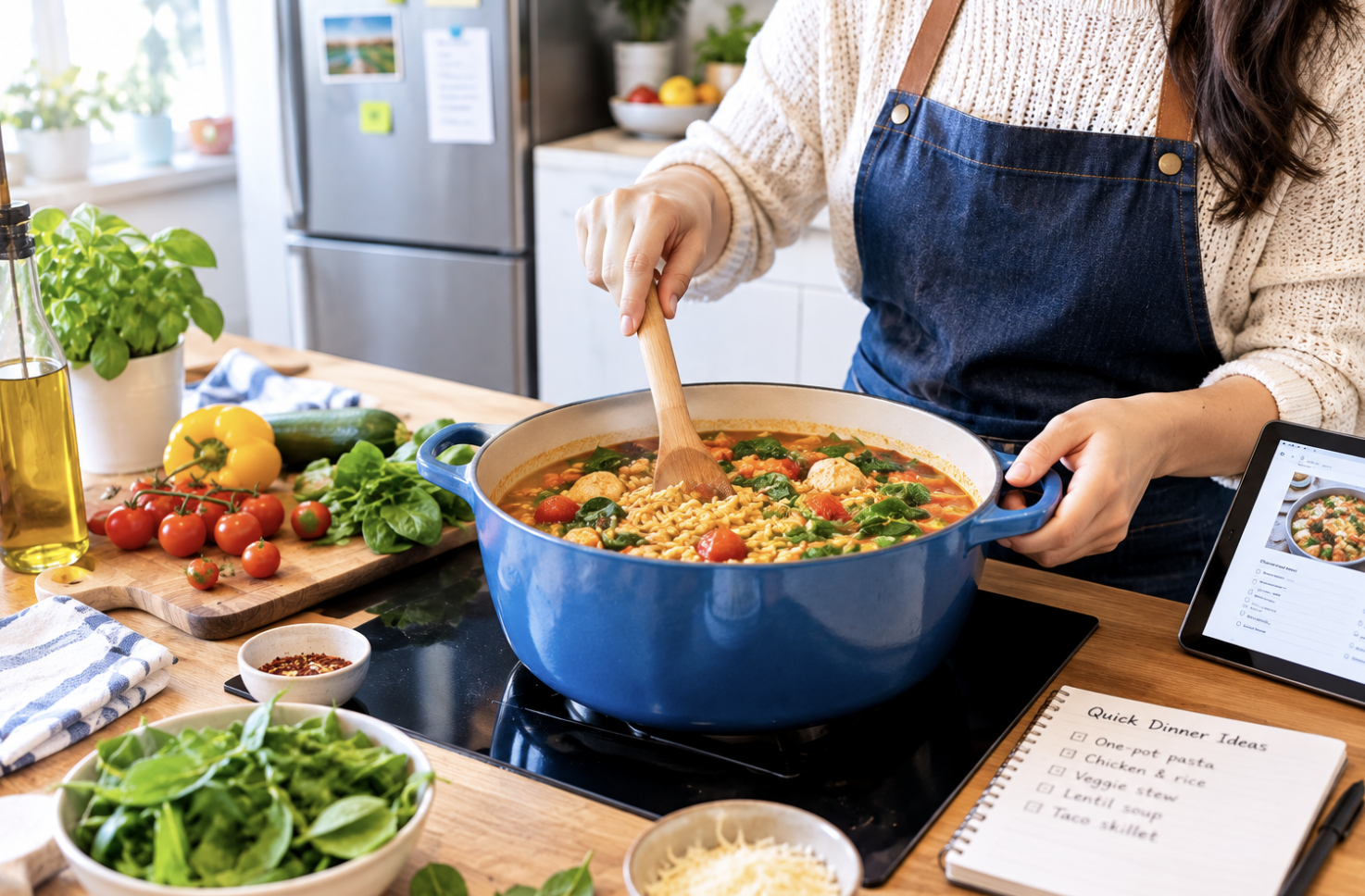
There’s a specific kind of relief that comes from realizing dinner tonight will only require a single pot, one thing to measure into, one thing to stir, and critically, one thing to wash afterward. One-pot meals have earned their popularity honestly, they genuinely deliver on the promise of minimal cleanup while still producing satisfying, complete meals, and understanding the basic principles behind why they work makes it easy to build your own reliable rotation rather than depending entirely on specific recipes.
Why One-Pot Cooking Actually Works
The core principle behind successful one-pot meals is building layers of flavor sequentially within the same vessel, rather than cooking separate components independently and combining them only at the end. Aromatics get cooked first, building a flavor base.
Proteins get added and browned, contributing their own flavor to the pot. Liquid and starches, rice, pasta, or grains, get added and absorb all the flavor that’s been building throughout the process. This sequential building, all happening within a single pot, is what allows one-pot meals to taste more cohesive and developed than the minimal effort involved might suggest.
Understanding this underlying logic, rather than memorizing individual recipes, means you can improvise based on whatever ingredients you have on hand, applying the same basic sequence to different specific combinations of protein, vegetables, and starch.
The Basic One-Pot Formula
Most successful one-pot meals follow a reasonably consistent structure you can adapt endlessly. Start by cooking aromatics, onion, garlic, and sometimes celery or carrots, in a bit of oil until softened. Add your protein and cook until browned or mostly cooked through.
Add any remaining vegetables that don’t need as long to cook. Add your starch, rice, pasta, or a grain like quinoa, along with the appropriate amount of liquid, broth, water, or a combination, based on what that specific starch requires to cook properly. Bring to a simmer, cover, and let everything cook together until the starch is tender and has absorbed the surrounding liquid and flavor.
This basic sequence works whether you’re making a one-pot chicken and rice dish, a pasta primavera, or a hearty grain-based bowl, with the specific ingredients and precise timing varying based on what you’re actually making, but the underlying logic remaining consistent across all of them.
One-Pot Pasta Dishes
One-pot pasta has become particularly popular specifically because it eliminates the traditional need to boil pasta separately from preparing a sauce. Combining dry pasta directly with your sauce ingredients, crushed tomatoes, broth, garlic, and seasoning, in a single pot, then simmering until the pasta is tender and the liquid has reduced into a properly thickened sauce, produces a good result with meaningfully less effort and cleanup than the traditional separate-pot method.
The key technical detail that makes this work is using enough liquid for the pasta to fully cook and absorb, generally somewhat more liquid than you’d use for a traditional sauce, since the pasta itself is absorbing much of it during cooking rather than being boiled separately in a large pot of water that gets drained away afterward.
One-Pot Rice and Grain Dishes
Rice and other grains work particularly well in one-pot preparations, since they’re specifically designed to absorb liquid and flavor during cooking. A one-pot chicken and rice dish, building flavor through browned chicken and aromatics before adding rice and broth, produces a flavorful, complete meal where the rice itself has absorbed all the flavor developed earlier in the cooking process, rather than being a neutral, separately cooked side dish.
Similar approaches work well with other grains, quinoa, farro, or barley, though cooking times and liquid ratios vary by specific grain, worth checking package instructions or a specific recipe if you’re using a grain you’re less familiar with cooking.
One-Pot Soups and Stews
Soups and stews are perhaps the most intuitive one-pot category, since they’ve traditionally been prepared this way regardless of any specific minimalist cooking trend. Building flavor through aromatics and browned protein, then adding vegetables, broth, and any grains or legumes, and letting everything simmer together, produces deeply flavorful results specifically because of the extended cooking time allowing flavors to fully develop and meld together within the single pot.
These dishes also tend to improve with a day of rest in the refrigerator, making them excellent candidates for cooking in a larger batch and eating across multiple days, further reducing the actual cooking effort required on subsequent busy evenings.
Sheet Pan Meals as a Related Approach
While technically using a pan rather than a pot, sheet pan meals follow similar minimal-cleanup logic and deserve mention as a related approach for busy nights.
Tossing proteins and vegetables with oil and seasoning directly on a lined baking sheet, then roasting everything together, produces a complete meal with the same single-vessel cleanup advantage as true one-pot cooking, just using dry roasting heat rather than a simmering liquid-based method.
Adapting Recipes to What You Actually Have
The real power of understanding one-pot cooking principles, rather than following specific recipes rigidly, is the ability to adapt based on whatever’s actually in your kitchen on a given night. Missing a specific vegetable a recipe calls for?
Substitute whatever similar vegetable you have on hand. Don’t have the specific protein? Most one-pot formulas work reasonably well with a range of protein substitutions, chicken for pork, or a plant-based protein for meat, without fundamentally changing the basic cooking approach.
This flexibility is particularly valuable for reducing food waste, since one-pot meals are well-suited to using up smaller amounts of various vegetables that might not be quite enough for their own dedicated dish but work well combined into a single, flexible pot.
Building Your Own One-Pot Recipe Rotation
Rather than searching for a new specific recipe every time you want a one-pot meal, building a small mental rotation of two or three reliable combinations you’re comfortable improvising, a chicken and rice variation, a pasta variation, a soup or stew variation, gives you a flexible foundation you can adapt endlessly based on what’s actually available in your kitchen on any given busy night, without needing to consult a specific recipe every single time.
Equipment Worth Having for One-Pot Cooking
A good, heavy-bottomed pot or Dutch oven, large enough to comfortably hold a complete meal for your household size, makes a difference in how evenly your one-pot meals cook, reducing the risk of scorching on the bottom while ingredients on top remain undercooked.
This is a worthwhile investment if you plan to make one-pot cooking a regular part of your routine, since a good quality pot generally lasts for many years of regular use and meaningfully improves the consistency of your results compared to a thin, lower-quality pot.
Making This a Sustainable Weeknight Habit
One-pot meals earn their place in a busy weeknight rotation specifically because they deliver satisfying, flavourful results while minimizing both active cooking time and, perhaps even more importantly for many busy people, the cleanup burden that often feels like the most exhausting part of cooking after a long day.
Building a small, flexible repertoire of one-pot combinations that you feel comfortable improvising with, instead of relying on searching for a new specific recipe each time, transforms this cooking method from an occasional treat into a dependable weeknight dinner option that you can consistently rely on.
Frequently Asked Questions
1. Can I make one-pot meals healthier without sacrificing convenience?
Absolutely, and the one-pot format doesn’t inherently limit nutritional quality. Choosing lean proteins, incorporating a generous amount of vegetables, and using whole grains rather than refined ones where the specific dish allows, all fit naturally within the one-pot approach without adding any meaningful extra effort or cleanup compared to a less nutritionally focused version of the same basic formula.
2. Why does my one-pot pasta sometimes turn out too watery or too dry?
This usually comes down to the specific liquid-to-pasta ratio, which can vary somewhat based on your specific pot’s size and shape, your stovetop’s heat output, and the specific pasta shape you’re using. If your result is consistently too watery, reduce the liquid slightly next time or extend the simmering time to allow more evaporation. If it’s too dry, add a bit more liquid, either from the start or partway through cooking if you notice it looking dry before the pasta is fully tender.
3. Is it better to use a Dutch oven or a regular pot for one-pot meals?
A Dutch oven offers advantages, particularly its heavy construction, which distributes heat more evenly and reduces the risk of scorching compared to a thinner, lighter pot. That said, a good quality regular pot with a heavy bottom can produce very similar results for most one-pot recipes, making a Dutch oven a worthwhile upgrade rather than a strict requirement for successful one-pot cooking.
4. Can one-pot meals be frozen for later use?
Many one-pot meals, particularly soups, stews, and grain-based dishes, freeze well and can be portioned into individual servings for a quick reheated meal on an especially busy night. Pasta-based one-pot dishes tend to freeze less well due to texture changes upon reheating, making them better suited to eating fresh or refrigerated for a few days rather than long-term freezer storage.
5. What’s the easiest one-pot meal for someone who’s intimidated by cooking?
A simple one-pot chicken and rice dish is an excellent starting point, since the basic sequence, browning chicken, cooking aromatics, adding rice and broth, then simmering until done, is forgiving of minor timing imprecision and produces a satisfying result even for someone with limited cooking experience. Starting with a specific, written recipe for your first attempt, then gradually experimenting with substitutions and variations as you become more comfortable, is a reasonable way to build confidence with this style of cooking.
