


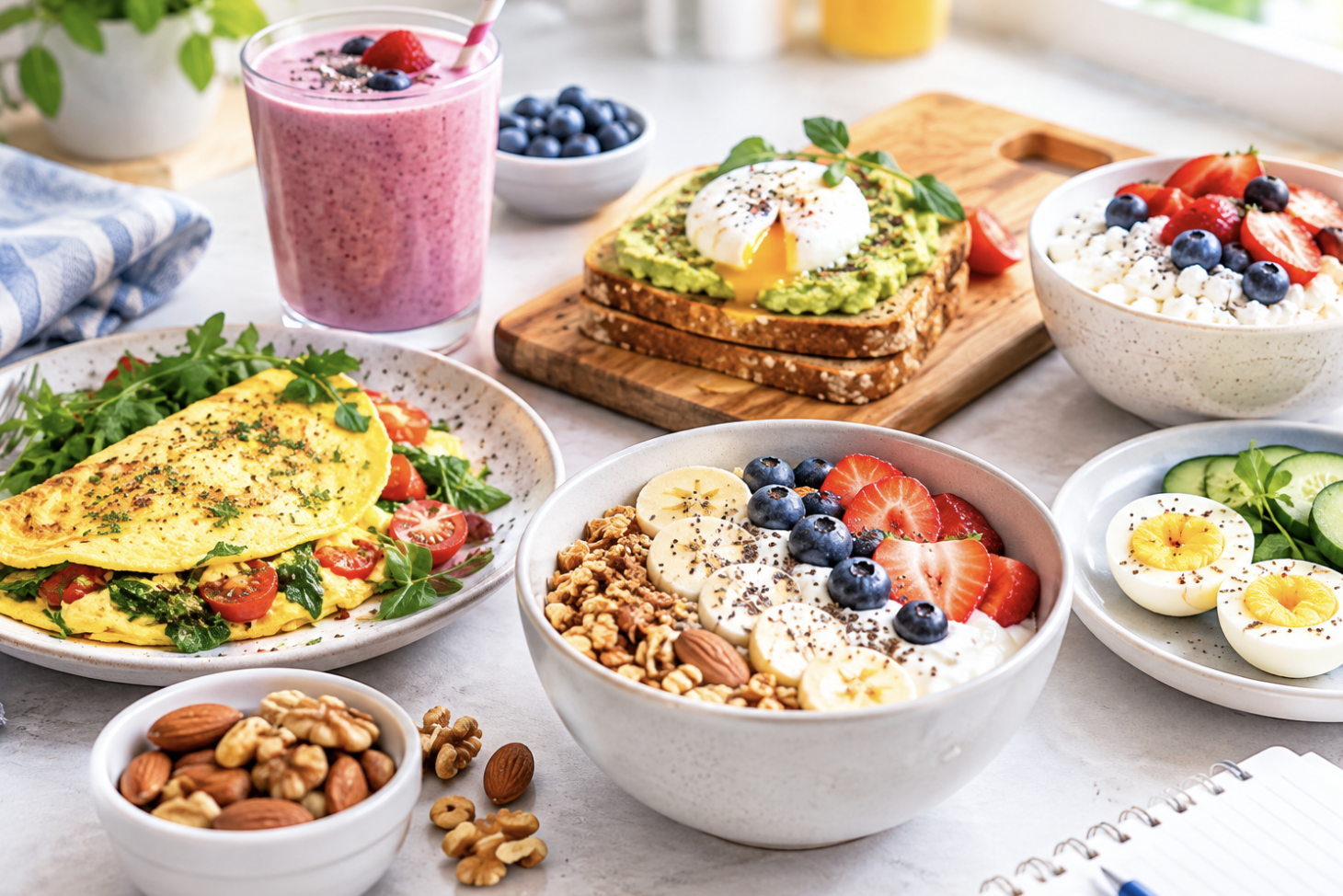
Breakfast has a reputation as the meal most likely to get rushed, skipped, or reduced to something quick and carbohydrate-heavy that leaves you hungry again within a couple of hours. Building more protein into your morning meal is one of the more reliable ways to improve satiety, stabilize energy through the morning, and support whatever fitness or health goals you’re working toward, without requiring a complicated overhaul of your entire morning routine.
The good news is that high-protein breakfast options span a genuinely wide range of preparation times and styles, from grab-and-go options for the busiest mornings to more involved dishes worth making when you have a bit more time.
Why Protein at Breakfast Matters
Protein plays a particularly useful role earlier in the day for a few concrete reasons. It tends to be more satiating than carbohydrates or fat on a per-calorie basis, meaning a protein-forward breakfast generally keeps you feeling satisfied longer than an equivalent-calorie breakfast built mostly around refined carbohydrates, which often leads to a blood sugar spike followed by a corresponding dip and renewed hunger within a couple of hours.
For anyone trying to manage their weight, build or maintain muscle, or simply avoid the mid-morning energy crash and subsequent reach for a sugary snack, prioritizing protein at breakfast specifically tends to produce noticeably better results than focusing on protein only at lunch and dinner while treating breakfast as an afterthought.
There’s also a practical distribution argument worth mentioning: research on muscle protein synthesis generally suggests that spreading protein intake more evenly across meals throughout the day, rather than concentrating the bulk of it into a single large dinner, tends to support muscle maintenance and growth somewhat more effectively than heavily skewing your intake toward the evening.
Eggs: The Reliable Foundation
Eggs remain one of the most versatile, affordable, and genuinely high-quality protein sources available for breakfast, and they lend themselves to an enormous range of preparation styles depending on how much time and effort you want to invest on a given morning.
A simple scramble with vegetables and a bit of cheese comes together in under ten minutes and delivers a substantial protein boost, particularly if you use a couple of whole eggs plus a few extra egg whites to increase the protein content without excessive additional fat. Hard-boiled eggs, prepared in a batch at the start of the week, provide a genuinely grab-and-go option that requires zero morning preparation beyond peeling, making them ideal for the busiest mornings when even a quick scramble feels like too much effort.
For a slightly more involved but still quick option, a folded omelet with vegetables and cheese, or a simple frittata baked in the oven and portioned out across several mornings, both deliver a satisfying, protein-rich breakfast that reheats reasonably well if you’re preparing ahead for a busy week.
Greek Yogurt as a High-Protein Base
Greek yogurt contains meaningfully more protein than regular yogurt due to the straining process that removes much of the whey, and it serves as an excellent, minimal-effort base for a variety of quick breakfast combinations. Topped with a handful of nuts, some berries, and a drizzle of honey, it becomes a genuinely satisfying breakfast in under two minutes of actual preparation time.
For an even higher protein content, look specifically for varieties marketed with additional protein fortification, or simply choose a plain, unsweetened Greek yogurt and add your own flavor through fruit, a bit of vanilla extract, or a spoonful of nut butter, which also adds healthy fat and additional protein of its own.
Cottage cheese, while perhaps less immediately appealing to some palates than yogurt, deserves consideration as well, since it typically contains an even higher protein content per serving than Greek yogurt, and works well both in savory preparations, mixed with everything bagel seasoning and vegetables, and sweeter combinations with fruit and a touch of honey or cinnamon.
Overnight Oats With a Protein Boost
Standard oatmeal isn’t naturally a high-protein food on its own, but overnight oats provide an excellent base for building in substantial additional protein while requiring essentially zero morning preparation time, since the entire dish is assembled the night before and simply grabbed from the refrigerator in the morning.
Building a protein-rich version typically involves combining oats with a protein source like Greek yogurt or a scoop of protein powder, along with your choice of milk, a bit of chia seeds for additional protein and fiber, and whatever fruit or flavoring you prefer.
Letting this mixture sit overnight in the refrigerator produces a genuinely satisfying, ready-to-eat breakfast requiring no cooking or morning effort whatsoever beyond opening the container.
Smoothies for Maximum Convenience
For mornings when even the minimal effort of assembling a bowl feels like too much, a protein-focused smoothie offers perhaps the fastest genuinely substantial breakfast option available. A base of Greek yogurt or a scoop of protein powder, combined with frozen fruit, a liquid of your choice, and optionally a source of healthy fat like nut butter or avocado for added satiety, blends into a complete, portable breakfast in under two minutes.
Preparing smoothie ingredients in advance, portioning frozen fruit and other add-ins into individual freezer bags ready to dump directly into a blender, removes even the minimal morning decision-making and measuring, streamlining the entire process down to blending and pouring.
Protein-Forward Baked Goods
For those who genuinely prefer something more traditionally breakfast-like, muffins or pancakes, it’s entirely possible to build meaningful protein into these formats as well, rather than assuming they’re
inherently a lower-protein choice. Adding protein powder directly into pancake batter, or incorporating Greek yogurt or cottage cheese into muffin recipes, meaningfully increases the protein content without dramatically altering the texture or flavor most people expect from these familiar breakfast foods.
Batch-preparing a larger quantity of protein-boosted muffins or pancakes over a weekend, then freezing individual portions for reheating throughout the week, brings the convenience of a grab-and-go breakfast to a format that might otherwise require more active morning preparation time.
Savory Options Beyond Traditional Egg Dishes
Not every high-protein breakfast needs to center around eggs or dairy. Leftover protein from dinner, chicken, ground turkey, tofu, reheated and paired with vegetables, offers a substantial savory breakfast option that also helps reduce food waste from the previous night’s cooking. This approach works particularly well for anyone who genuinely enjoys savory flavors in the morning more than the sweeter profile of yogurt or oatmeal-based options.
Breakfast burritos, assembled with eggs, beans, and vegetables, then wrapped and frozen individually, provide another genuinely portable, reheatable high-protein option that can be prepared in a larger batch over a weekend and grabbed quickly on busy mornings throughout the following week.
Building a Realistic Weekly Rotation
Rather than trying to prepare something elaborate every single morning, most people find success building a small rotation of two or three reliable high-protein breakfast options they genuinely enjoy and can prepare with minimal friction. This might mean hard-boiled eggs and Greek yogurt with fruit as a default for busiest mornings, a batch of overnight oats prepared for a few days at a time, and a slightly more involved option like a frittata or protein pancakes reserved for mornings with a bit more available time.
Having this rotation established removes the daily decision fatigue of figuring out breakfast from scratch each morning, while still providing enough variety that you’re not eating the exact same thing every single day, which matters for many people’s long-term consistency with any dietary habit.
Meal Prepping for Consistent High-Protein Mornings
Many of the options covered here lend themselves well to batch preparation over a weekend, hard-boiled eggs, a frittata cut into portions, a batch of overnight oats divided into individual containers, or a large batch of protein muffins or pancakes frozen individually.
Spending even thirty to forty-five minutes on a weekend preparing several days’ worth of breakfast options removes the need to make any real decisions or preparation effort during busy weekday mornings, which is often the single biggest factor in whether people actually maintain a higher-protein breakfast habit consistently rather than falling back on whatever’s quickest and most convenient in the moment, which often isn’t particularly high in protein.
Adjusting Portions to Your Specific Needs
The right amount of protein for your breakfast depends on your overall daily protein needs, activity level, and personal goals, and there’s no single universal target that applies equally to everyone. As a general starting point, many nutrition guidelines suggest aiming for somewhere in the range of twenty to thirty-five grams of protein at breakfast for most active adults, though your specific needs may reasonably fall outside this range depending on your body size, activity level, and specific goals.
Adjusting portion sizes of the ingredients covered here, more eggs, a larger serving of Greek yogurt, an additional scoop of protein powder in a smoothie or oatmeal, lets you scale any of these options up or down to match your specific target rather than needing entirely different recipes for different protein goals.
Conclusion
The most effective high-protein breakfast approach is ultimately the one you’ll actually maintain consistently, rather than the theoretically optimal one that requires more time or effort than fits into your actual daily routine.
Starting with one or two simple, genuinely low-effort options, hard-boiled eggs or a basic Greek yogurt bowl, and gradually expanding your rotation as you find what you actually enjoy and can prepare reliably, tends to build a sustainable habit far more effectively than attempting an elaborate, time-intensive breakfast routine from the very start that’s difficult to maintain once the initial motivation fades.
Frequently Asked Questions
1. Is it necessary to use protein powder to hit a high-protein breakfast target?
No, protein powder is a convenient tool but far from required. Whole food sources like eggs, Greek yogurt, cottage cheese, and leftover proteins from previous meals can easily provide substantial protein without any supplementation at all. Protein powder is worth considering primarily for convenience, particularly in smoothies or oatmeal, rather than as a necessary ingredient for a genuinely high-protein breakfast.
2. How much protein should I actually aim for at breakfast?
This varies by individual factors including body size, activity level, and overall goals, but many nutrition guidelines suggest a general target somewhere between twenty and thirty-five grams for most active adults. Rather than fixating on an exact number, focusing on consistently including a genuine protein source at breakfast, rather than a meal built almost entirely around refined carbohydrates, captures most of the practical benefit regardless of hitting a precise gram target.
3. Can plant-based eaters get enough protein at breakfast without eggs or dairy?
Yes, though it may require slightly more intentional planning. Tofu scrambles, plant-based protein powders, hemp seeds, and legumes like beans mixed into a savory breakfast bowl can all contribute meaningful protein for those avoiding eggs and dairy. Many plant-based Greek yogurt alternatives now also offer competitive protein content compared to traditional dairy-based versions, making the yogurt-based options covered above accessible with some product-specific research.
4. Will eating more protein at breakfast actually help with weight management?
For many people, yes, primarily through the increased satiety protein tends to provide compared to an equivalent-calorie meal built around refined carbohydrates. Feeling fuller for longer after breakfast can reduce the likelihood of reaching for a mid-morning snack or overeating at lunch, which indirectly supports weight management goals, though overall dietary pattern and total caloric intake across the full day remain the more significant factors for weight management specifically.
5. Is it fine to eat the same high-protein breakfast every day, or should I vary it?
Eating the same breakfast repeatedly is completely fine nutritionally for most people, and many find it actually supports consistency by removing daily decision-making. That said, building a small rotation of two or three options, rather than a single fixed choice, tends to prevent the kind of flavor fatigue that can eventually lead someone to abandon a healthy habit out of sheer boredom with the specific food itself.
6. How far in advance can I meal prep high-protein breakfasts and have them stay fresh?
Most of the options covered here, hard-boiled eggs, overnight oats, cooked frittatas, and frozen breakfast burritos or muffins, stay fresh for approximately four to five days when refrigerated properly, or considerably longer when frozen. Freezing individual portions of items like muffins, pancakes, or breakfast burritos extends usable freshness to a month or more, making a larger prep session worthwhile if you have the freezer space to store extra portions beyond a single week’s worth.
