


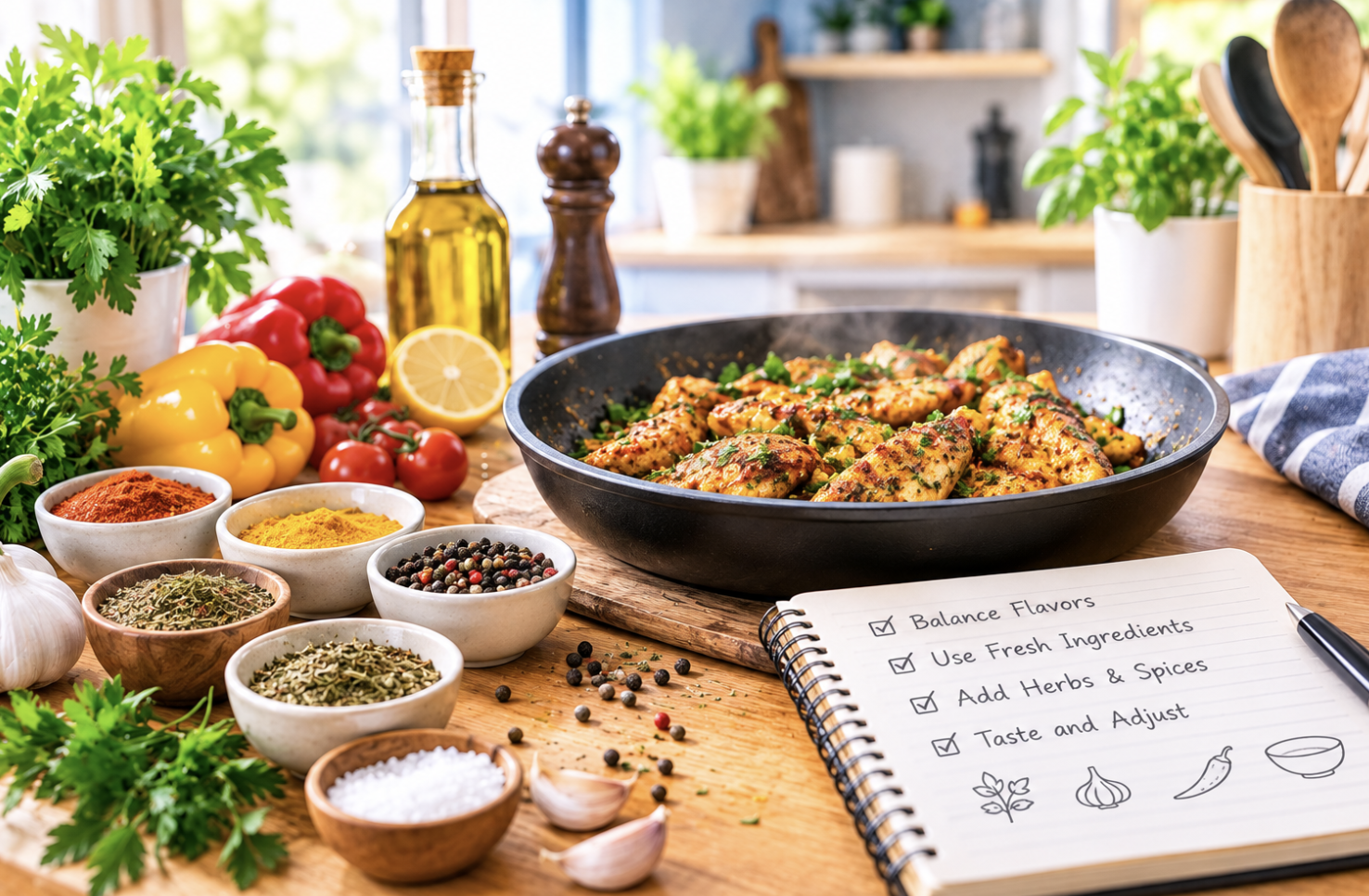
There’s a noticeable gap between home-cooked food and restaurant food that often has less to do with technique or ingredients than with seasoning, specifically how confidently and thoughtfully salt, acid, and other flavor-building elements are used throughout the cooking process rather than added once at the very end. Understanding how professional cooks actually approach seasoning demystifies a lot of what separates a flat, one-dimensional dish from one that tastes genuinely well-balanced and satisfying.
Season in Layers, Not Just at the End
One of the most significant differences between home cooking and professional cooking is when seasoning happens. Many home cooks add salt only once, near the end of cooking, tasting and adjusting a single time before serving. Professional cooks season throughout the entire cooking process, salting proteins before cooking, seasoning vegetables as they’re added to a pan, adjusting again partway through a longer-cooking dish like a soup or braise, and doing a final taste and adjustment at the end.
This layered approach means each component of a dish is properly seasoned on its own, rather than relying on a single final seasoning pass to compensate for everything, which rarely achieves the same depth of flavor throughout the entire dish.
Understand That Salt Does More Than Add Saltiness
Salt’s primary function in cooking isn’t simply making food taste salty, it’s enhancing and bringing out the existing flavors already present in your ingredients. This is why a properly salted dish tastes more like itself, more genuinely flavorful, rather than simply tasting like added salt.
Under-salted food often tastes flat or muted, even if all the other ingredients and techniques are technically correct, while properly salted food allows the actual flavors of your ingredients to come through clearly.
This is also why professional kitchens salt throughout cooking rather than only at the end, since salt added earlier has time to actually penetrate and enhance the food from within, rather than simply sitting on the surface as it would with only a final sprinkle right before serving.
Taste Constantly Throughout Cooking
Professional cooks taste their food repeatedly throughout the cooking process, not just once at the end, adjusting seasoning incrementally based on what they’re actually tasting rather than following a recipe’s stated seasoning amounts rigidly regardless of how the dish is actually developing.
This habit alone, tasting and adjusting as you go rather than only at the very end, is one of the most impactful changes a home cook can make, since it catches under-seasoning or imbalance early, when it’s still easy to correct, rather than discovering a flat-tasting dish only once it’s already fully plated.
Building this habit requires overcoming the instinct to simply follow a recipe’s measurements exactly and trust the process. Recipes provide reasonable starting points, but your specific ingredients, their freshness, size, and inherent variation, mean the exact right amount of seasoning genuinely varies from batch to batch, which only tasting throughout the process can actually reveal.
Don’t Forget Acid
Salt gets most of the attention in seasoning discussions, but acid, lemon juice, vinegar, wine, tomatoes, plays an equally important and often overlooked role in creating balanced, professional-tasting food. Acid brightens and lifts flavors, cutting through richness and heaviness in a dish and adding a dimension that salt alone can’t provide.
A rich, heavy dish that tastes slightly flat or overly one-note often just needs a small amount of added acid, a squeeze of lemon, a splash of vinegar, to genuinely transform the overall balance and make it taste noticeably more vibrant and complete.
This is a common technique professional cooks use specifically to fix a dish that tastes almost right but is missing something identifiable, adding a small amount of acid before reaching for more salt or additional ingredients, since the issue is often balance rather than a lack of flavor intensity.
Build Flavor With Aromatics From the Start
Onions, garlic, celery, carrots, and other aromatic vegetables, when properly cooked at the beginning of a dish rather than added later as an afterthought, build a foundational layer of flavor that supports everything added afterward.
Taking the time to properly cook these aromatics, generally until they’re softened and beginning to develop some color rather than rushing this step, develops significantly more flavor than adding them briefly partway through cooking or skipping this foundational step entirely.
This patience early in the cooking process is one of the less visible but genuinely significant differences between rushed home cooking and more deliberate professional technique, since this foundational flavor layer affects the entire finished dish in a way that’s difficult to fully compensate for later with additional seasoning alone.
Use Fresh Herbs and Spices Thoughtfully
Dried herbs and spices lose potency over time, and using ones that have been sitting in your pantry for years contributes to flatter, less vibrant seasoning even if you’re using a technically correct amount according to a recipe. Replacing dried spices every year or two, and toasting whole spices briefly in a dry pan before grinding or using them, meaningfully increases their flavor impact compared to using stale, long-stored spices.
Fresh herbs, when called for, are generally added at different points depending on their type. Hardier herbs like rosemary and thyme hold up well to extended cooking and can be added earlier. Delicate herbs like basil, cilantro, and parsley lose flavor and color quickly with heat and are best added at the very end or as a finishing garnish, preserving their fresh, bright flavor rather than cooking it away entirely.
Balance the Full Range of Flavors, Not Just Salt
Professional seasoning considers the full range of flavor elements, salt, acid, sweetness, and sometimes bitterness or umami, rather than focusing exclusively on salt as the only adjustable variable. A dish that tastes too acidic can be balanced with a touch of sweetness. A dish that tastes flat despite adequate salt often needs acid rather than more salt.
Learning to identify which specific element is actually missing or overpowering, rather than defaulting to adding more salt for every seasoning problem, is a skill that develops directly through the habit of tasting frequently and thinking specifically about what’s actually needed to bring the dish into better balance.
Season Proteins Before Cooking, Not Just After
Salting meat, poultry, or fish before cooking, ideally with enough time for the salt to actually penetrate the surface rather than immediately before it hits the pan, produces noticeably better seasoned results throughout the protein rather than just on the exterior surface.
For larger cuts, salting even an hour or more before cooking, or the night before for something like a whole chicken, allows the salt meaningfully more time to penetrate and season the meat throughout rather than remaining only on the surface.
Conclusion
Like most cooking skills, confident seasoning develops through repetition and attention rather than through memorizing exact rules. Tasting your food constantly throughout cooking, thinking specifically about what might be missing when something tastes flat or imbalanced, and gradually building comfort with adjusting salt, acid, and other elements incrementally rather than all at once, transforms seasoning from a source of anxiety into an intuitive, genuinely enjoyable part of cooking, much closer to how professional cooks actually approach it in practice.
Read more about News PinUp
Frequently Asked Q uestions
1. How do I know if I’m adding too much salt?
Taste frequently and add salt incrementally rather than all at once, since it’s much easier to add a bit more than to correct an oversalted dish. If you do oversalt something, adding an acidic element, a starchy ingredient like potatoes in a soup, or diluting with additional unsalted liquid or ingredients can help balance an overly salty dish, though prevention through gradual tasting is generally more reliable than correction after the fact.
2. What’s the difference between kosher salt, table salt, and sea salt for cooking?
The main practical difference is crystal size and density, meaning the same volume measurement, a teaspoon, for example, can contain meaningfully different amounts of actual salt depending on the type. This is why many professional recipes specify kosher salt specifically, since its larger, more consistent crystals make it easier to control and distribute evenly by hand compared to the finer grains of table salt.
3. Why does restaurant food often taste so much better than similar dishes made at home?
Beyond seasoning technique specifically, professional kitchens often use more fat, more concentrated stocks and reductions, and more time spent building foundational flavors than typical home cooking allows for on a regular weeknight. Seasoning in layers and tasting throughout cooking, as covered above, is one of the most replicable differences a home cook can adopt without needing professional equipment or unlimited time.
4. Should I season vegetables the same way I season meat?
The general principles, seasoning throughout cooking rather than only at the end, and tasting frequently, apply to vegetables as well, though the specific timing differs. Vegetables generally benefit from salt added as they cook, helping draw out moisture and concentrate flavor, particularly when roasting or sautéing, rather than only being seasoned after they’re already fully cooked.
5. Is it possible to over-season food to the point where it can’t be fixed?
It’s possible, particularly with strong ingredients like chili, certain spices, or excessive salt, but most seasoning issues are fixable to some degree with the right adjustment, more acid, a touch of sweetness, dilution, or additional unseasoned components to balance an overly intense flavor. This is part of why tasting frequently throughout cooking matters so much, since it’s far easier to make small corrections along the way than to fix a dish that’s already significantly over-seasoned by the time it’s fully cooked.
