


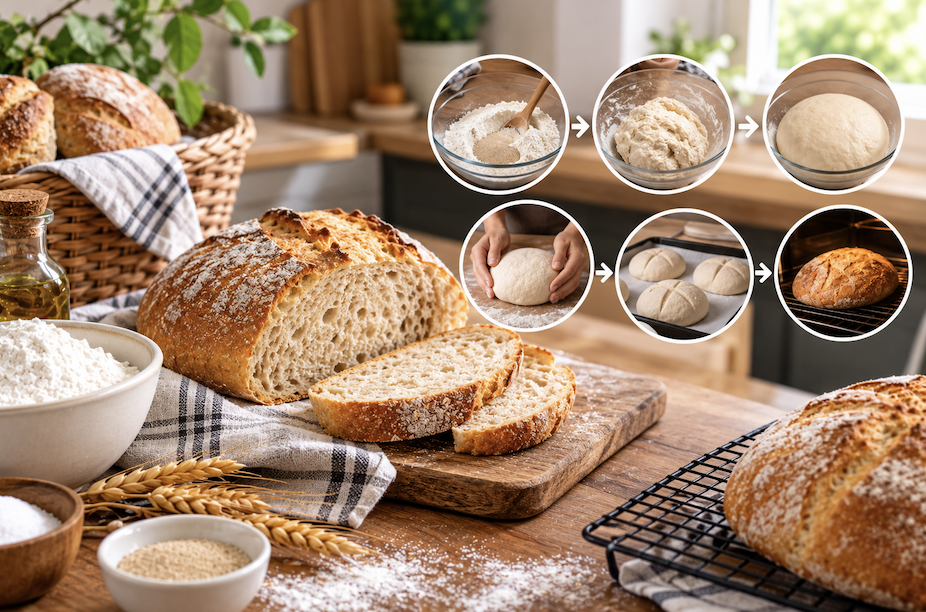
Bread baking has a reputation for being intimidating, full of precise measurements, mysterious yeast behavior, and techniques that seem to require years of practice to master. In reality, a basic loaf of bread comes together from just a few ingredients flour, water, yeast, and salt, and understanding what each one actually does during the process demystifies most of what makes beginners nervous. Once you’ve made a few loaves and gotten comfortable with the basic rhythm, bread baking becomes a genuinely satisfying, repeatable skill rather than an intimidating one.
Understanding the Core Ingredients
Flour provides the structure of bread, primarily through a protein called gluten, which forms an elastic network when flour is combined with water and worked through kneading. Bread flour, with a higher protein content than all-purpose flour, produces a chewier, more structured loaf, while all-purpose flour works perfectly well for many bread recipes and produces a slightly softer result.
Water hydrates the flour and activates gluten formation, and the specific ratio of water to flour, called hydration, significantly affects the final texture, with higher hydration doughs generally producing a more open, airy crumb, though they’re also somewhat more challenging to handle for beginners.
Yeast is the living organism responsible for fermentation, consuming sugars in the flour and producing carbon dioxide gas, which creates the bubbles that make bread rise, along with alcohol and other compounds that contribute to flavor development during the rising process.
Salt does more than add flavor, it also strengthens gluten structure and helps regulate the speed of fermentation, preventing yeast from working too quickly and producing a less flavorful, poorly structured loaf.
Choosing Your Yeast
Active dry yeast requires dissolving in warm water before use, typically around 105 to 110 degrees Fahrenheit, to activate it before mixing into your other ingredients. Instant yeast can be mixed directly into your dry ingredients without this separate activation step, making it slightly more convenient for beginners, and it’s a reasonable substitute in most recipes calling for active dry yeast, generally used in a very similar quantity.
Whichever type you use, checking the expiration date matters significantly, since expired or improperly stored yeast may not activate properly, leading to a loaf that doesn’t rise as expected despite otherwise following the recipe correctly.
Mixing and Kneading
Combine your flour, water, yeast, and salt according to your specific recipe, then knead the dough, which develops the gluten structure necessary for good bread texture. Kneading by hand typically takes about eight to ten minutes, working the dough by folding and pressing it repeatedly until it becomes smooth and elastic, springing back slightly when you press into it with a finger.
A stand mixer with a dough hook attachment can handle this step for you, typically requiring less time, around five to seven minutes on a low to medium speed, and is worth considering if you plan to bake bread regularly, though it’s entirely possible to produce excellent bread through hand kneading alone.
Understanding when dough is properly kneaded matters more than following an exact time, since flour absorbency and specific conditions vary. The windowpane test, gently stretching a small piece of dough until it becomes thin enough to see light through without tearing, is a reliable way to confirm adequate gluten development regardless of how long the actual kneading took.
The First Rise
After kneading, place your dough in a lightly oiled bowl, cover it, and let it rise in a warm, draft-free location until it has roughly doubled in size, typically taking one to two hours depending on your specific recipe, the ambient temperature, and the yeast quantity used. This first rise, sometimes called bulk fermentation, is where much of the flavor and structure development happens, and rushing it by using an environment that’s too hot to speed things up, rather than allowing the natural process to complete at a reasonable pace, generally produces a less flavorful result.
If your kitchen is particularly cool, placing the covered bowl in an oven with just the oven light on, which provides gentle, consistent warmth without actually turning the oven on, creates a good environment for rising without needing any special equipment.
Shaping and the Second Rise
Once your dough has completed its first rise, gently deflate it and shape it into your final form, whether that’s a loaf pan shape, a round boule, or another shape depending on your specific recipe. This shaping step also helps redistribute the yeast and create surface tension that supports the bread’s structure during baking.
After shaping, most recipes call for a second, shorter rise, typically thirty minutes to an hour, allowing the dough to relax and rise again in its final shape before baking. This second rise is sometimes called proofing, and slightly underproofing, baking a bit before this rise fully completes, generally produces a more predictable result for beginners than overproofing, which can cause the bread to collapse or produce a denser texture than intended.
Baking at the Right Temperature
Most basic bread recipes bake at a relatively high temperature, generally somewhere between 375 and 450 degrees Fahrenheit depending on the specific type of bread, which helps create a good crust while cooking the interior fully. Preheating your oven thoroughly before baking matters significantly, since an underheated oven can result in bread that spreads too much before the crust sets properly, affecting both texture and final shape.
Many bread recipes benefit from introducing steam during the first portion of baking, achievable by placing a pan of hot water in the oven or spraying the oven walls with water just before closing the door, which helps the crust develop properly before it sets too early, resulting in better rise and a more attractive, crackly crust.
Knowing When Your Bread Is Done
Visual cues, a golden brown crust, help but aren’t always sufficient on their own for determining doneness. Tapping the bottom of a loaf and listening for a hollow sound is a traditional method, though checking the internal temperature with a food thermometer, generally looking for around 190 to 210 degrees Fahrenheit depending on the specific type of bread, provides a more reliable, less subjective confirmation that your loaf is fully baked through.
Letting Your Bread Cool Properly
It’s tempting to cut into a fresh loaf immediately, but bread continues cooking internally for a period after coming out of the oven, and cutting too early can result in a gummy, underdone texture even if the bread was actually fully baked. Allowing your loaf to cool on a wire rack for at least an hour, longer for larger loaves, lets the internal structure fully set before slicing, significantly improving the final texture compared to cutting into a still-hot loaf straight from the oven.
Troubleshooting Common Beginner Issues
If your bread doesn’t rise properly, check that your yeast is fresh and was activated at an appropriate temperature, since water that’s too hot can kill yeast entirely while water that’s too cool won’t activate it efficiently. If your bread turns out dense, this often points to under-kneading, insufficient rising time, or old, less active yeast. If your crust is too pale, your oven temperature may be too low, or you may need a longer bake time or the addition of steam during baking to help crust development.
Conclusion
Like most baking skills, bread making improves significantly through repetition rather than trying to perfect every variable in a single attempt. Making the same basic recipe a few times in a row, paying attention to how small adjustments affect the outcome, builds genuine intuition for the process far more effectively than reading about technique alone, and most people find their second or third loaf noticeably better than their first, simply from having gone through the process and started to internalize what each stage should actually look and feel like.
- Read more about Newspinup
FAQ’s
1. Why didn’t my bread rise at all?
This is most commonly due to inactive yeast, either expired, killed by water that was too hot, or never properly activated. Double-check your yeast’s expiration date and confirm your water temperature was appropriate before mixing, since even correctly followed recipes will fail to rise if the yeast itself wasn’t viable at the start.
2. Can I use all-purpose flour instead of bread flour?
Yes, in most recipes, though the resulting loaf will typically be slightly softer and less chewy due to the lower protein content in all-purpose flour compared to bread flour. For most beginner recipes, this difference is fairly minor, and all-purpose flour produces perfectly good results while you’re still getting comfortable with the overall process.
3. Do I need any special equipment to start baking bread?
Not really. A large mixing bowl, a baking sheet or loaf pan, and an oven are genuinely sufficient to get started. A kitchen scale for measuring ingredients by weight rather than volume improves consistency significantly and is a worthwhile investment as you continue baking, though it’s not strictly required for a first attempt using volume measurements from a beginner-friendly recipe.
4. How do I know if I’ve kneaded the dough enough?
The windowpane test is the most reliable method: take a small piece of dough and gently stretch it between your fingers. If it stretches thin enough to see light through without tearing, the gluten is sufficiently developed. If it tears before becoming thin, continue kneading for a few more minutes before testing again.
5. Why does my homemade bread go stale faster than store-bought bread?
Store-bought bread often contains preservatives specifically designed to extend shelf life, which homemade bread naturally lacks. Homemade bread is best eaten within a few days, and freezing any portion you won’t finish within that window, then thawing or toasting as needed, is the most effective way to extend its usable life without the added preservatives found in most commercial bread.
