


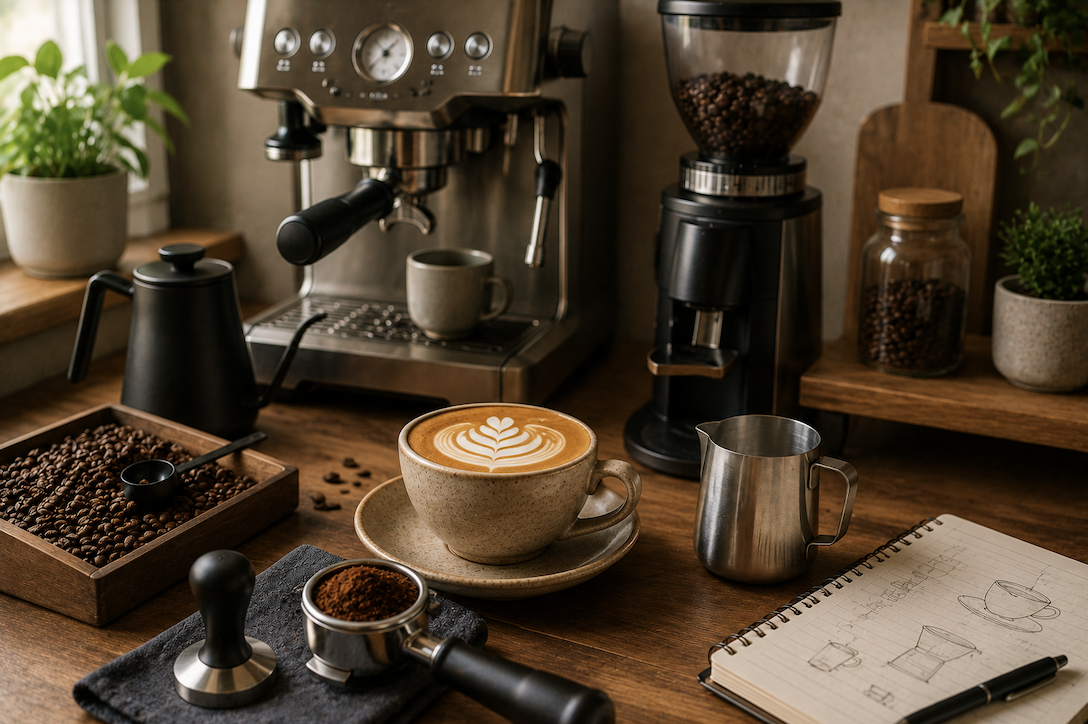
There’s a specific gap between the coffee most people brew at home and what they get from a good coffee shop, and it’s not really about expensive equipment or professional training. Most of the difference comes down to a handful of fundamentals, fresh beans, the right grind, correct ratios, and proper water temperature, which are genuinely achievable in a home kitchen once you understand what’s actually driving the flavor difference.
Start With Genuinely Fresh Beans
Coffee begins losing flavor almost immediately after roasting, and pre-ground coffee sitting on a grocery store shelf for months has already lost a substantial amount of the complexity and freshness that makes coffee shop coffee taste noticeably better. Buying whole beans from a roaster with a visible roast date, ideally within the past two to four weeks, and grinding them yourself right before brewing makes one of the single biggest differences in overall flavor quality, more than almost any other single change you can make.
Store your beans in an airtight container away from light, heat, and moisture, and avoid buying more than you’ll use within a few weeks, since even properly stored beans gradually lose flavor over time rather than staying fresh indefinitely.
Invest in a Proper Grinder
Pre-ground coffee, even from fresh beans, loses flavor rapidly once ground, since grinding dramatically increases the surface area exposed to air. A burr grinder, which crushes beans to a consistent particle size, produces a far more even grind than a blade grinder, which chops beans unevenly, resulting in some particles over-extracted and bitter while others remain under-extracted and sour, muddying the overall flavor.
If you’re serious about improving your home coffee, a decent burr grinder is genuinely one of the highest-impact purchases you can make, often producing a bigger improvement in your coffee than upgrading your actual brewing equipment.
Match Your Grind Size to Your Brewing Method
Different brewing methods require different grind sizes for proper extraction, and using the wrong grind size for your specific method is a common source of disappointing results even with good beans and equipment. A drip coffee maker generally works best with a medium grind. A French press requires a coarse grind, since the metal filter allows finer particles through, resulting in sediment and over-extraction if the grind is too fine. Espresso requires a very fine grind to create appropriate resistance for the pressure-based extraction process. Pour-over methods typically fall in a medium-fine range, though this varies somewhat by the specific method and personal preference.
If your coffee consistently tastes bitter, your grind may be too fine for your brewing method, causing over-extraction. If it tastes sour or weak, your grind may be too coarse, resulting in under-extraction.
Get the Coffee-to-Water Ratio Right
A commonly recommended starting ratio is roughly one to two tablespoons of coffee for every six ounces of water, though personal preference and specific brewing methods create meaningful variation around this general guideline. Using a kitchen scale to measure both coffee and water by weight, rather than estimating with scoops, produces far more consistent results from batch to batch, which matters more than people initially expect for genuinely reproducing a good cup rather than getting lucky occasionally with an imprecise approach.
Once you’ve found a ratio you genuinely enjoy through some initial experimentation, keeping careful notes on the specific measurements lets you consistently reproduce that result rather than needing to guess anew each time you brew.
Pay Attention to Water Quality and Temperature
Coffee is mostly water, and water quality genuinely affects the final flavor more than people typically expect. If your tap water has a strong taste or odor, using filtered water generally produces a noticeably cleaner-tasting cup. Water temperature also matters significantly for proper extraction: water that’s too hot, boiling directly, can over-extract and produce bitterness, while water that’s too cool under-extracts, producing a weak, sour result. The generally recommended range for most brewing methods falls between one hundred ninety-five and two hundred five degrees Fahrenheit, just below a full boil, which you can achieve by letting boiling water rest for thirty seconds to a minute before pouring.
Don’t Neglect Your Equipment’s Cleanliness
Coffee oils build up on brewing equipment over time and can turn rancid, adding an unpleasant bitter or off flavor to even well-brewed coffee made with fresh, high-quality beans. Regularly cleaning your coffee maker, grinder, and any reusable filters, following the manufacturer’s specific recommendations for your equipment, prevents this buildup from undermining the quality of every other improvement you’ve made to your actual brewing process.
Experiment With Brewing Method to Find Your Preference
Different brewing methods genuinely produce different flavor profiles, not just different levels of quality, so part of achieving coffee shop-quality results at home involves finding the method that actually matches your personal taste preferences rather than assuming one specific method is universally superior. Pour-over methods tend to produce a cleaner, brighter cup that highlights subtle flavor notes. French press produces a fuller-bodied, richer cup due to the metal filter allowing more oils through. Drip machines offer convenience and consistency once properly dialed in. Trying a couple of different methods with the same beans lets you directly compare and identify which style genuinely appeals to you most, rather than assuming your current method is automatically the right choice.
Consider Your Milk and Additions Carefully
If you enjoy milk-based coffee drinks, the quality and preparation of your milk matters more than people often realize. Properly steamed or frothed milk, achievable at home with a relatively affordable milk frother, adds genuine texture and sweetness that significantly improves drinks like lattes or cappuccinos compared to simply pouring cold milk directly into coffee. If you use sweeteners or flavorings, adding them while the coffee is still hot generally helps them dissolve more evenly than adding them after the coffee has cooled somewhat.
Conclusion
Start by prioritizing fresh, quality beans and a proper burr grinder, since these two changes alone typically produce the most noticeable improvement over a typical home coffee setup. From there, dial in your specific grind size and ratio for your preferred brewing method, pay attention to water quality and temperature, and keep your equipment clean. None of these individual changes require professional training or particularly expensive equipment, but combined, they add up to coffee that genuinely rivals what you’d get from a good coffee shop, at a fraction of the ongoing cost.
- Read more about Newspinup
FAQ’s
1. Is it really necessary to grind beans right before brewing every time?
For the best possible flavor, yes, since coffee loses aromatic compounds rapidly once ground. If grinding immediately before every single brew isn’t practical for your routine, grinding in smaller batches every few days, rather than a large batch that sits for weeks, still represents a meaningful improvement over pre-ground coffee purchased already ground from the store.
2. How do I know if my coffee is over-extracted or under-extracted?
Over-extracted coffee typically tastes bitter, harsh, or overly dry on the finish. Under-extracted coffee tends to taste sour, weak, or thin, lacking the fuller body of a properly extracted cup. Adjusting your grind size finer to address under-extraction, or coarser to address over-extraction, while keeping your ratio and brew time consistent, is the most direct way to dial in better results.
3. What’s the difference between light, medium, and dark roast, and does it affect brewing?
Roast level affects flavor profile more than it affects the actual brewing process itself, though darker roasts are sometimes slightly more forgiving of grind and ratio imprecision due to their bolder, more dominant flavor. Light roasts tend to highlight more of the bean’s original, subtle flavor characteristics, while dark roasts emphasize the deeper, more caramelized flavors developed during a longer roasting process. Personal preference plays the biggest role in choosing between them.
4. Do I need an expensive espresso machine to make good coffee at home?
Not at all, unless espresso specifically is what you’re after. Many excellent brewing methods, pour-over, French press, and well-calibrated drip machines produce genuinely excellent coffee without anywhere near the cost of a quality espresso machine, which does require a more significant investment if espresso-based drinks specifically are your goal.
5. How long do coffee beans actually stay fresh once opened?
Whole beans generally maintain good flavor for about two to four weeks after the roast date when stored properly in an airtight container away from light and heat, though this varies somewhat by roast level and specific bean. Ground coffee loses freshness dramatically faster, often within days rather than weeks, which is the core reason grinding your own beans just before brewing makes such a meaningful difference.
6. Should I refrigerate or freeze my coffee beans to extend freshness?
Generally not recommended for beans you’ll use within the next few weeks, since the temperature fluctuations and potential moisture exposure from repeatedly opening a refrigerated or frozen container can actually degrade quality faster than proper room-temperature storage in an airtight container. Freezing can be reasonable for beans you genuinely won’t use for a month or more, provided they’re portioned into smaller sealed containers to minimize how often the full batch is exposed to temperature changes.
