


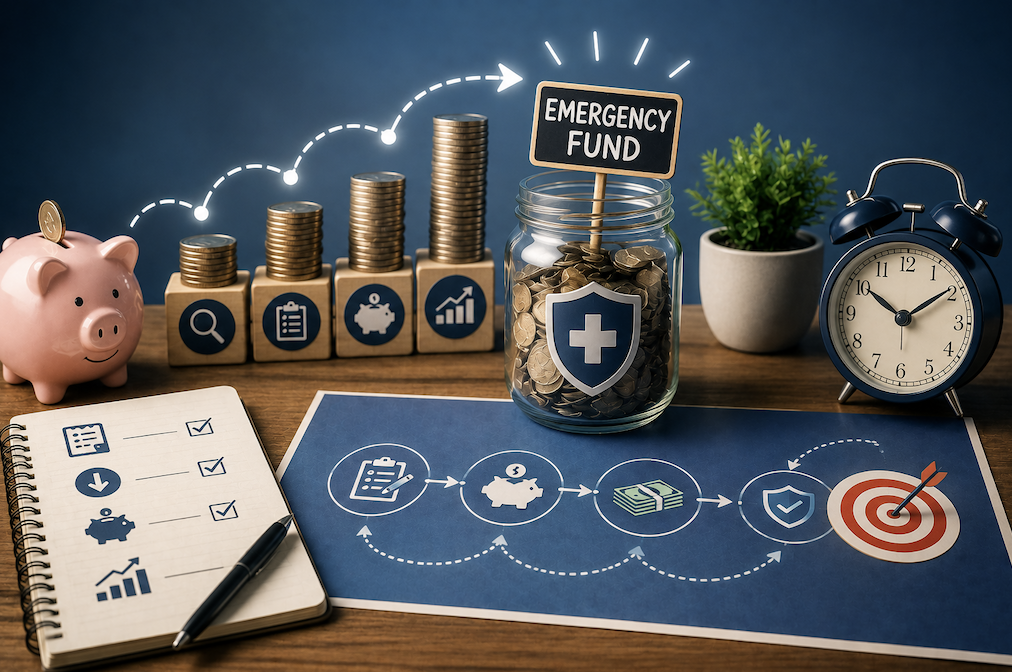
Most financial advice about emergency funds starts with a number, usually three to six months of expenses, and then leaves you wondering how anyone with a regular income is supposed to save that much money. If you’re living paycheck to paycheck, or even just feeling like there’s never anything left over at the end of the month, that advice can feel more discouraging than helpful. The truth is that building an emergency fund isn’t about hitting a specific number quickly. It’s about building a habit and a buffer, starting small, and letting it grow steadily until a surprise expense stops being a crisis.
Why an Emergency Fund Matters More Than It Seems
An emergency fund is money set aside specifically for unexpected costs, a car repair, a medical bill, a period of reduced income, an appliance that suddenly breaks. Without one, these situations often get handled with credit cards or loans, which turns a one-time expense into an ongoing debt with interest attached. The emergency becomes twice as expensive as it needed to be, and the stress of it lingers for months or years afterward.
Having even a small buffer changes the entire experience of an unexpected expense. Instead of panicking about how to cover it, you simply pay for it and move on. That shift, from crisis to inconvenience, is really what an emergency fund is for.
Start With a Realistic First Goal
Forget three to six months of expenses for now. That number is a long-term target, not a starting point, and treating it as the first goal is one of the main reasons people give up before they start. Instead, aim for a smaller, genuinely achievable first milestone: five hundred dollars, or one month of your most essential expenses, whichever feels more realistic to you.
This smaller number matters because it covers the most common unexpected costs people actually run into: a flat tire, a minor medical copay, a broken phone screen. Reaching it quickly also builds confidence and momentum, which matters more than people give it credit for. Once you’ve hit that first milestone, you can raise the target and keep building from there.
Figure Out Where the Money Will Actually Come From
The biggest obstacle to building an emergency fund usually isn’t willpower, it’s not having a clear source for the money in the first place. Before you set a savings goal, take a real look at where money is currently going. This doesn’t require a complicated budgeting system, just an honest look at your last month of spending, either through your bank’s app or by reviewing your statements directly.
Look specifically for subscriptions you forgot you had, recurring charges that no longer serve you, and categories where spending has quietly crept up over time. You’re not looking to cut everything enjoyable out of your life, just to find the specific leaks that, once patched, can be redirected toward
savings without actually changing your quality of life.
If there’s genuinely nothing left over after essential expenses, the more direct path is increasing income, even temporarily, through overtime, a short-term side gig, or selling items you no longer need. Both approaches, cutting and earning, work better together than either one does alone.
Automate It So You Don’t Have to Rely on Willpower
One of the most effective things you can do is remove yourself from the decision entirely. Set up an automatic transfer from your checking account to a separate savings account on the same day your paycheck arrives, even if the amount is small. Twenty dollars a week doesn’t feel like much, but it adds up to over a thousand dollars a year, and because it happens automatically, you’re not relying on remembering or feeling motivated every single time.
The key word here is separate. Keeping emergency savings in the same account you use for daily spending makes it far too easy to dip into without really noticing. A dedicated savings account, ideally one that’s slightly less convenient to access than your checking account, creates just enough friction to keep the money there for its actual purpose.
Choose the Right Place to Keep It
An emergency fund needs to be accessible, but it doesn’t need to be sitting in a checking account earning nothing. A high-yield savings account, widely available through online banks, typically offers a meaningfully better interest rate than a traditional bank’s savings account while still allowing you to withdraw the money within a day or two when you actually need it.
Avoid putting emergency savings into investments like stocks or retirement accounts, even though they may offer higher potential returns. The entire point of this money is that it needs to be there, in full, exactly when something goes wrong, and investments can lose value at the worst possible moment, right when you need to access them.
Treat Windfalls as an Opportunity, Not Extra Spending Money
Tax refunds, work bonuses, cash gifts, and rebates are easy to treat as free money to spend on something fun, and there’s nothing wrong with using some of it that way. But putting even half of an unexpected windfall directly into your emergency fund can meaningfully speed up your progress without requiring any change to your regular monthly budget. It’s money you weren’t counting on in the first place, so redirecting a portion of it rarely feels like a real sacrifice.
What to Do When You’re Tempted to Use It for Something Else
Once there’s a few hundred dollars sitting in a savings account, it’s common to start eyeing it for something that isn’t really an emergency: a vacation, a sale on something you’ve wanted, a slightly nicer version of something you already own. This is where having a clear, specific definition of what counts as an emergency becomes genuinely useful.
A reasonable definition is something unexpected, necessary, and urgent. A flat tire on your way to work qualifies. A flash sale does not. Writing this definition down somewhere you’ll actually see it, and asking yourself honestly whether a purchase meets it before pulling from the fund, keeps the money available for the moments it’s actually meant for.
Rebuilding After You Use It
At some point, you will use your emergency fund, and that’s not a failure, it’s the fund doing exactly what it was built for. What matters is treating the withdrawal as a signal to restart your automatic savings, not as a reason to give up on the habit entirely. Go back to the smaller, more achievable milestones if the full target feels overwhelming again, and rebuild the same way you built it the first time.
How Big Should It Eventually Get
Once you’ve built a solid starting cushion, the traditional three to six months of essential expenses becomes a reasonable long-term target, and the right number within that range depends on your situation. If your income is stable and predictable, closer to three months is often sufficient. If your income varies, if you’re self-employed, or if you work in an industry with less job security, leaning toward six months or slightly more provides a meaningful additional layer of protection.
There’s no need to rush toward this larger number. An emergency fund built slowly and consistently is still an emergency fund. The version that exists, even partially funded, is infinitely more useful than the perfect version that never gets started because the goal felt too far away.
Conclusion
Building an emergency fund isn’t really about a single number. It’s about creating a habit of setting money aside consistently, removing the friction of relying on willpower, and giving yourself a buffer that turns unexpected costs from a crisis into a manageable inconvenience. Start small, automate what you can, protect it from casual spending, and let it grow over time. The peace of mind that comes with even a modest cushion is worth far more than the discomfort of getting started.
Frequently Asked Questions
1. How much should I save each month if I don’t have much extra income?
There’s no minimum that’s too small to matter. Even ten or twenty dollars a week, moved automatically into a separate account, adds up faster than most people expect and builds the habit that matters more than the amount at the start. Consistency over time outperforms a large deposit made once and never repeated.
2. Should I pay off debt first or build an emergency fund first?
Most financial guidance suggests building a small starter emergency fund, often around five hundred to one thousand dollars, before aggressively paying down debt. This way, a surprise expense doesn’t force you to rely on credit cards again while you’re trying to pay other debt off. Once that small cushion exists, you can shift focus toward debt while contributing smaller ongoing amounts to savings.
3. Is a checking account good enough, or do I really need a separate savings account?
A separate account matters more than people expect. Keeping emergency money mixed in with your everyday spending account makes it far too easy to absorb into regular purchases without a clear decision being made. A dedicated account, especially one at a different bank than your everydaychecking, creates a small but meaningful barrier that helps the money stay put.
4. What counts as a real emergency versus something I just want to buy?
A useful test is asking whether the expense is unexpected, necessary, and time-sensitive. A car repair needed to get to work fits all three. A limited-time sale on something you’ve wanted does not. When in doubt, give yourself 24 hours before deciding, genuine emergencies rarely wait that long, but the urge to spend on something else often fades.
5. Can I invest my emergency fund instead of keeping it in savings?
It’s better not to. Investments can lose value at exactly the moment you need the money most, during a market downturn that coincides with a job loss, for example. A high-yield savings account offers a reasonable middle ground, some interest growth without the risk of the balance dropping when you need to rely on it.
How do I stay motivated when progress feels slow?
Track your progress somewhere visible, a simple note on your phone or a small chart works fine, and celebrate reaching smaller milestones rather than waiting until you hit the full target. Automating the transfers also removes a lot of the mental effort involved, since you’re not relying on motivation every single week to make it happen.
