


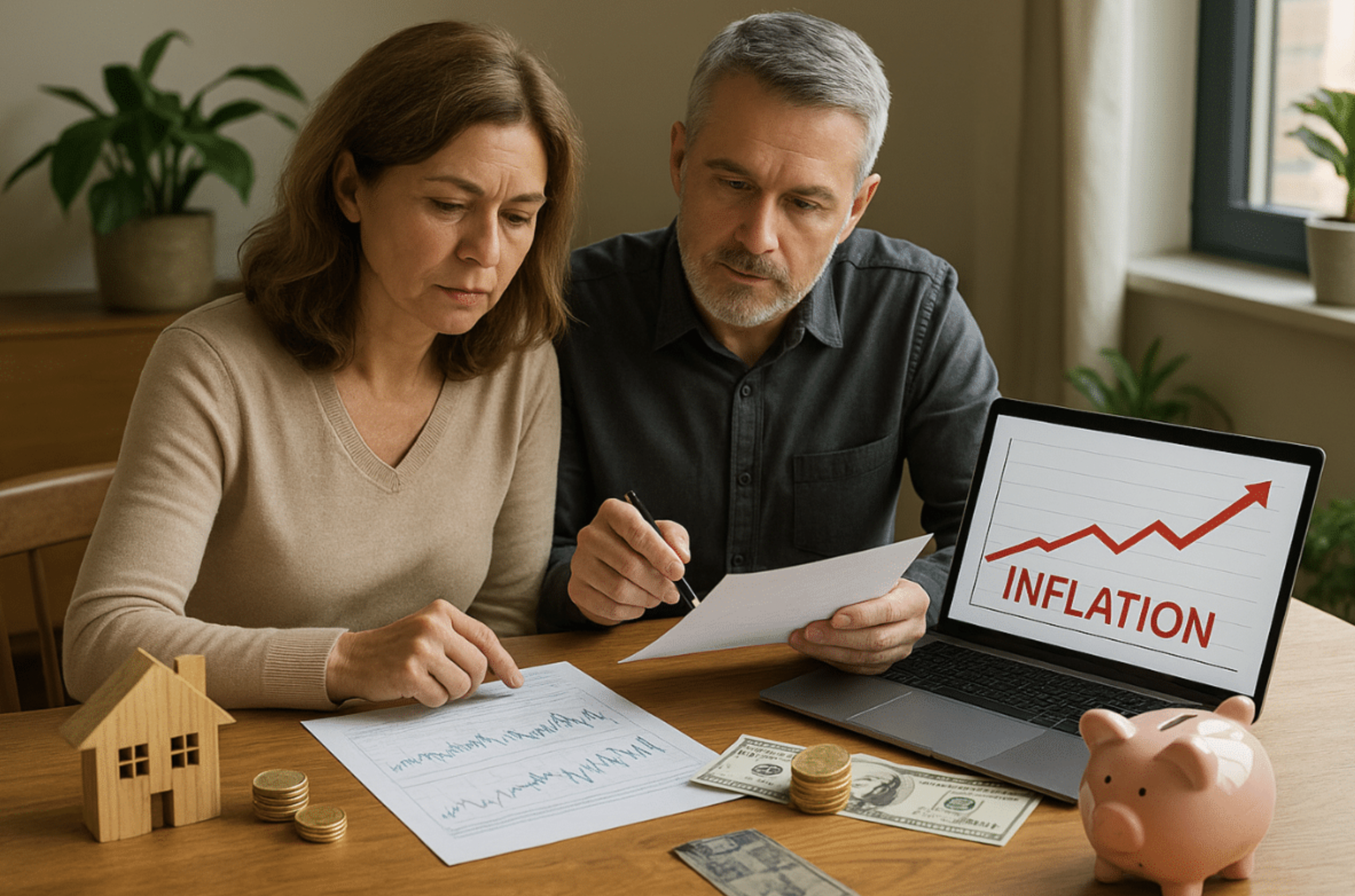
Inflation is a term that appears constantly in news coverage, economic discussions, and everyday conversations about the rising cost of living, yet many people have only a general, it’s somewhat vague about what it actually means and how it affects their personal financial situation.
The actual mechanics behind inflation, rather than just recognizing it as a general economic buzzword, helps you make more informed decisions about saving, spending, and planning for the future.
What Inflation Actually Means
Inflation refers to the general increase in prices across an economy over time, which correspondingly means a decrease in the purchasing power of money, since the same amount of currency buys progressively less as prices rise.
This is typically measured through indices tracking the average price of a broad basket of goods and services that a typical household might purchase, comparing how this overall cost changes from one period to the next, usually expressed as an annual percentage rate.
It’s worth that inflation reflects average price changes across the broader economy, meaning individual prices for specific goods and services can rise, fall, or remain stable even during a period of overall inflation, and your own personal experience of inflation can differ somewhat from the broader reported average depending on your specific spending patterns and the particular goods and services that matter most in your own household budget.
Why Some Inflation Is Considered Normal and Even Healthy
It might seem intuitive that zero inflation, meaning completely stable prices, would represent an ideal economic state, but most economists and central banks actually target a modest, positive rate of inflation, typically around two percent annually in many developed economies, rather than aiming for zero.
This reflects a belief that modest, predictable inflation supports healthy economic activity, encouraging spending and investment rather than excessive saving driven by an expectation that money will be worth more if simply held rather than spent or invested.
Deflation, the opposite of inflation where prices actually decline over time, might sound appealing on the surface, but it can create problematic economic dynamics, since falling prices can discourage spending as consumers delay purchases anticipating even lower prices later, potentially creating a downward economic spiral that proves considerably harder to correct than the challenges posed by moderate, expected inflation.
What Causes Inflation
Inflation typically results from some combination of a few underlying economic dynamics. Demand-pull inflation occurs when overall demand for goods and services in an economy exceeds the available supply, pushing prices upward as buyers compete for limited available goods.
Cost-push inflation occurs when the costs of producing goods and services increase, whether due to rising material costs, labor costs, or other input expenses, with businesses passing these increased costs along to consumers through higher prices.
Monetary factors also play a significant role, since changes in the overall money supply within an economy can influence inflation, with a rapidly expanding money supply, without a corresponding increase in the actual production of goods and services, generally contributing to inflationary pressure over time. Central banks specifically monitor and attempt to manage this dynamic through various monetary policy tools aimed at keeping inflation within a targeted, manageable range.
How Inflation Directly Affects Your Everyday Finances
The most immediately noticeable effect of inflation is simply higher prices for the goods and services you regularly purchase, groceries, housing, transportation, and everything else in a typical household budget. If your income doesn’t increase at a rate that keeps pace with inflation, your effective purchasing power gradually declines, meaning the same salary buys progressively less over time even though the actual dollar amount hasn’t changed.
This effect matters considerably for evaluating raises and salary negotiations, since a raise that doesn’t at least match the current inflation rate actually represents a real decrease in purchasing power despite appearing as a nominal increase on paper.
This distinction between nominal and real, meaning inflation-adjusted, income changes provides a more accurate picture of whether your financial situation is improving or simply keeping pace with rising costs.
The Impact on Savings and Cash Holdings
Money held in cash, or in accounts earning minimal interest, loses purchasing power over time during periods of inflation, since the interest earned, if any, often fails to keep pace with the rate at which prices are rising.
This is part of why holding significant amounts of money purely in cash or very low-yield accounts over extended periods isn’t generally considered an effective long-term financial strategy, since inflation steadily erodes the real value of that money even though the nominal dollar amount remains unchanged.
This dynamic is a significant part of why financial advice generally emphasizes investing money intended for longer-term goals, since historically, investment returns from stocks and other growth-oriented assets have generally outpaced inflation over extended time periods, helping preserve and grow real purchasing power in a way that simply holding cash typically doesn’t achieve.
The Impact on Debt
Inflation affects debt in a interesting way that’s worth, particularly for debt with a fixed interest rate. If you’re paying back a loan with a fixed interest rate, inflation actually works somewhat in your favor over time, since you’re repaying the loan with dollars that are worth progressively less in real terms compared to when you originally borrowed the money, effectively reducing the real burden of that fixed debt obligation as inflation continues over the loan’s term.
This doesn’t mean inflation makes debt good, and variable-rate debt in particular can actually become more expensive during inflationary periods, since central banks often raise interest rates specifically to help combat elevated inflation, which directly increases the cost of any debt with a variable interest rate tied to these broader rate changes.
How Inflation Influences Interest Rates
Central banks typically respond to elevated inflation by raising benchmark interest rates, which influences borrowing costs throughout the broader economy, from mortgage rates to credit card interest rates to general business borrowing costs.
This is a deliberate policy tool intended to help cool an overheating economy and bring inflation back toward a more targeted, manageable range, though it also means periods of elevated inflation often coincide with higher borrowing costs across the economy, affecting decisions ranging from home purchases to business investment.
This relationship helps explain why interest rate changes and inflation figures tend to receive so much attention together in financial news coverage, since these two economic factors are closely intertwined rather than being entirely separate, unrelated economic phenomena.
Practical Steps for Managing Your Finances During Inflationary Periods
Rather than trying to perfectly predict future inflation rates, which even professional economists struggle to forecast with precision, focusing on a few practical, generally sound financial habits helps protect your purchasing power regardless of the specific inflation environment.
Investing money intended for longer-term goals, rather than holding excessive cash reserves beyond a reasonable emergency fund, helps your money’s growth potential keep better pace with rising prices over time.
Negotiating salary increases that at least match, and ideally exceed, current inflation rates helps maintain your real purchasing power rather than allowing it to quietly erode even as your nominal salary technically increases. And being mindful of variable-rate debt during periods of rising interest rates, potentially exploring fixed-rate alternatives where available and financially sensible, helps manage the borrowing cost increases that often accompany inflationary economic periods.
Conclusion
Inflation as a measurable economic phenomenon with real, predictable effects on your purchasing power, savings, debt, and borrowing costs, rather than simply an abstract news topic, helps you make more informed financial decisions.
This doesn’t require predicting exactly how inflation will move in the future, but rather building financial habits, investing for growth, negotiating fair compensation, managing debt thoughtfully, that remain sound regardless of the specific inflationary environment you happen to be navigating at any given time.
Frequently Asked Questions
Why does my personal experience of rising prices sometimes feel more severe than official inflation figures suggest?
Official inflation measurements track a broad average basket of goods and services, while your personal spending pattern likely emphasizes certain categories more heavily than others. If your specific spending leans heavily toward categories experiencing above-average price increases, housing or certain food categories, for example, your personal experience of inflation can feel more severe than the broader reported average reflects.
Is there anything individuals can do to directly influence inflation?
Individual actions have essentially no measurable effect on broader inflation, which is driven by large-scale economic forces, monetary policy, and aggregate supply and demand across an entire economy. The more productive focus for individuals is managing personal finances effectively within whatever inflationary environment exists, rather than trying to influence the broader phenomenon itself.
How is inflation actually measured?
Government statistical agencies typically track inflation through indices that monitor price changes across a broad, representative basket of goods and services that a typical household purchases, comparing this basket’s total cost across different time periods to calculate the overall rate of change. Different indices exist tracking somewhat different baskets or population segments, which is part of why you might occasionally see slightly different inflation figures reported depending on the specific measurement being referenced.
Does inflation affect everyone equally?
No, inflation’s impact varies considerably based on individual circumstances. People with significant fixed-rate debt may benefit somewhat from inflation eroding the real value of what they owe, while people relying heavily on fixed incomes, certain retirees, for example, without inflation-adjusted income sources, can be disproportionately affected as their purchasing power steadily erodes without a corresponding increase in income to compensate.
What’s the difference between inflation and a recession?
These are distinct economic concepts, though they can occur simultaneously in certain circumstances. Inflation refers specifically to rising prices and declining purchasing power, while a recession refers to a broader economic contraction, typically measured by declining economic output over a sustained period. It’s possible to experience inflation without a recession, a recession without significant inflation, or in less common circumstances, both simultaneously, a combination sometimes referred to as stagflation.
