


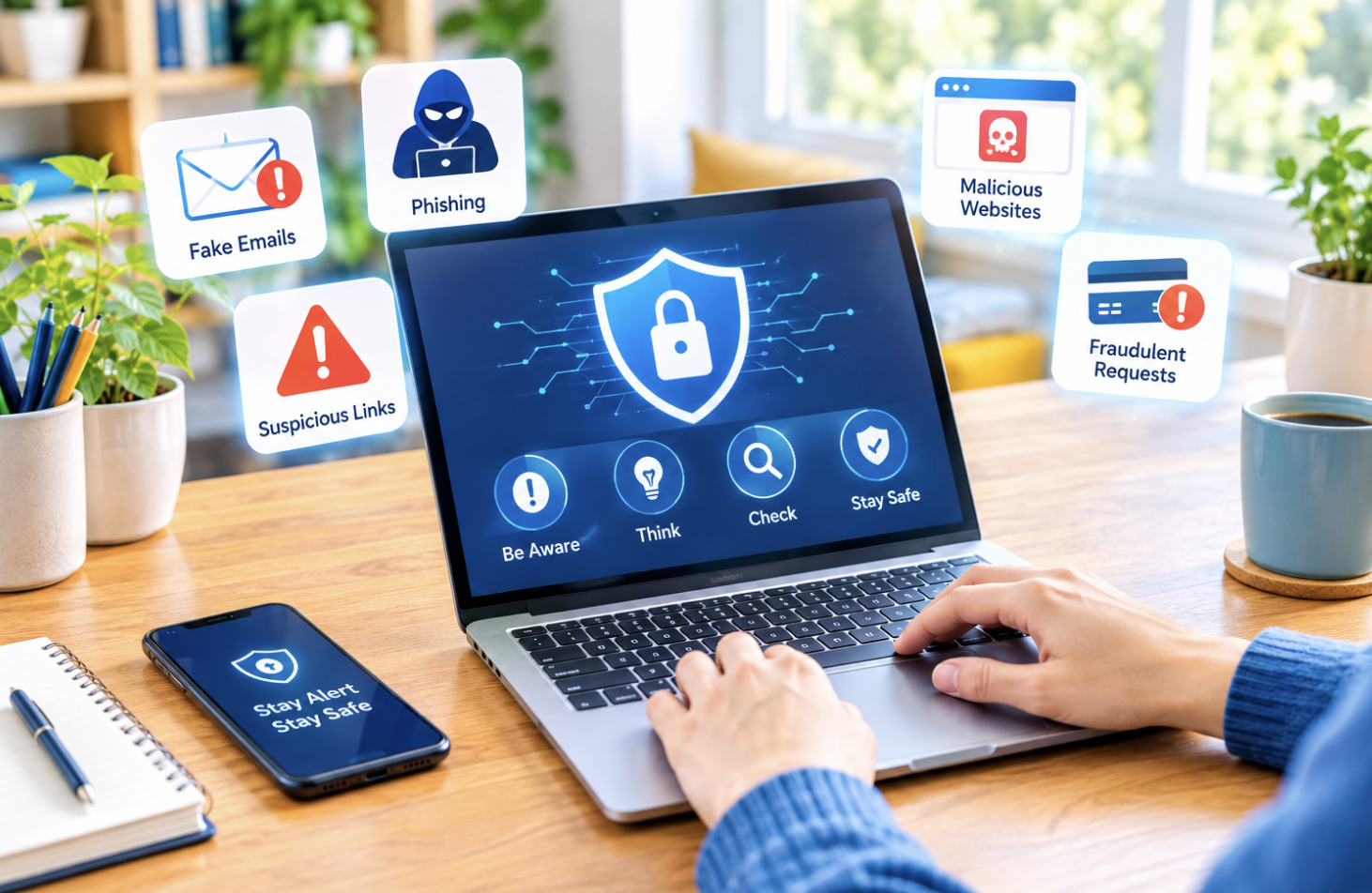
Online scams have grown increasingly sophisticated, moving well beyond the obviously fraudulent emails from supposed foreign royalty that many people associate with the term. Modern scams frequently mimic legitimate businesses convincingly, exploit current events and trending topics, and use psychological pressure tactics specifically refined to bypass the skepticism most people have developed over years of internet use.
Understanding the common patterns behind these scams, rather than memorizing specific examples that will inevitably be replaced by new variations, provides more durable protection against whatever new specific scam happens to be circulating at any given time.
Understand the Common Psychological Tactics Scammers Rely On
Nearly all successful scams, regardless of their specific format or claimed purpose, rely on a similar set of psychological pressure tactics. Urgency, creating a sense that you must act immediately or face a negative consequence, a suspended account, a missed opportunity, an expiring deadline, is designed specifically to prevent the careful, skeptical thinking that would otherwise expose the scam.
Authority, impersonating a trusted institution, a bank, a government agency, a well-known company, exploits our natural inclination to comply with requests from sources we perceive as legitimate and official. And appeals to greed or fear, promising an unrealistic reward or threatening a serious consequence, both work by triggering an emotional response that overrides more careful, rational evaluation of the actual situation.
Recognizing these underlying tactics, rather than trying to memorize every specific scam scenario, helps you identify a scam even when you encounter a completely new specific variation you haven’t seen described anywhere before.
Common Scam Categories to Recognize
Phishing scams, attempting to steal login credentials or personal information by impersonating a legitimate service through email, text, or fake websites, remain among the most common online scam formats, and they’ve become increasingly sophisticated in visually mimicking legitimate companies’ actual branding and communication style.
Romance scams, building a fabricated relationship over time, often over weeks or months, before eventually requesting money for a fabricated emergency or need, specifically exploit emotional connection to lower a victim’s normal skepticism about financial requests from someone they haven’t met in person.
Investment and cryptocurrency scams promise unrealistic returns, often using fabricated testimonials, fake trading platforms showing fictional profits, or high-pressure recruitment tactics resembling pyramid schemes, exploiting both financial anxiety and excitement about potentially lucrative investment opportunities.
Tech support scams involve someone claiming your computer has a serious problem, sometimes through a fake pop-up warning or an unsolicited phone call, then requesting remote access to your computer or payment for unnecessary or fabricated repair services.
Online marketplace scams involve fraudulent listings for products that don’t actually exist, or that never actually ship after payment, often on legitimate marketplace platforms where scammers exploit the platform’s reputation to appear more trustworthy than an obviously fraudulent standalone website would.
Verify Independently Rather Than Trusting Provided Contact Information
One of the most reliable general defenses against a wide range of scam types is verifying independently rather than using any contact information, phone numbers, links, email addresses, provided within a suspicious message itself.
If you receive a message claiming to be from your bank, for example, closing that message entirely and separately navigating to your bank’s website or calling the number on your actual bank card, rather than clicking a link or calling a number provided in the suspicious message, ensures you’re actually communicating with the legitimate organization rather than a scammer who has provided fraudulent contact information designed to keep you within their controlled environment.
Be Skeptical of Unsolicited Contact Requesting Action
Legitimate organizations, banks, government agencies, well-established companies, rarely initiate unsolicited contact demanding immediate action, especially involving payment, sensitive personal information, or remote computer access.
Treating any unsolicited contact along these lines with heightened skepticism, regardless of how professional or urgent it appears, protects against a significant portion of common scam attempts, since this pattern, unsolicited contact plus urgent demanded action, is characteristic of the vast majority of scam attempts regardless of their specific claimed purpose.
Research Before Sending Money to Anyone You Haven’t Met in Person
Any situation involving sending money to someone you’ve only interacted with online, whether through a romance scam, a supposed investment opportunity, or an online marketplace transaction, deserves particular scrutiny.
Searching for the specific details of the situation, the person’s photos through a reverse image search, the specific investment opportunity’s name combined with the word scam, the marketplace listing’s specific claims, often reveals whether others have reported similar experiences, providing valuable information before you commit any money.
Understand That Payment Method Requests Can Be a Red Flag
Legitimate businesses and organizations generally accept standard payment methods, credit cards, established payment platforms, checks. Requests for payment specifically through gift cards, wire transfers, or cryptocurrency, particularly when combined with urgency, are a significant red flag, since these payment methods are difficult or impossible to reverse once sent, making them a common preference among scammers specifically because standard, more easily disputed payment methods would allow victims to recover their money once a scam is discovered.
Be Cautious About What You Share Publicly
Information shared publicly on social media, your location, your daily routine, personal relationship details, can sometimes be used by scammers to make a targeted scam attempt feel more personalized and convincing.
Being thoughtful about your privacy settings and what you share publicly, without needing to become completely closed off from normal social media use, reduces the raw material available for a scammer to construct a more convincing, personalized approach targeting you specifically.
Trust Your Instincts When Something Feels Off
Many scam victims report, in hindsight, having had a nagging feeling that something wasn’t quite right before ultimately being convinced by a scammer’s persistent pressure or persuasive narrative. Taking that instinct seriously in the moment, pausing to independently verify or simply taking time before acting rather than responding to pressure to decide immediately, is one of the most effective practical defenses available, since scammers specifically design their approaches to overcome exactly this kind of hesitation through manufactured urgency.
What to Do If You Suspect You’ve Encountered a Scam
If you receive a suspicious message or contact, avoid clicking any links, providing any information, or sending any money. Report the attempt to the relevant platform, your email provider, the marketplace, the social media platform, where the contact occurred, since this helps protect others from the same scam attempt.
If you’ve already provided financial information or sent money, contact your bank or payment provider immediately, since faster action sometimes allows for recovery or at least limits further damage, and consider reporting the incident to relevant consumer protection or law enforcement resources in your area.
Conclusion
Scam tactics continue evolving, and maintaining awareness of general patterns and common red flags, rather than assuming you’re now permanently protected after learning about a few specific historical scam examples, provides more durable protection over time.
Periodically reviewing current scam trends, many consumer protection organizations publish regular updates on emerging scam patterns, helps keep your awareness current as scammers adapt their specific tactics to exploit new technologies, current events, and evolving public awareness of previous scam formats.
Frequently Asked Questions
1. Can I get my money back if I’ve already sent it to a scammer?
This depends significantly on the specific payment method used and how quickly you act after realizing what happened. Bank transfers and credit card payments sometimes offer more recourse through dispute processes than gift cards, wire transfers, or cryptocurrency, which are generally very difficult or impossible to reverse once completed. Contacting your bank or payment provider immediately upon suspecting a scam gives you the best possible chance at some form of recovery, even though success isn’t guaranteed with any payment method.
2. How can I tell a legitimate urgent request from a scam if my actual bank does sometimes contact me about real issues?
The key distinction is verification method rather than the mere fact of receiving an urgent message. Legitimate concerns from your actual bank can always be verified by closing the message and separately contacting your bank through a phone number or website you already know is legitimate, rather than using any contact information provided within the message itself. If the request is, this verification step will confirm it without any real cost beyond a few minutes of your time.
3. Are older adults really more vulnerable to online scams than younger people?
Research on this is somewhat mixed, and vulnerability varies considerably by individual rather than purely by age, though older adults are sometimes specifically targeted due to assumptions about accumulated savings or less familiarity with rapidly evolving digital scam tactics. That said, younger, digitally native individuals aren’t immune either, and are increasingly targeted through platforms and formats, certain social media scams or cryptocurrency schemes, for example, that specifically resonate with younger demographics.
4. What should I do if a scammer has some of my personal information already?
If a scammer has obtained personal information like your name, address, or partial financial details, likely through a previous data breach unrelated to their current attempt, monitoring your accounts closely for unauthorized activity, considering a credit freeze if financial information was involved, and being extra cautious about any subsequent contact claiming to need additional information to resolve a supposed issue, are all reasonable protective steps.
5. Is it worth reporting a scam attempt even if I didn’t fall for it?
Yes, reporting attempted scams, even unsuccessful ones, to the relevant platform and appropriate consumer protection resources helps build a broader picture of active scam campaigns, which can help protect others and sometimes contributes to law enforcement action against organized scam operations. This reporting takes relatively little time and provides an indirect, benefit beyond your own individual situation.
