


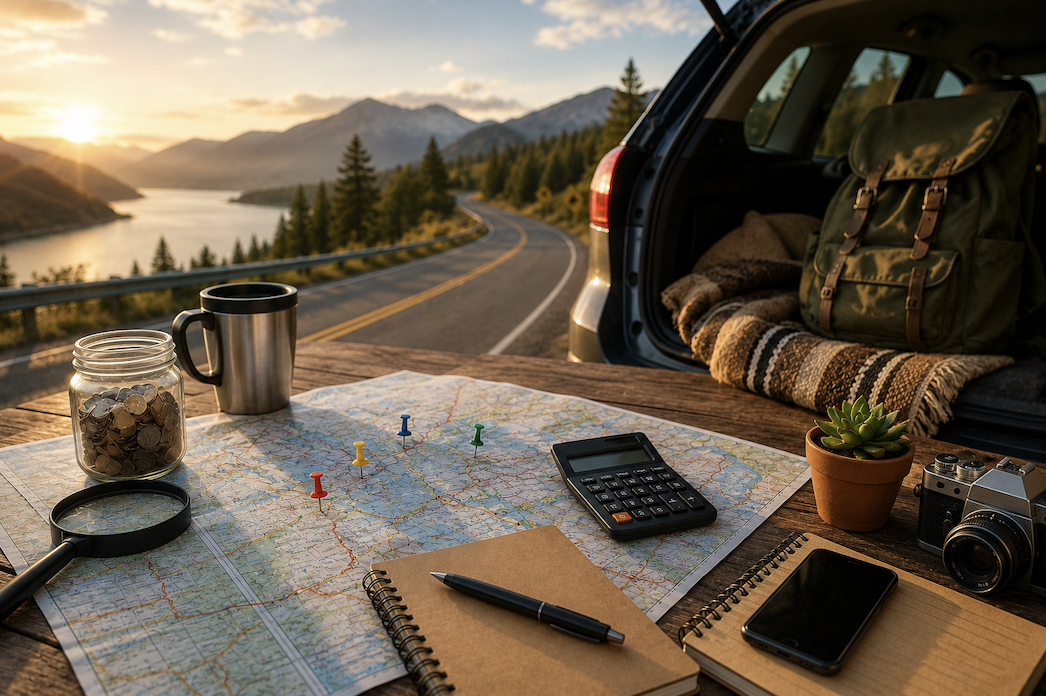
A road trip has a reputation as the affordable alternative to flying somewhere, and while that’s often true, it’s not automatic. Without some planning, gas, food, lodging, and unexpected costs can add up to more than a comparable flight-based trip. The good news is that a genuinely budget-friendly road trip is achievable with a bit of upfront planning, and the process of planning it is a lot less complicated than it might seem.
Plan Your Route With Cost in Mind, Not Just Distance
The most direct route between two points isn’t always the cheapest, or even the most enjoyable. Before finalizing your route, look into toll roads along the way and whether a slightly longer, toll-free alternative would actually cost less once you factor in the toll charges, particularly on routes with expensive bridges or tunnels. Mapping apps typically offer a toggle to avoid tolls, which lets you compare the time difference against the potential savings.
It’s also worth considering fuel prices along your route, since they can vary meaningfully by region and even by state or country. A quick search for current fuel price trends along your planned route can help you time fill-ups strategically, topping off in cheaper areas rather than waiting until you’re nearly empty in a more expensive one.
Get Your Vehicle Ready Before You Leave
An unexpected breakdown or mechanical issue mid-trip is one of the most expensive things that can happen to a road trip budget, both in repair costs and in the ripple effect on your schedule and lodging plans. Before a long trip, have your vehicle checked for basic maintenance items: oil level, tire pressure and tread, brakes, and fluid levels. This is a relatively small upfront cost compared to the potential expense and disruption of a breakdown in an unfamiliar location.
Keeping your tires properly inflated also has a direct impact on fuel efficiency, so this simple check pays for itself in fuel savings alone over a longer trip, independent of the breakdown prevention benefit.
Drive More Efficiently to Save on Fuel
How you drive affects fuel consumption more than most people account for when budgeting a road trip. Maintaining a steady speed, avoiding aggressive acceleration and hard braking, and using cruise control on highways where appropriate all improve fuel efficiency meaningfully over the course of a long trip. Reducing unnecessary weight in your vehicle and removing roof racks or cargo boxes when they’re not actively in use also helps, since both extra weight and wind resistance increase fuel consumption.
Planning your route to minimize unnecessary backtracking or detours, beyond just the time savings, directly translates into fuel cost savings as well, particularly on a longer multi-day trip where small inefficiencies compound significantly.
Rethink Where You Stay Each Night
Lodging is often the single largest expense category on a road trip, and there’s meaningful room for savings here if you’re willing to consider options beyond standard hotels. Camping, where it fits your trip and preferences, is dramatically cheaper than most hotel options and can be a genuinely enjoyable part of a road trip rather than simply a cost-cutting measure. Vacation rentals, particularly for groups splitting the cost, sometimes offer better value than multiple hotel rooms, especially when a kitchen is included, which then allows for cost savings on food as well.
Booking accommodations slightly outside popular tourist areas, even by a short drive, frequently costs meaningfully less than staying directly in a high-demand area, and for a road trip specifically, where you already have a vehicle, this tradeoff is easier to manage than it would be without one.
If your route allows for it, timing your travel to include an overnight drive occasionally, though this requires careful consideration of driver fatigue and safety, can eliminate a night of lodging entirely for particularly long, multi-day routes, though this approach isn’t right for every trip or every traveler.
Plan Meals Strategically Rather Than Eating Out for Everything
Eating at restaurants for every single meal adds up quickly over a multi-day trip. Packing a cooler with basic groceries, sandwich supplies, snacks, drinks, and simple no-cook meals covers a meaningful portion of your food needs without sacrificing much convenience, especially for breakfast and lunch, saving restaurant meals for dinner or specific experiences you’re genuinely looking forward to.
Stopping at grocery stores along your route to restock, rather than relying entirely on gas station convenience stores or restaurants, keeps food costs significantly lower throughout a longer trip, and grocery store prices are almost always meaningfully better than either alternative.
Take Advantage of Free and Low-Cost Attractions
Road trips offer a unique opportunity to experience free or low-cost attractions along the route that wouldn’t be practical to reach without a vehicle: scenic overlooks, public parks, free museums or visitor centers, and interesting small towns that don’t charge for simply walking around and experiencing them. Building some of these into your itinerary alongside any paid attractions you’re planning keeps your overall daily entertainment budget lower without sacrificing genuinely memorable experiences.
Researching regional or state park passes, if you’re planning to visit multiple parks along your route, can also offer meaningful savings compared to paying individual entrance fees at each location.
Budget for the Unexpected
Even with careful planning, road trips involve some inherent unpredictability, a detour due to road construction, an unexpected repair, a change in plans due to weather. Building a reasonable buffer into your overall trip budget, generally somewhere around ten to fifteen percent of your planned total, helps absorb these unexpected costs without derailing your entire trip financially or forcing you to cut a planned activity you were looking forward to.
Track Your Spending as You Go
Rather than waiting until the end of the trip to see how your actual spending compared to your budget, checking in briefly each day or every couple of days lets you make small adjustments in real time if you’re running ahead of budget in one category. This might mean choosing a slightly cheaper meal option one evening, or deciding to skip a paid attraction you’re less excited about, small, manageable adjustments that are much easier to make along the way than realizing at the very end of the trip that you’ve significantly overspent.
Conclusion
Before you leave, estimate your fuel costs based on your route distance and your vehicle’s fuel efficiency, factor in a realistic lodging cost based on your chosen accommodation style, budget for groceries and a reasonable number of restaurant meals, set aside money for planned attractions and activities, and add a reasonable buffer for the unexpected. Having this rough total in mind before you leave, and tracking against it as you go, is what actually keeps a road trip within budget, rather than simply hoping driving instead of flying will automatically be the cheaper option.
FAQ’s
1. Is a road trip actually cheaper than flying for every trip?
Not automatically, it depends on distance, number of travelers, and how you handle lodging and food along the way. For shorter distances and groups splitting costs, road trips are often significantly cheaper. For very long distances with just one or two travelers, flying combined with a rental car at the destination can sometimes come out ahead, so it’s worth roughly comparing both options for your specific trip rather than assuming driving is always cheaper.
2. How much should I budget per day for a road trip?
This varies enormously based on your accommodation choices, region, and travel style, but building your estimate from actual specific costs, fuel based on your route and vehicle efficiency, a realistic nightly lodging cost, and a grocery and restaurant budget gives a far more accurate number than trying to apply a generic daily figure that doesn’t reflect your specific trip.
3. What’s the best way to save on gas during a long road trip?
Beyond driving efficiently and keeping your vehicle well maintained, using a gas price comparison app to find the cheapest stations along your route, and timing fill-ups strategically based on regional price differences, can add up to meaningful savings over a multi-day trip without requiring any real extra effort.
4. Should I bring my own food or plan to eat out during a road trip?
A mix of both tends to work best for most people. Packing a cooler with breakfast and lunch supplies while saving restaurant meals for dinner, or for specific food experiences you’re excited about at your destination, balances cost savings with still enjoying part of the experience of trying local food along the way.
5. Is camping actually a realistic way to save money on a road trip?
For travelers comfortable with it, yes, camping is dramatically cheaper than most hotel or rental options and can meaningfully lower your overall lodging costs across a multi-day trip. It requires some additional gear and planning compared to hotel stays, so it’s worth weighing the upfront cost of camping equipment against the savings if you don’t already own it, particularly for a one-time trip versus a more frequent hobby.
