


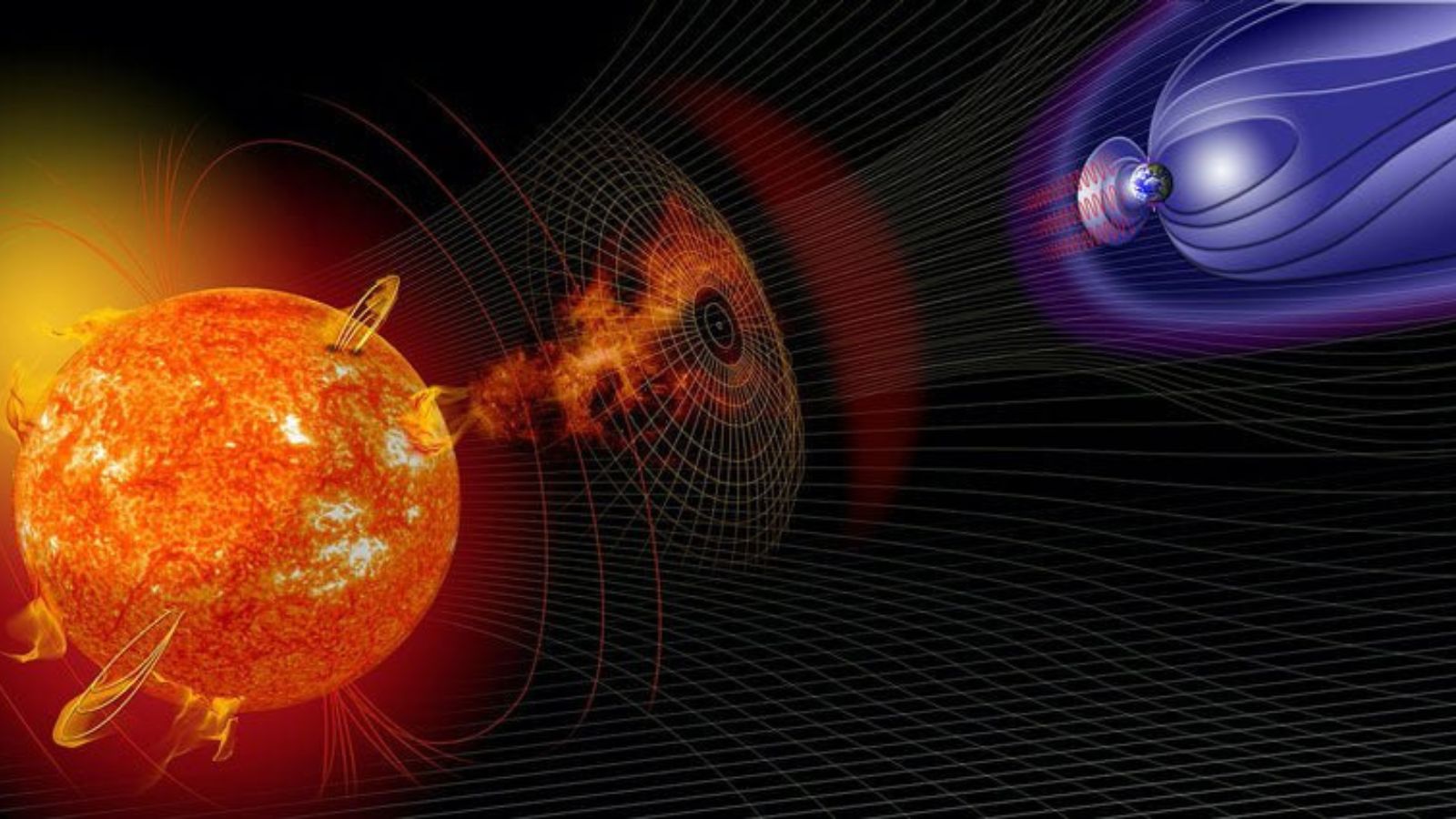
Solar storms are among the most fascinating and powerful natural phenomena in our solar system. Originating from the Sun, these intense eruptions release massive amounts of energy in the form of electromagnetic radiation, charged particles, and plasma. While they occur millions of kilometers away, their effects can reach Earth and influence modern technology, communication systems, and even our daily lives. Understanding solar storms is essential in a world increasingly dependent on satellites and electronic infrastructure.
What Are Solar Storms?
Solar storms are disturbances caused by sudden releases of energy from the Sun’s surface. These events are often associated with regions known as sunspots—temporary dark spots on the Sun that indicate areas of intense magnetic activity. When magnetic energy builds up and is suddenly released, it can trigger powerful solar events.
The two main types of solar storms are solar flares and coronal mass ejections (CMEs). Both play a critical role in shaping space weather and influencing Earth’s environment.
Solar Flares: Bursts of Radiation
A solar flare is a sudden and intense burst of radiation from the Sun’s surface. These flares release energy across the entire electromagnetic spectrum, including visible light, ultraviolet rays, and X-rays. Solar flares travel at the speed of light, meaning their effects can reach Earth in about eight minutes.
Although Earth’s atmosphere protects us from harmful radiation, solar flares can still disrupt communication systems. High-frequency radio signals, often used in aviation and maritime operations, may be temporarily blocked or weakened during strong flares.
Coronal Mass Ejections (CMEs)
Coronal Mass Ejections are massive clouds of solar plasma and magnetic fields ejected from the Sun into space. Unlike solar flares, which primarily release radiation, CMEs involve billions of tons of charged particles traveling at high speeds.
When a CME is directed toward Earth, it can interact with our planet’s magnetic field, causing geomagnetic storms. These storms can have significant effects on satellites, power grids, and navigation systems.
CMEs typically take one to three days to reach Earth, providing scientists with a short window to prepare for potential impacts.
The Science Behind Solar Storms
Solar storms are driven by the Sun’s magnetic field. The Sun is made of hot, electrically charged gases, which generate complex magnetic fields. These fields can become twisted and unstable over time. When they suddenly snap or reconnect, they release enormous amounts of energy—resulting in solar flares or CMEs.
This process is known as magnetic reconnection and is a key concept in understanding solar activity. It explains how energy stored in magnetic fields is rapidly converted into heat, light, and motion.
The 11-Year Solar Cycle
Solar activity follows a natural cycle that lasts approximately 11 years. During this cycle, the number of sunspots on the Sun increases and decreases. The period of highest activity is known as the solar maximum, while the quieter phase is called the solar minimum.
During solar maximum, solar storms occur more frequently and with greater intensity. This increases the likelihood of geomagnetic storms affecting Earth. Scientists closely monitor the solar cycle to predict periods of heightened activity and prepare for potential disruptions.
Effects on Earth’s Technology
Solar storms can have a wide range of effects on modern technology. One of the most significant concerns is their impact on satellites. Charged particles from CMEs can damage satellite electronics, disrupt communication signals, and interfere with GPS systems.
Power grids are also vulnerable. Strong geomagnetic storms can induce electric currents in power lines, potentially causing outages or damaging transformers. In extreme cases, entire regions could experience blackouts.
Air travel can also be affected. Flights that rely on high-frequency radio communication, especially those near the poles, may need to reroute during strong solar storms.
Auroras: A Beautiful Side Effect
Not all effects of solar storms are harmful. One of the most stunning outcomes is the creation of auroras, also known as the Northern and Southern Lights. These colorful displays occur when charged particles from the Sun interact with Earth’s atmosphere.
As the particles collide with gases like oxygen and nitrogen, they produce vibrant lights in shades of green, red, purple, and blue. Auroras are typically visible near the polar regions, but during strong solar storms, they can be seen at lower latitudes.
This natural light show is a reminder of the powerful connection between the Sun and Earth.
Historical Solar Storm Events
Throughout history, several major solar storms have demonstrated the potential impact of these events. One of the most famous is the Carrington Event of 1859, the strongest geomagnetic storm on record. It caused telegraph systems to fail and even sparked fires in some equipment.
If a similar event occurred today, the consequences could be far more severe due to our reliance on electronic technology. This highlights the importance of monitoring and preparing for solar activity.
Monitoring and Prediction
Scientists use advanced technology to monitor the Sun and predict solar storms. Space agencies like NASA and European Space Agency operate satellites that observe solar activity in real time.
These observations help researchers detect sunspots, solar flares, and CMEs. By analyzing this data, scientists can issue warnings and forecasts, allowing governments and industries to take preventive measures.
Although prediction has improved significantly, it is still challenging to determine the exact timing and impact of solar storms.
Preparing for Solar Storms
As our dependence on technology grows, preparing for solar storms becomes increasingly important. Governments and organizations are working to strengthen infrastructure and develop response strategies.
Some preventive measures include:
- Designing more resilient satellites
- Protecting power grids from geomagnetic disturbances
- Developing backup communication systems
- Improving forecasting models
Public awareness is also essential. Understanding solar storms can help individuals and businesses take precautions during periods of high solar activity.
The Future of Solar Research
The study of solar storms is an evolving field. New missions and technologies are being developed to improve our understanding of the Sun. These efforts aim to enhance prediction accuracy and minimize the risks associated with solar activity.
As scientists continue to explore the Sun, they gain valuable insights into the forces that shape our solar system. This knowledge not only helps protect Earth but also supports future space exploration.
Conclusion
Solar storms are powerful reminders of the dynamic nature of our Sun. From solar flares to coronal mass ejections, these events release immense energy that can travel across space and affect Earth in various ways. While they pose challenges to modern technology, they also create breathtaking natural phenomena like auroras.
