


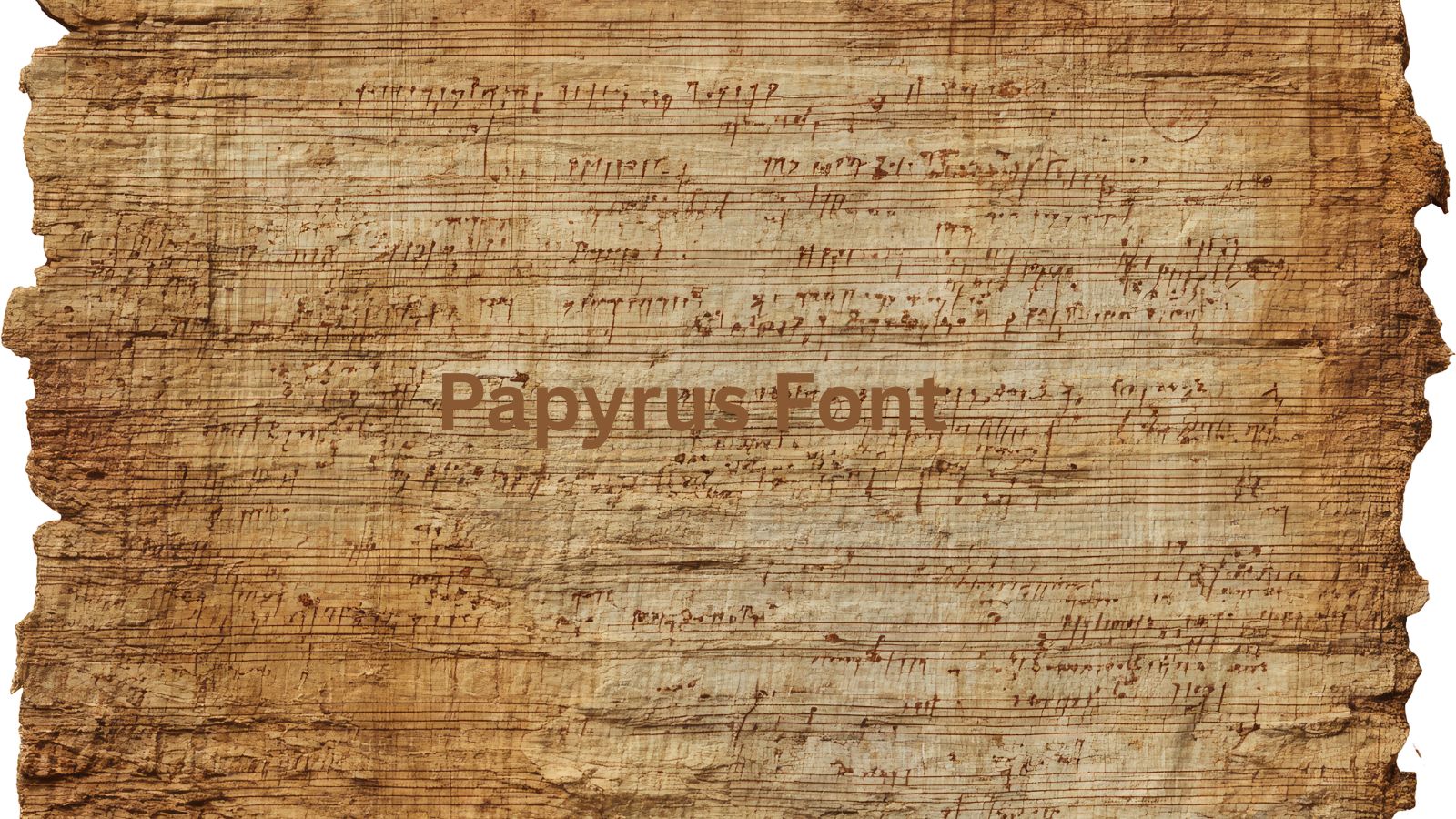
Typography has the power to shape perception, evoke emotion, and transport audiences into entirely different worlds. Few fonts have achieved this as memorably—and controversially—as Papyrus, a highly recognizable fantasy typeface created by Chris Costello in 1982. With its rough edges, organic texture, and ancient aesthetic, Papyrus has become one of the most widely used and debated fonts in modern design history.
The Origins of Papyrus
Papyrus was born from a deeply artistic and experimental process. Chris Costello, then in his early twenties, set out to create a typeface that captured the look and feel of ancient writing materials—specifically, the textured surfaces of papyrus paper used in early civilizations like Egypt and Greece.
Unlike many fonts developed digitally, Papyrus began as a hand-drawn creation. Costello reportedly spent months sketching each letter using calligraphy tools, carefully crafting uneven strokes and distressed edges. The goal was to make the font feel natural and imperfect, as though it had been written centuries ago.
This dedication to authenticity is what gave Papyrus its distinctive personality. It wasn’t just a font—it was a visual experience rooted in history and artistry.
Key Characteristics of the Papyrus Typeface
Papyrus stands out immediately due to its unique design features. These characteristics define its identity and explain why it remains so recognizable:
- Rough, Textured Edges: The letters appear worn and slightly eroded, mimicking aged paper or stone carvings.
- Irregular Letterforms: Each character has subtle variations, giving the font a handcrafted feel.
- Tall, Narrow Structure: The vertical emphasis adds elegance while maintaining readability.
- Organic Flow: The strokes feel natural and fluid, as if created with a brush or reed pen.
- Historical Aesthetic: The overall design evokes ancient manuscripts and early writing systems.
These elements combine to create a typeface that feels both artistic and atmospheric, making it ideal for themes related to history, spirituality, or fantasy.
Rise to Popularity
Papyrus gained widespread recognition in the late 20th century, particularly as personal computers and desktop publishing became more accessible. It was included in many operating systems and software packages, which meant millions of users suddenly had access to a visually distinctive font.
Designers and non-designers alike were drawn to its exotic and mystical appearance. It quickly became a go-to choice for:
- Restaurant menus (especially Mediterranean or Middle Eastern themes)
- Spa and wellness branding
- Book covers and posters
- Event invitations
- Educational materials
Its versatility and availability contributed significantly to its rapid adoption across various industries.
Papyrus in Pop Culture
One of the most notable uses of Papyrus came in James Cameron’s 2009 film Avatar. The movie’s logo prominently featured the font, bringing it to the attention of a global audience.
This choice sparked widespread discussion in the design community. While the film itself was groundbreaking in visual effects, the use of Papyrus was seen by many designers as surprisingly simplistic for such a high-budget production.
The debate even reached mainstream audiences through comedy. A famous sketch on Saturday Night Live humorously criticized the use of Papyrus in Avatar, highlighting how deeply the font had embedded itself in cultural consciousness.
Criticism and Controversy
Despite—or perhaps because of—its popularity, Papyrus has become one of the most criticized fonts in the design world. Many professional designers argue that it is overused and often applied inappropriately.
Common criticisms include:
- Overexposure: Its widespread availability led to excessive use, reducing its originality.
- Misuse: Papyrus is often used in contexts where it doesn’t fit, weakening its intended impact.
- Lack of Subtlety: Its strong personality can overpower a design rather than complement it.
For some designers, Papyrus has become a symbol of amateur design choices. However, this criticism also highlights an important truth: a font’s effectiveness depends heavily on how and where it is used.
Why Papyrus Still Matters
Despite the criticism, dismissing Papyrus entirely would overlook its significant contributions to typography. The font represents a unique approach to design—one that prioritizes texture, emotion, and storytelling over precision and uniformity.
Papyrus remains relevant because:
- It introduced a more expressive, artistic style to digital typography.
- It demonstrated the value of handcrafted design in a digital era.
- It continues to evoke strong emotional and visual responses.
In the right context, Papyrus can still be highly effective. When used thoughtfully, it can enhance themes of antiquity, mysticism, and natural beauty.
Lessons from Papyrus in Design
The story of Papyrus offers valuable lessons for designers and creatives:
- Distinctiveness is Powerful: A unique design can achieve global recognition.
- Context is Key: Even a great font can fail if used in the wrong setting.
- Balance Matters: Strong stylistic elements should complement, not dominate, a design.
- Trends Evolve: What is popular today may become overused tomorrow.
These lessons extend beyond typography, applying to all forms of visual communication.
Modern Alternatives and Inspiration
As design trends have evolved, many designers have sought alternatives to Papyrus that retain its organic feel without its overused reputation. Modern fonts often take inspiration from Papyrus while refining its roughness and improving versatility.
These newer typefaces typically feature:
- Subtle texture instead of heavy distressing
- Improved readability across digital platforms
- Greater adaptability for branding and editorial design
Even so, Papyrus remains a reference point—a benchmark for expressive, thematic typography.
The Legacy of Chris Costello
The enduring recognition of Papyrus is a testament to the creativity of Chris Costello. What began as a personal artistic project evolved into one of the most famous typefaces in the world.
Costello himself has acknowledged both the success and the criticism of his creation. Regardless of opinion, the impact of Papyrus on design culture is undeniable. Few fonts have sparked as much conversation, debate, and recognition.
Conclusion
Papyrus is more than just a font—it is a cultural phenomenon. Its textured, ancient aesthetic has made it instantly recognizable, while its widespread use has sparked ongoing debate about design quality and originality.
