


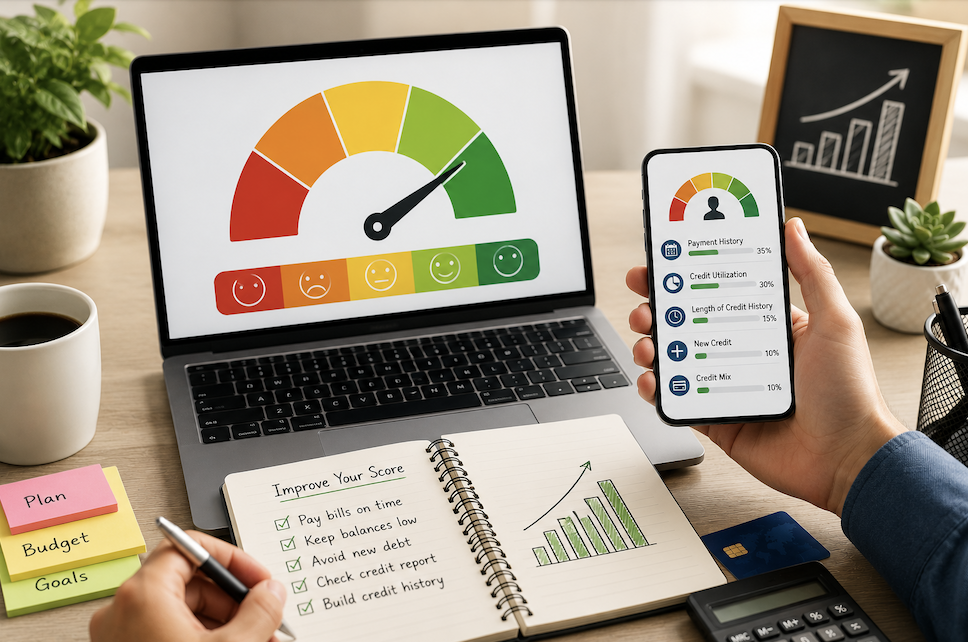
A credit score can feel like an arbitrary number handed down from an invisible authority, one that somehow affects your ability to rent an apartment, buy a car, or get approved for a credit card, without much explanation of how it actually works. Once you understand what actually goes into the calculation, credit scores stop feeling mysterious and start feeling like something genuinely within your control.
What a Credit Score Actually Represents
A credit score is a numerical summary of how reliably you’ve managed borrowed money in the past, used by lenders to estimate the risk of lending to you in the future. In the United States, scores typically range from 300 to 850, with higher scores indicating lower perceived risk to lenders. This number influences not just whether you’re approved for credit, but the interest rate you’re offered, which can mean a significant difference in the total cost of a loan or credit card balance over time.
It’s worth understanding that you don’t have just one credit score. Multiple scoring models exist, and different lenders may pull your credit report from different bureaus, sometimes resulting in slightly different scores depending on which one you’re looking at. The overall factors that influence these scores, however, remain largely consistent across models.
The Main Factors That Determine Your Score
Payment history typically carries the most weight of any single factor. This tracks whether you’ve paid your bills, credit cards, loans, and other credit accounts on time consistently. Even one missed payment, particularly one that goes thirty days or more past due, can meaningfully lower your score, and the impact tends to be more severe for more recent missed payments.
Credit utilization, meaning how much of your available credit you’re actually using, is the second major factor. This is calculated by dividing your current balances by your total available credit limits. Using a high percentage of your available credit, even if you pay it off in full each month, can lower your score, since it signals higher risk to lenders regardless of your actual payment behavior.
Length of credit history matters as well, with longer credit histories generally viewed more favorably, since they provide more data on your borrowing behavior over time. This is part of why closing your oldest credit card, even one you rarely use, can sometimes hurt your score by shortening your average account age.
Credit mix, meaning the variety of credit types you manage, credit cards, an auto loan, a mortgage, for example, contributes a smaller but still meaningful portion of your score. Lenders generally view successfully managing different types of credit as a positive signal.
New credit inquiries, meaning how often you’ve applied for new credit recently, also factor in, though this typically has a smaller impact than the factors above. Multiple credit applications within a short period can suggest higher risk or financial strain, though most scoring models account for rate shopping, treating multiple inquiries for the same type of loan within a short window as a single inquiry.
How to Check Your Credit Score and Report
You’re entitled to a free copy of your credit report from each of the three major credit bureaus, and checking these regularly, at minimum once a year, is worth doing even if you’re not actively trying to improve your score, since it’s also how you catch errors or signs of identity theft. Many banks and credit card companies now offer free credit score access directly through their apps or websites as well, giving you an easy way to monitor your score without a separate service.
It’s worth noting that checking your own credit score or report, sometimes called a soft inquiry, does not affect your score at all, regardless of how often you check it. Only hard inquiries, which happen when you actually apply for new credit, have any impact.
Practical Steps to Improve Your Score
Pay every bill on time, without exception, since payment history carries the most weight of any factor. If you struggle to remember due dates, setting up automatic minimum payments, even if you plan to pay more, ensures you never miss a payment entirely, which is the single most damaging outcome for your score.
Keep your credit utilization low, ideally under thirty percent of your total available credit, and lower still if you’re actively trying to improve your score quickly. If you have the means, paying down credit card balances before your statement closing date, rather than just before the due date, can lower the balance that actually gets reported to credit bureaus.
Avoid closing old credit cards you’re not actively using, unless there’s a compelling reason like a high annual fee on a card you no longer need. Keeping older accounts open, even with minimal activity, helps maintain a longer average credit history.
Be strategic about applying for new credit, spacing out applications rather than applying for several credit cards or loans in a short window, particularly if you’re planning a major purchase like a home or car in the near future, where you’ll want your score as strong as possible.
Consider becoming an authorized user on a family member’s credit card with a strong payment history, if that’s an option available to you. This can help build credit history, particularly for those just starting out or rebuilding after past credit issues, though it’s worth confirming the card issuer actually reports authorized user activity to the credit bureaus, since not all of them do.
What to Do If You Find an Error on Your Credit Report
Errors on credit reports are more common than people assume, and they can meaningfully hurt your score if left uncorrected. If you spot an account you don’t recognize, an incorrect late payment, or any
other inaccurate information, you have the right to dispute it directly with the credit bureau reporting the error. This process typically involves submitting documentation supporting your claim, and the bureau is required to investigate within a defined timeframe.
Given how much errors can potentially affect your score, it’s worth reviewing your credit report periodically specifically with an eye toward catching mistakes, not just monitoring your overall score.
How Long It Takes to See Improvement
Credit scores don’t change overnight, and building or repairing credit is a gradual process. Some factors, like lowering your credit utilization, can show improvement within a single billing cycle once your reduced balance is reported. Other factors, particularly building a longer credit history or recovering from a significant negative mark like a missed payment, take months or years to fully improve.
Patience and consistency matter more than any single dramatic action. Making on-time payments and keeping utilization low, sustained over time, is what genuinely builds a strong credit score, far more than any quick fix or shortcut.
Final Thoughts
If you’re just beginning to focus on your credit, start by checking your current score and report to understand where you stand. Set up automatic payments to eliminate the risk of missed payments entirely. Review your credit utilization and pay down balances where possible. And commit to checking your report periodically for errors, treating credit building as an ongoing habit rather than a one-time project you complete and forget about.
Understanding what actually drives your credit score transforms it from an opaque, anxiety-inducing number into something genuinely manageable, one built through consistent, understandable habits rather than luck or mystery.
- Read more about Newspinup!
Frequently Asked Questions
1. What’s considered a good credit score?
Generally, scores in the high 600s to low 700s are considered good, with scores above 740 or so often qualifying for the best available interest rates. Scores below the low 600s are typically considered fair to poor and may result in higher interest rates or difficulty getting approved for certain types of credit.
2. Does checking my own credit score hurt it?
No. Checking your own score or report, whether through a free service, your bank’s app, or the official free annual credit report, is considered a soft inquiry and has no impact on your score whatsoever, regardless of how frequently you check.
3. How much does a single missed payment actually affect my score?
It can be significant, particularly if the payment is thirty days or more late and this is reported to the credit bureaus. The exact impact varies based on your overall credit profile, but payment history is the single most heavily weighted factor, so even one missed payment can cause a noticeable, though usually not permanent, drop.
4. Will paying off a loan completely improve my score right away?
It depends on the type of loan and your overall credit mix. Paying off an installment loan, like a car loan, in full is generally positive for your credit history, though it can very slightly reduce your credit mix diversity in some scoring models. The long-term positive impact of successfully completing a loan almost always outweighs any minor, short-term fluctuation.
5. Can I improve my credit score if I have no credit history at all?
Yes, though it takes some time to build from scratch. Starting with a secured credit card, which requires a cash deposit as collateral, or becoming an authorized user on a family member’s well-managed account, are both common ways to begin establishing a credit history when you’re starting with none at all.
