


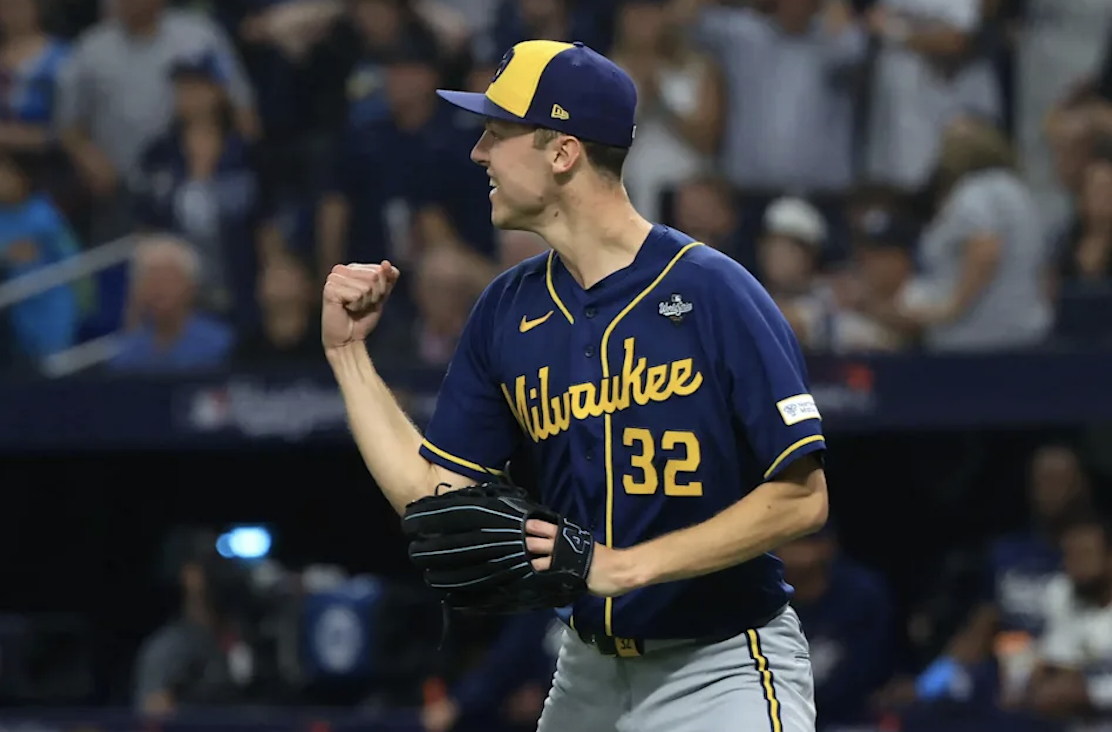
Milwaukee waited 58 seasons for a championship, and on a Wednesday night in Florida, the wait ended. The Brewers closed out the Tampa Bay Rays in Game 5 of the World Series, turning a long run of near misses into the first title in franchise history.
In this article, we will explore how Game 5 unfolded run by run, who delivered the key moments, which records fell, and what the result means for a franchise and its city.
The Night Milwaukee Finished It
The final was 4-1 in favor of the Brewers on Wednesday, October 28, 2026, at Tropicana Field in St. Petersburg, Florida. According to the Associated Press account carried by MPR News and a separate report from Spectrum News, the Brewers built their lead early and held it to the end. The coverage describes a game decided by steady, unglamorous baseball: a single here, a double there, a sacrifice fly, and a pitching plan that handed the ball from a starter to a closer without a crisis in between.
It is worth saying plainly what the sources do and do not tell us. They confirm that Game 5 clinched the championship and that the Brewers lost Game 4 earlier in the series, according to Spectrum News. They do not give a final series count, so this article will not state one. What matters for the history books is simpler: when the last out was recorded, Milwaukee was the champion for the first time.
The deciding game was played in St. Petersburg, Florida, a long way from the Wisconsin city that has waited for this moment. That detail has a small human side, because the title was won away from home and the first celebration happened in someone else’s ballpark. Christian Yelich summed up the mood in a line the coverage quoted: “It’s the best feeling ever.”
Why the Clincher Felt Different
Clinching games carry a special tension because the winning team knows how close the prize is and the losing team knows that one more defeat ends the year. Players describe that pressure as louder than anything in the regular season. A team that has already won 103 games and gone 11-2 in October has handled pressure well, but the final game is a different test: every pitch is magnified, and hitters tend to chase if they try to end it themselves. Milwaukee’s hitters did the opposite, taking one base at a time.
A Quick Orientation for Casual Fans
The World Series is a best-of-seven championship between the winners of the National League and the American League. The first team to win four games takes the title, and the series ends the moment that fourth win is recorded, which is why Game 5 can be the final game. A team that loses one game in the series can still win in five. Because the sources do not state the series score, treat the phrase “Game 5 clinched it” as the safe summary.
For readers who follow the sport only in October, a few terms will help with the rest of this piece. An RBI is a run batted in, credited to a hitter whose at-bat sends a runner home. A sacrifice fly is a fly ball caught for an out that is deep enough for a runner to tag up and score. A grounder is a ball hit along the ground, and a scoreless inning means the other side did not cross the plate.
Inning by Inning: How Game 5 Was Decided
The scoring came in three short bursts, and each one was built by hitters who simply put the ball in play. Milwaukee put its first run on the board in the second inning, added to the lead in the fifth, and then made it a four-run cushion in the sixth. Tampa Bay answered only once, very late.
The Second Inning
Cooper Pratt opened the scoring with an RBI single in the second inning, giving Milwaukee a 1-0 lead. It was not a dramatic swing, and it did not need to be. Against a starter such as Drew Rasmussen, the Rays’ choice for the game, a 1-0 lead early means the opposing pitcher has to work every inning knowing that one more mistake could double the deficit.
The Fifth and Sixth Innings
In the fifth, David Hamilton delivered a single that scored Pratt. Spectrum News reports that the single brought in both Pratt and Jackson Chourio, while the other account describes it as scoring Pratt; the two reports differ on that detail, and the 4-1 final is the anchor that is easiest to trust. Either way, the fifth inning moved the game out of the one-run range where a single swing can tie it.
The sixth inning did the rest of the damage. William Contreras hit an RBI double, and then Pratt’s sacrifice fly made it 4-0. Both plays follow a pattern that baseball people love: a runner in scoring position, a hitter who does not try to do too much, and a ball hit hard enough to turn the situation into a run. After the sixth, Milwaukee had a four-run lead and a bullpen ready to protect it.
The Ninth Inning
Chandler Simpson’s two-out RBI double in the ninth gave Tampa Bay its only run, and it turned a 4-0 game into the 4-1 final. Trevor Megill then finished the game, getting Richie Palacios on a grounder. A grounder to end a championship is a quiet way to finish, but it is the sort of ending that looks inevitable in the replay. Once the ball was fielded and the out was secured, the Brewers had their first title.
The Key Moments at a Glance
The table below summarizes the scoring plays and the finish as the two news reports describe them. It uses only what the coverage states.
| Moment | Inning | What happened | Score effect |
| Pratt RBI single | Second | Gave Milwaukee the first run | Brewers 1-0 |
| Hamilton single | Fifth | Scored Pratt (one report also names Chourio) | Brewers extend lead |
| Contreras RBI double | Sixth | Added a run | Brewers extend lead |
| Pratt sacrifice fly | Sixth | Scored another run | Brewers 4-0 |
| Simpson RBI double | Ninth | Tampa Bay’s only run, with two outs | Brewers 4-1 |
| Megill grounder | Ninth | Palacios grounds out to end the game | Final, Brewers 4-1 |
Misiorowski’s Start and the Calf Cramp
The first five and two-thirds innings belonged to Jacob Misiorowski, who threw 5 2/3 scoreless innings and allowed two hits. In a clinching game, that is close to the ideal line for a starter: no runs, almost no traffic on the bases, and the lead handed over before the hardest outs arrive. The Rays had few real chances against him, which kept the pressure on their offense rather than on the Brewers’ defense.
He did not leave on his own terms, however. The coverage says he exited with a right calf cramp, and that is where the game’s most uncertain moment sat. The decision to take him out is easy to second-guess from the couch and hard to dispute from the dugout. A cramp in a pitcher’s leg matters because a pitcher’s power comes from the legs and hips as much as the arm, so a tight calf can change a delivery and, if ignored, risk a bigger injury. Teams usually prefer to pull a pitcher early rather than gamble, and nothing in the sources suggests Milwaukee did anything but that.
What a Cramp Does and Does Not Mean
A muscle cramp is a sudden, involuntary tightening that can come from fatigue, heavy workload, fluid and electrolyte balance, or simply the strain of an unusually intense game. It is not the same as a tear or a strain, and many cramps ease within minutes or days. The sources do not describe any diagnosis, so there is no basis to say how serious this one was. Anyone who wants an update should wait for the club’s official medical statements rather than guessing from the replay.
Handing the Lead to the Bullpen
When a starter leaves in the sixth inning of a game with a lead, the manager’s choice is how to bridge the remaining outs. The usual playbook is to bring in relievers in a defined order, saving the most trusted arm for the last inning. The coverage confirms that Trevor Megill was the one on the mound when the final out arrived, which fits that pattern. The sources do not list every reliever who pitched between the starter and the closer, so this article will not either.
Reading the Two Pitching Lines Together
Place the two starters side by side and the shape of the night appears. Misiorowski kept Tampa Bay off the scoreboard through 5 2/3 innings with two hits allowed, while the Brewers’ bats produced runs in the second, fifth, and sixth innings. That is the standard recipe for a road win in a deciding game: take the lead early, avoid giving back runs, and trust the final innings to a reliable arm. It is also why the cramp, while worrying, did not turn the game around.
The Other Dugout
Drew Rasmussen was Tampa Bay’s starter, and the Rays did not manage to put early runs on the board for him. That makes his job harder than the box score suggests, because a pitcher who works behind in the score has little room to pitch to contact the way he would prefer. A late rally was the last thing the Rays could attempt, and Simpson’s ninth-inning double was the closest they came to starting one.
Records Set by a Rookie and a Teammate
Two records came out of the series, and both belong to Milwaukee hitters. Cooper Pratt, who is 22, set a World Series rookie record with six straight hits. Jackson Chourio set a five-game Series record with 11 hits. The coverage does not say which games those hits came in, so there is no need to assign them to specific innings. Both marks speak to the same theme: Milwaukee won with contact and patience, not with one big star carrying the load.
To put six straight hits in context, think about how hard it is to get even one hit in a game against a club’s best pitchers. Professional hitters fail more often than they succeed, and a hitter who strings six hits together in a row, in the biggest games of the year, is on a rare run. The fact that he did it as a rookie is why the record has the rookie label attached, and that is exactly the sort of detail that tends to be quoted for decades.
Chourio’s 11 Hits in Five Games
Eleven hits across five games works out to a little more than two per game on average, which is a very high pace for a championship series. That is simple division and not a statistic from the coverage, and it is offered only to show the scale. A hitter who gets on base that often forces opposing pitchers to throw out of the stretch more, to change signs, and to rethink how they pitch to the rest of the lineup. The record was set over a five-game Series, which is the shortest length in which a team can still win a best-of-seven.
The Most Valuable Player
William Contreras was named the World Series Most Valuable Player. His sixth-inning RBI double in Game 5 is one of the plays the coverage highlights, and it gave Milwaukee a bigger lead at the point where a game like this can tip. The sources do not detail his full series statistics, so the award itself is the headline. It is worth noting how this series spread the credit around: a rookie with a record, a teammate with a record, and a Most Valuable Player who is a different player again.
Fifty-Eight Seasons of Waiting
Milwaukee’s baseball story starts in an unusual place. The franchise began as the Seattle Pilots in 1969 and moved to Milwaukee in 1970, which makes this the franchise’s 58th season. For a team to wait this long without a championship, and to have changed cities along the way, is to carry a very particular kind of baseball history.
The timeline is compact enough to lay out. The Pilots played one season in Seattle in 1969, and the team arrived in Milwaukee for 1970. Twelve years later, it reached its first World Series, which it lost in seven games. Then came a long gap of more than four decades before the 2026 run, with the first title at the end of it. For many fans, that means a lifetime of following the club without ever seeing it finish a season on top.
The 1982 Near Miss
The Brewers reached the World Series only once before this year, in 1982. That series ended in a Game 7 loss to the St. Louis Cardinals, 6-3, after Milwaukee had held a 3-1 series lead according to the figures in the coverage. For the fans of that era, it is a painful memory precisely because the team was so close to the title: a lead in games, a chance to finish it, and then a seven-game collapse. The 2026 result reads partly as a repayment of that old loss.
The 1957 Braves
Milwaukee had won a baseball championship once before, but not with this franchise. In 1957, the Braves won it all, and they later moved to Atlanta. That history is important to the city’s identity: it had the experience of winning, then of losing the team, and then of watching a new franchise arrive and wait. The coverage notes that the 1957 Braves are Milwaukee’s only other Major League Baseball championship.
The Braves Connection
The 1957 championship and the 2026 one belong to different franchises, yet Milwaukee fans have long treated them as part of the same story. A city that loses a team feels it for generations, and a city that gets a new one tends to cling to its baseball identity. Because the Braves later moved to Atlanta, the 1957 title is part of the record in that city too, so the two cities share a piece of history even though they no longer share a team.
Why a First Title Matters to a City
For a smaller market, a title is more than a trophy. Smaller-market clubs generally have less revenue to spend on payroll than the largest teams, so building a champion usually relies on scouting, player development and good decisions, and that is part of why a win like this resonates with fans. It tends to bring a surge in merchandise sales, packed bars and plazas, and an energy that carries into the next season, although the size of any economic effect is hard to measure and none is reported here. The deeper effect is emotional. Generations of fans who grew up with the 1982 loss now have a different story to tell their children.
Looking at the whole game, the pattern is clear. Milwaukee scored in three different innings with three different kinds of hits: a single to begin, a double to extend, and a fly ball to finish the job. Pitching-wise, the Brewers allowed just one run, and it came with two outs in the ninth after the game was effectively settled. Teams that win a title-clinching game 4-1 rarely do it with fireworks.
Tampa Bay’s Side of the Ledger
The Rays are an expansion team that debuted in 1998, and the coverage describes them as 0-3 in their earlier World Series appearances, with losses in 2008 and 2020 named. Kevin Cash is their manager. Falling short again, against a team that had waited far longer for its first title, will sting in the Tampa Bay area.
There is a bigger point behind the Rays’ record. The franchise is one of four in Major League Baseball that have never won a title; the other three are Colorado, San Diego and Seattle. That list matters because it underlines how many teams spend decades chasing the same prize. Milwaukee is no longer in a similar position, since the Brewers have now won, but the Rays remain on the list of franchises still searching for their first championship.
A Season That Still Counts
It would be unfair to read a lost World Series as a lost year. Reaching the final round of a thirty-team sport requires a deep roster and some good fortune with injuries and matchups. The Rays won a Game 4 over Milwaukee in this series, according to Spectrum News, and their ninth-inning run in Game 5 showed that they kept fighting until the final out. Fans in Tampa Bay will feel the loss, but reaching the World Series is an achievement in itself.
A Season Built on 103 Wins and an 11-2 October
The Brewers’ path to the title began with a regular season in which they won 103 games. In the postseason they went 11-2, and Spectrum News says they lost only two games in October: Game 3 of the National League Division Series to the San Diego Padres, and Game 4 of the World Series. That is a rare record, because even the strongest teams normally drop several playoff games to hot opposing pitchers or lucky bounces.
The Manager
Pat Murphy, 67, managed the club. He was the National League Manager of the Year in 2024 and again in 2025, according to the coverage. A manager’s job in a short series is largely about deciding when to pull a pitcher, how to set the lineup, and when to trust a young hitter. Murphy’s choices in Game 5, including removing Misiorowski when he left with the cramp and getting through the middle innings with a lead, were not documented in detail in the sources.
What 11-2 Tells Us
Going 11-2 means winning a very high share of games against the best teams in the sport. The Brewers did not dominate in every game, since they dropped one against San Diego and one against Tampa Bay, but neither defeat turned into a lost series. That balance, rather than any single dramatic win, is what the record shows. It also fits the style of Game 5 itself, a win built from modest, repeatable plays.
Final Thoughts: What Fans Can Do Next
The immediate practical questions are about celebration and souvenirs, and the sources do not answer them. They do not mention attendance, a parade, or any official ceremony plan, so anyone hoping to attend an event should look to the team’s own announcements and to local officials in Milwaukee for details. Be careful with unofficial sources, because event details can spread quickly and then change.
Think too about how to share the moment with someone newer to the game. A good way to do it is to pick a single play, such as Pratt’s second-inning single or Contreras’s double, and explain why it mattered. Casual viewers tend to remember stories more than numbers, and the records set in this series, a rookie’s six straight hits and 11 hits from Chourio, give plenty of material for an easy conversation.
If you want championship merchandise, buy from the team’s official shop or an authorized retailer. Items rushed out right after a title are common, and counterfeit goods follow them. A quick check of the seller and of the licensing label on the item will save money and disappointment. For a ticket to any future victory event, use only the channels the club names.
For fans who want to relive the game, the simplest approach is to watch the plays in order: Pratt’s single in the second, the fifth-inning single, Contreras’s double and Pratt’s sacrifice fly in the sixth, and Megill’s final grounder. Looking at the box score alongside the video shows how little drama the game needed. Finally, if you follow the sport casually, this is a good moment to learn the history, since the Braves, the Pilots and the 1982 team each form a chapter of the story.
Read more about News PinUp
Frequently Asked Questions
1. Who Won the 2026 World Series?
The Milwaukee Brewers won, beating the Tampa Bay Rays 4-1 in Game 5 on October 28, 2026. It is the first World Series title in the franchise’s history.
2. Who Was the World Series MVP in 2026?
William Contreras was named World Series MVP. He hit a sixth-inning RBI double in the clinching Game 5.
3. What Was the Score of the Clincher?
The Brewers won Game 5 by a score of 4-1 at Tropicana Field in St. Petersburg, Florida. Milwaukee led 4-0 after the sixth inning, and Tampa Bay scored its only run in the ninth.
4. Had the Brewers Ever Won a World Series Before?
No, this was the franchise’s first. Milwaukee’s only other MLB championship came in 1957, when the Braves won, and that team later moved to Atlanta.
5. Who Pitched the Final Out and Who Started Game 5?
Jacob Misiorowski started for Milwaukee and threw 5 2/3 scoreless innings before leaving with a right calf cramp. Trevor Megill finished the game by getting Richie Palacios to ground out.
6. Are There Parade Plans for the Brewers?
The coverage reviewed for this article did not mention any parade plans. Check the team’s official channels and local Milwaukee announcements for any celebration details.
